 Stefani Rindus
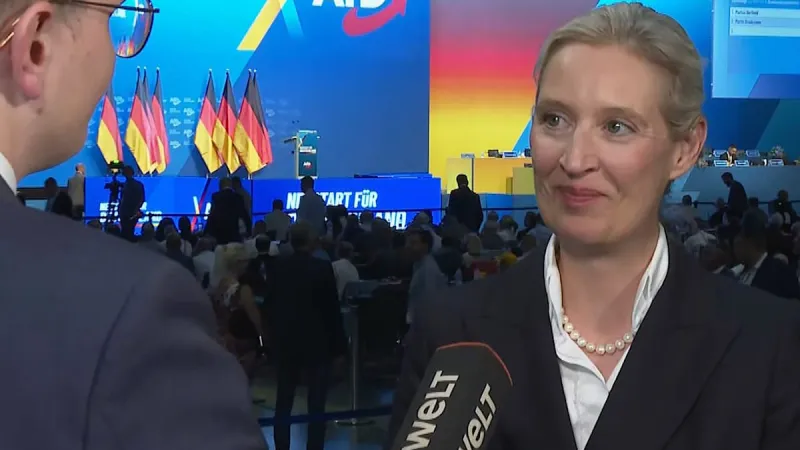
Erfurt, Germany – At a recent Alternative for Germany (AfD) party congress in this central German city, co-leader Alice Weidel confidently asserted the party's new self-identification, proclaiming, "We are no longer the Alternative for Germany; we are the future for Germany." Her remarks underscored a strategic pivot, emphasizing the party's renewed focus on upcoming election campaigns and expressing satisfaction with the newly constituted federal executive board.
Weidel's statement reflects a significant shift in the party's public messaging, moving beyond its foundational role as an opposition force to positioning itself as an inevitable governing power. This ambitious declaration sets a clear tone for the AfD's political objectives in the coming years, particularly as Germany approaches crucial regional and federal polls.
The congress served as a pivotal moment for the party to consolidate its leadership and strategize its path forward. Weidel highlighted the unity and effectiveness of the new Bundesvorstand, suggesting a cohesive front for the challenges ahead. Such internal stability is crucial for a party that has often faced public scrutiny and internal divisions.
The AfD's ascendance in German politics has been a subject of considerable debate and public discourse. Its congresses have frequently drawn both fervent supporters and vocal protestors, reflecting the deep divisions it often engenders within society. For context on historical parallels, the AfD Congress Sparks Protests, Recalls Weimar's Troubled Past.
The party leadership's emphasis on future election campaigns signals an intent to translate its rising poll numbers into concrete electoral gains. With various state elections on the horizon, followed by the next federal election, the AfD aims to solidify its position as a major political player capable of shaping national policy.
This strategic redirection comes as the AfD has seen its support broaden in certain demographics, challenging the traditional political establishment. Recent reports have indicated a AfD Widens Lead As German Public Divides on Party Ban, further intensifying the political climate.
Weidel's rhetoric, while aimed at rallying the party base, also serves as a direct challenge to mainstream German parties. By declaring the AfD the nation's "future," she implicitly questions the capacity of existing coalitions to address the country's challenges effectively.
Observers suggest that this rebranding effort is designed to make the party appear more palatable to a broader electorate, moving past its initial identity as a protest movement. The shift from "alternative" to "future" is indicative of a maturation in political strategy, attempting to project an image of readiness for governance.
The political landscape in Germany remains dynamic, with established parties grappling with the AfD's persistent rise. Weidel's confident pronouncements from Erfurt are likely to intensify political discourse and campaign rhetoric across the spectrum as parties vie for public trust and electoral advantage.
The party's focus on forthcoming electoral contests suggests a concerted effort to capitalize on current political sentiments and societal anxieties. How this newly articulated vision translates into tangible electoral success will be closely watched by both national and international observers. This period marks a critical juncture for the AfD as it seeks to redefine its role within the complex fabric of German democracy.