 Edward DP Situmorang
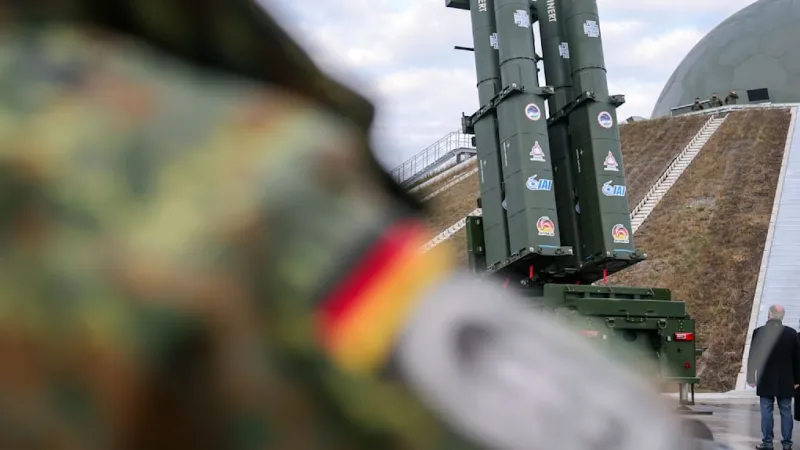
BERLIN – Germany's ambitious Zeitenwende, or era change, remains largely unmanifested within its broader society, a consensus view emerging from politicians, military leaders, and business executives at the recent WELT Security Summit. The nation's economic sector openly acknowledged its own deficiencies in adapting to the new geopolitical realities while simultaneously issuing forceful demands for government action to accelerate the critical defense and societal transformation.
This profound disconnect highlights a critical challenge for Germany, a nation grappling with its role in a rapidly shifting global security landscape. While Chancellor Olaf Scholz declared the Zeitenwende in 2022, signaling a decisive break from decades of post-Cold War defense inertia, the conceptual shift appears to have resonated more with policymakers than with the general populace or even segments of the industrial base.
Held in Berlin, the WELT Security Summit served as a crucial forum where stakeholders converged to assess the progress, or lack thereof, in implementing this strategic overhaul. Participants from diverse sectors articulated concerns that the necessary reorientation of national priorities, particularly regarding defense capabilities and economic resilience, has yet to permeate the collective consciousness.
Representatives from Germany's robust industrial sector, a traditional powerhouse of innovation and manufacturing, candidly addressed their contributions to the perceived stagnation. Several prominent managers admitted that the economic sphere had been slow to fully commit to the significant investments and structural adjustments required by the Zeitenwende, a frank admission rare in such high-profile gatherings.
These confessions were not without a corresponding call for governmental partnership. Industry leaders, advocating for a more coherent national strategy, presented a series of clear demands to the federal government. These included calls for streamlined bureaucratic processes, enhanced procurement efficiency for defense projects, and substantial public investment to stimulate domestic production and innovation in critical security technologies.
Military officials, who have long advocated for increased defense spending and modernization, underscored the urgent need for societal buy-in. They reiterated that sophisticated hardware, such as advanced tanks, while essential, is insufficient without the underlying societal and industrial infrastructure to support a sustained, robust defense posture. The concept of a total national effort, echoing Cold War readiness, was implicitly invoked.
Political figures present at the summit largely concurred with the assessment, acknowledging the chasm between stated policy goals and public perception. Discussions often centered on how to effectively communicate the imperative of the Zeitenwende to citizens, particularly regarding the need for increased defense expenditure and a re-evaluation of long-held pacifist sentiments.
The delay in full societal adoption carries significant implications for Germany's standing within NATO and its capacity to act as a reliable security provider in Europe. Allies have watched closely as Germany navigates this internal debate, hoping for a swift and decisive pivot towards greater strategic autonomy and military capability.
The original declaration of the Zeitenwende came in response to the full-scale invasion of Ukraine in 2022, a moment that fundamentally reshaped European security paradigms. Chancellor Scholz pledged a 100-billion-euro special fund for the Bundeswehr and a commitment to reaching NATO's 2% of GDP defense spending target, commitments that have seen mixed progress in their implementation.
Overcoming decades of underinvestment and a deeply ingrained culture of civilian-focused economic policy presents a formidable challenge. The shift requires not just financial allocation but a fundamental change in mindset across government, industry, and the general public, fostering a collective understanding of the evolving threats and Germany's necessary response.
This internal debate unfolds against a backdrop of wider economic uncertainties and ongoing policy reforms within the German coalition government, which has been defending sweeping reforms amidst economic uncertainty. The challenge of balancing social welfare, economic stability, and heightened security demands further complicates the Zeitenwende's realization.
While the consensus at the WELT Security Summit painted a stark picture of current deficiencies, it also underscored a shared resolve among leaders to bridge the gap. The path forward for Germany's Zeitenwende hinges on concerted efforts from all sectors to translate strategic intent into tangible action and, crucially, to bring the nation's populace fully on board with its historical reorientation.