 Stefani Rindus
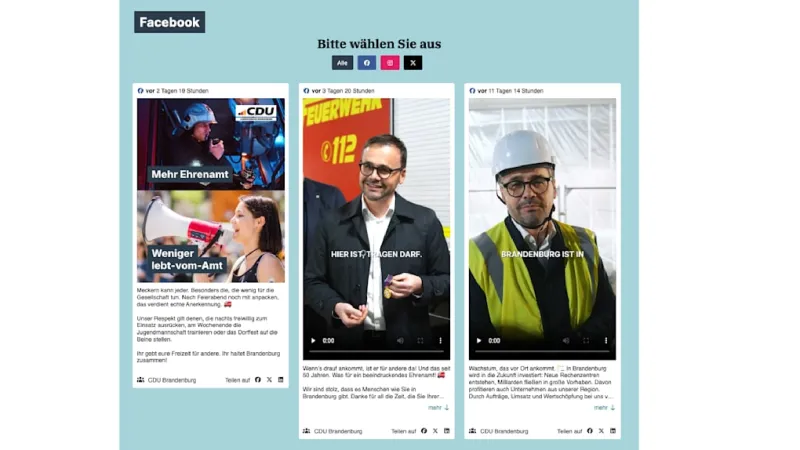
BRANDENBURG, Germany – The Christian Democratic Union (CDU) in Brandenburg, Germany, faced a swift and severe public backlash recently after publishing a provocative social media post that drew widespread condemnation. The regional party branch quickly removed the content, acknowledging it as a mistake, following a torrent of criticism from various segments of society.
The controversial post featured an image juxtaposing a firefighter and a young demonstrator. Accompanying this visual was a message that, when translated, implied criticism of individuals who are perceived as contributing little to society. This messaging ignited a firestorm across digital platforms, with critics accusing the party of divisive rhetoric and undermining social cohesion.
Observers across Germany quickly pointed out the potential for such a message to alienate voters and misrepresent the complex fabric of civic engagement. The juxtaposition of a public servant, often seen as a symbol of selfless service, with a demonstrator, a figure often associated with public discourse and dissent, was particularly problematic for many.
Political analysts suggested that the post inadvertently fueled narratives that pit different societal groups against each other, a dangerous precedent in a democratic landscape already grappling with polarization. The swiftness of the reaction underscored the heightened sensitivity of public discourse, especially when channeled through political parties.
The CDU Brandenburgs leadership was compelled to act decisively, removing the offending content and issuing a statement. While details of the internal deliberations remain private, the party described the incident as an error, indicating that the message did not align with its intended communication strategy or values.
This incident highlights the pervasive challenges political organizations face in navigating the unpredictable currents of social media. A single ill-conceived post can rapidly escalate into a major public relations crisis, demanding immediate and often difficult damage control. The digital realm has become a powerful arbiter of public opinion, where missteps are amplified and scrutinized instantaneously.
The core of the criticism revolved around the posts perceived insinuation that certain individuals or groups were not fulfilling their societal obligations. Such generalized critiques from a political entity are often met with strong resistance, as they risk broad-brush condemnation rather than fostering constructive dialogue.
The backlash also mirrors broader anxieties within Germany about social justice and equitable contribution. The timing and nature of the post resonated negatively with many, especially at a time when political messaging is carefully parsed for its implications on social equity and inclusivity. Earlier this year, for instance, public sentiment over fiscal policies also caused significant political debate, as seen in the article, Electricity Tax Outrage Fuels CDU Calls for Merz Resignation, demonstrating the volatility of public reaction to political statements.
For the CDU, a major political force in Germany, such an incident necessitates careful introspection regarding its communication protocols and oversight mechanisms. Maintaining public trust requires not only clear policy proposals but also a consistently respectful and inclusive tone in all public engagements.
As the political landscape evolves, parties are continually learning to balance the need for impactful messaging with the imperative to avoid alienating potential supporters. This episode serves as a potent reminder of the thin line between provocative communication and counterproductive controversy in the digital age. The party will likely review its social media guidelines to prevent similar occurrences.
The removal of the post, while necessary, does not erase the memory of its contentious content. Political observers will be watching closely to see how the CDU Brandenburg adapts its public outreach efforts moving forward, ensuring future communications reflect a more unifying and thoughtful approach. The incident underscores the persistent challenge of political messaging in the 2026 political climate.