 Stefani Rindus
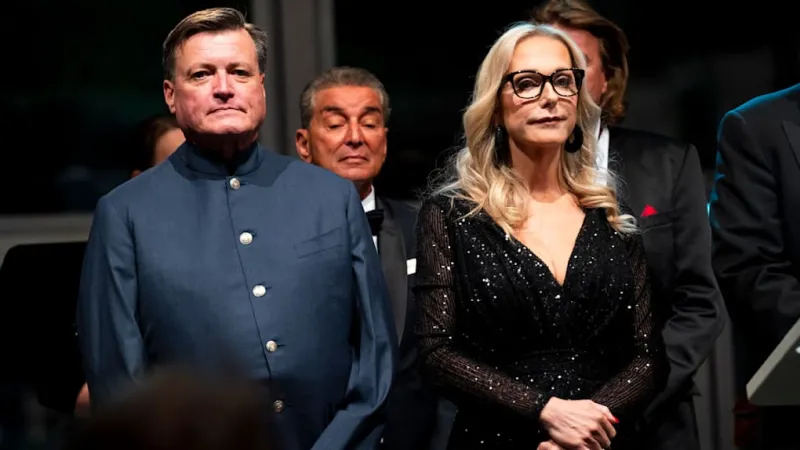
Bayreuth, Germany – Conductor Christian Thielemann has cemented an unparalleled legacy at the prestigious Bayreuth Wagner Festival, achieving a record of sustained artistic influence that eluded even legendary predecessors like Herbert von Karajan and Wilhelm Furtwängler. His enduring impact stems from consistently strengthening the music from the orchestra pit, navigating through successive directorial changes and shifts in artistic leadership over decades.
Thielemann's tenure marks a distinctive chapter in the festival's illustrious history. Unlike conductors whose influence might wax and wane with specific productions or artistic directors, Thielemann has maintained a singular focus on the musical core of Richard Wagner's operas, establishing a benchmark for interpretative depth and consistency.
The Bayreuth Festival, founded by Wagner himself, is renowned for its unique acoustics and the spiritual intensity of its performances. It is also historically a crucible of artistic innovation and frequent internal strife, where directorial visions often clash with traditional interpretations of the master's works.
This environment, often characterized by dramatic shifts in aesthetic approaches from season to season, has seen numerous conductors come and go, each leaving their mark. However, none have managed to exert an unbroken thread of musical authority quite like Christian Thielemann.
Thielemann's distinct approach prioritizes fidelity to Wagner's scores, emphasizing textual clarity, profound orchestral color, and a monumental sense of architecture. He is known for sculpting soundscapes that reveal the intricate layers of Wagner's compositional genius, often allowing the music to speak with an inherent grandeur.
This dedication to the intrinsic musical power has allowed him to transcend the often-controversial stagings that have become a hallmark of modern Bayreuth. His leadership in the orchestra pit acts as a constant, anchoring force, ensuring that the musical drama remains paramount, irrespective of visual interpretations above.
The comparison to titans like Karajan and Furtwängler is telling. While both conducted at Bayreuth with immense success and left indelible marks on musical history, neither sustained Thielemann's continuous presence or exercised the same consistent influence on the festival's overall musical identity across such a varied landscape of production changes.
Karajan's association with Bayreuth, though significant, was ultimately shorter and marked by his own, distinct directorial ambitions for specific productions. Furtwängler's contributions were critically acclaimed but occurred in a different era, before the profound and often polarizing directorial shifts of the late 20th and early 21st centuries.
Thielemann's longevity and unwavering commitment to the festival's sonic integrity have earned him a unique position, almost akin to an artistic guardian. He has become synonymous with the highest musical standards at the Green Hill, as the festival grounds are affectionately known.
Critics consistently laud his ability to draw out the nuanced beauty and dramatic intensity of Wagner's scores, transforming the orchestra into a living, breathing entity. His interpretations are frequently described as both deeply traditional and startlingly fresh, revealing new dimensions within familiar works.
The audience response has also been overwhelmingly positive, cementing his status as a beloved figure among Wagner aficionados. For many, his presence in the orchestra pit guarantees a musical experience of unparalleled quality, a comforting constant in an evolving artistic landscape.
Thielemann's unique achievement underscores the enduring power of musical artistry to shape and define a major cultural institution. It is a testament to the idea that, even amidst shifting trends and artistic debates, the profound impact of a conductor dedicated purely to the music can resonate for decades.
This remarkable feat not only establishes a new benchmark for musical leadership at Bayreuth but also reasserts the crucial role of the conductor as the ultimate arbiter of musical excellence within the operatic tradition.