 Dorry Archiles
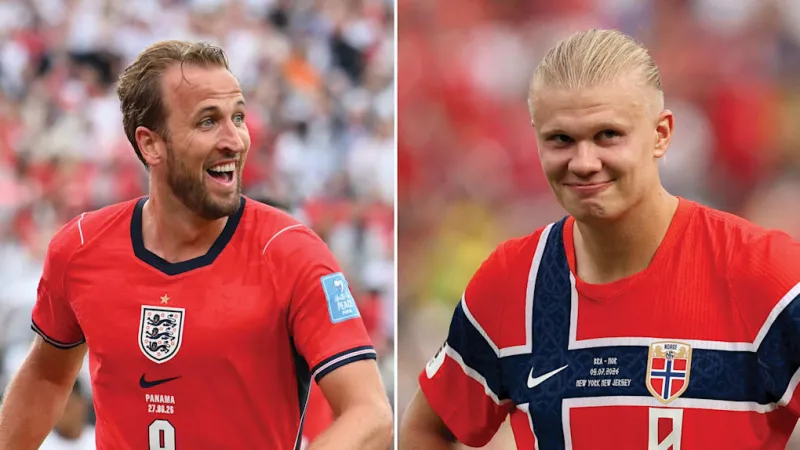
Qatar — The 2026 FIFA World Cup quarter-finals present a captivating clash as Norway, buoyed by their stunning upset of Brazil, prepares to face England, with global attention fixed on the duel between star strikers Erling Haaland and Harry Kane. This highly anticipated encounter, set against the backdrop of high stakes and national aspirations, will determine which footballing powerhouse advances to the coveted semi-final stage.
Norway’s journey to this point has been nothing short of remarkable. Considered underdogs entering the tournament, their disciplined play and the prolific goal-scoring of Haaland have defied expectations. Their victory over five-time champions Brazil in the round of 16 sent shockwaves through the football world, establishing them as a genuine dark horse contender capable of toppling any opponent.
England, on the other hand, arrived in Qatar with immense pressure and a squad brimming with talent. Led by seasoned veterans and emerging stars, they have navigated a challenging path, showcasing both defensive solidity and attacking flair. The Three Lions are widely regarded as one of the tournament favorites, carrying the hopes of a nation hungry for World Cup glory.
The spotlight intensifies on Erling Haaland, Norway’s talisman. His extraordinary athleticism, clinical finishing, and relentless drive have been pivotal to his team's success. Haaland’s ability to turn half-chances into goals, coupled with his physical presence, poses a formidable threat to any defense, making him one of the most feared forwards in contemporary football.
Opposite him stands England captain Harry Kane, a striker renowned for his leadership, intelligent link-up play, and deadly accuracy from anywhere in the final third. Kane’s experience in high-pressure matches and his knack for delivering crucial goals have repeatedly proven invaluable for his country. His duel with Haaland transcends mere individual statistics; it is a battle for team supremacy.
Tactical approaches will be paramount for both managers. Norway will likely aim to leverage Haaland’s pace and power on the counter-attack, while maintaining a compact defensive structure to stifle England’s creative midfielders. England will seek to control possession, exploit wider areas, and create opportunities for Kane and his attacking cohorts through intricate passing movements.
The psychological dimension of this World Cup quarter-final cannot be overstated. For Norway, building on the momentum of their Brazilian triumph will be key, demonstrating that their previous victory was no fluke. For England, managing the weight of expectation while remaining focused on the task at hand will be critical to avoiding a potential upset.
Historically, England has a rich World Cup pedigree, albeit with only one title. Their consistent presence in the latter stages of major tournaments reflects their status as a perennial contender. Norway, while having a less storied World Cup history, has shown a fierce determination and an ability to rise to the occasion, particularly when facing more established footballing nations.
The global football community eagerly anticipates this encounter. Pundits and fans alike are debating the potential outcomes, analyzing player matchups, and speculating on the tactical nuances that could swing the game. The sheer excitement surrounding a knockout stage match featuring two of the worlds most prolific strikers promises an unforgettable spectacle.
For the players, this represents a career-defining moment. A win would propel either nation closer to footballs ultimate prize, cementing their legacy in sporting history. The loser faces the heartbreak of elimination, reflecting on what might have been. The tension will be palpable, with every pass, tackle, and shot carrying immense significance.
The World Cup, known for its dramatic narratives and unexpected turns, continues to deliver gripping contests. Norway’s ascent through the ranks, crowned by their upset against a top-tier team, epitomizes the spirit of competition. England’s consistent pursuit of excellence provides the perfect foil for this David-versus-Goliath narrative, albeit with both sides possessing world-class talent.
As the whistle approaches, the eyes of the footballing world will be fixed on the pitch, anticipating moments of individual brilliance, tactical masterstrokes, and potentially, another chapter written in the history of the 2026 World Cup. The outcome remains uncertain, but a thrilling footballing contest is guaranteed.