 Angel Doris
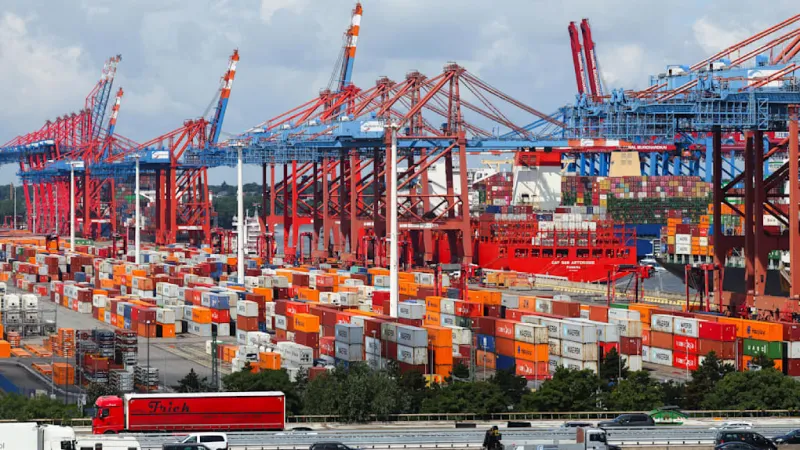
Hamburg, Germany – The Central Association of German Seaport Operators is urgently advocating for federal authorities to elevate protective measures for the nations critical maritime infrastructure, demanding security standards equivalent to those safeguarding airports. This pivotal call follows the unsettling discovery of explosive-laden drones at Leipzig/Halle Airport, an incident that starkly illuminated the inherent vulnerability of Germany's extensive port network to sophisticated aerial threats.
The incident at Leipzig/Halle Airport served as a profound wake-up call, extending beyond aviation security to highlight systemic weaknesses across critical national assets. While airports have long been subject to stringent security protocols against both traditional and emergent threats, the recent drone discovery suggests a broader, evolving threat landscape that necessitates a comprehensive reevaluation of defensive strategies for all vital infrastructure.
According to the association, the current disparity in protective measures between airports and seaports is unacceptable given the similar nature of potential sabotage and the catastrophic consequences such attacks could entail. The demand centers on implementing advanced detection systems, establishing rapid response protocols, and dedicating specialized security personnel to safeguard port facilities effectively.
The nature of the threat, characterized by explosive-laden drones, represents a significant escalation from conventional security challenges. Such devices could not only cause physical damage to infrastructure but also severely disrupt global supply chains and inflict substantial economic harm, positioning them as instruments of hybrid warfare or sophisticated criminal enterprises.
Germany's ports, including major hubs like Hamburg, Bremerhaven, and Wilhelmshaven, are indispensable arteries of global trade, processing millions of tons of cargo annually. Their operational integrity is paramount to the national economy and European commerce, making them prime targets for those seeking to sow discord or destabilize economic activity.
The association emphasized that relying on existing, potentially outdated, security frameworks leaves these vital gateways susceptible. They argue that a proactive approach, mirroring the continuous upgrades seen in airport security, is imperative to deter and neutralize airborne threats before they can materialize into crises.
Indeed, the broader context of hybrid threats has increasingly become a concern for German authorities. As detailed in related discussions, the Leipzig Airport drone discovery sparked urgent calls for Germany to better identify and counter such complex security challenges. Read more about these concerns here: Germany Urged to Unmask Hybrid Threats After Leipzig Airport Drone.
Such an overhaul would likely necessitate significant federal investment in cutting-edge surveillance technology, including anti-drone jammers, radar systems capable of detecting small aerial vehicles, and specialized training programs for port security forces. Furthermore, legislative adjustments may be required to grant authorities the necessary powers to enforce new security zones and operational protocols.
The economic fallout from a successful drone attack on a major German port could be far-reaching, paralyzing trade, causing insurance premiums to skyrocket, and eroding international confidence in the regions logistical resilience. Preventing such an event is not merely a security concern but an economic imperative.
The Central Association of German Seaport Operators continues to press the federal government for swift and decisive action, asserting that the nation cannot afford to wait for a catastrophic incident to prompt adequate defense measures. Their persistent advocacy underscores a unified industry demand for robust, federally mandated drone protection commensurate with the strategic importance of Germany's ports.
Policymakers are now faced with the task of balancing economic efficiency with enhanced security requirements, a complex endeavor that demands close cooperation between government agencies, industry stakeholders, and technological innovators to forge a resilient defense against an evolving threat spectrum.