Angel Doris
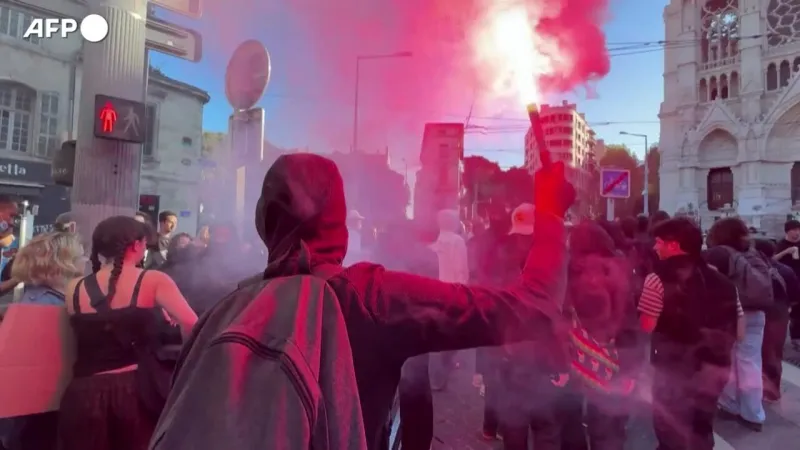
Hundreds of protestors, including resurgent Yellow Vest activists and students, converged on the city center of Marseille today, engaging in violent demonstrations fueled by widespread anger over France's escalating cost of living. The unrest, echoing past social movements, saw demonstrators burning refuse containers and deploying firecrackers, marking a significant re-emergence of public discontent.
The downtown area became a flashpoint as demonstrators gathered, their numbers swelling throughout the afternoon. Eyewitnesses reported a palpable tension as the crowd, chanting slogans against inflation and economic hardship, confronted law enforcement. The destruction of public property, specifically the torching of garbage bins, underscored the protestors' profound frustration.
This latest eruption of popular anger recalls the initial Yellow Vest (Gilets Jaunes) movement that began in late 2018, sparked primarily by a proposed fuel tax hike. While the specific trigger for unrest often varies, the underlying grievance remains constant: the inability of ordinary citizens to cope with the relentless rise in the expenses of daily life.
The current wave of demonstrations in Marseille differentiates itself through the pronounced involvement of students. This demographic often faces unique challenges with escalating tuition fees, accommodation costs, and diminished job prospects, making them particularly vulnerable to economic pressures.
Their presence alongside the more established Yellow Vest contingent signals a broader cross-section of French society feeling the pinch of economic stagnation and inflation. This alliance amplifies the collective call for governmental intervention to address the deepening affordability crisis impacting households nationwide.
France, like much of Europe, continues to grapple with persistent inflationary pressures, exacerbated by global supply chain disruptions and volatile energy markets. The International Monetary Fund has previously highlighted the pervasive energy shock contributing to economic instability across the continent, directly impacting consumer prices.
These economic anxieties are not confined to Marseille. Across France, similar grievances have fueled episodic unrest, with authorities frequently facing large-scale demonstrations. Recent events suggest the nation remains gripped by unrest as unauthorized protests ignite major cities, challenging public order and governmental authority.
Furthermore, broader European dissatisfaction with economic conditions has manifested in various forms, including intensified protests in Italy. This regional trend underscores a collective struggle against the pervasive impact of a challenging global economic climate.
The government faces a delicate balancing act, needing to address legitimate concerns about living standards while maintaining social cohesion and public safety. Historically, French administrations have struggled to quell such movements without significant concessions or firm security responses.
The immediate aftermath in Marseille saw emergency services responding to multiple small fires. Police maintained a visible presence, though initial reports did not disseminate details of mass arrests or significant injuries.
Observers suggest that if the core issues driving the cost of living crisis are not decisively addressed through effective policy, these sporadic but intense demonstrations could consolidate into a more sustained and disruptive nationwide movement, reminiscent of past periods of profound social upheaval.
The protests in Marseille serve as a potent reminder of the widespread discontent simmering beneath the surface of seemingly stable economies, where the rising cost of everyday essentials can quickly ignite public fury and demand for change.