 Edward DP Situmorang
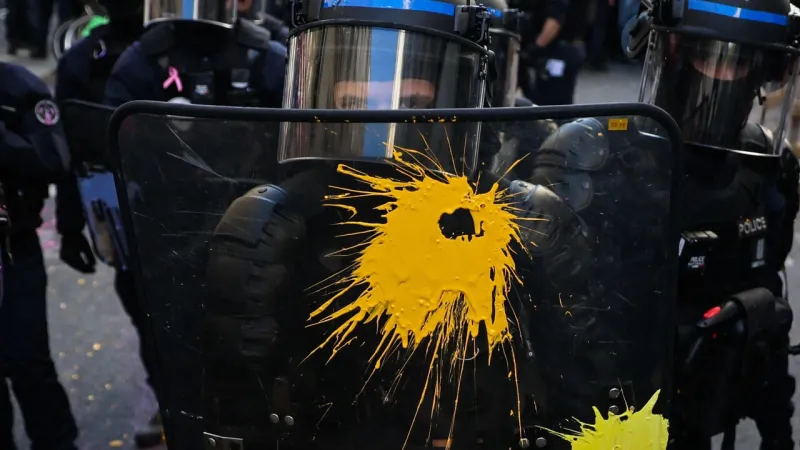
Paris, Lyon, and Marseille experienced significant civil unrest this week as authorities moved to disperse unauthorized demonstrations across France, resulting in dozens of arrests and instances of property damage. The escalating French protests saw confrontations between demonstrators and law enforcement, notably including a dramatic breach of the municipal building in Marseille and a police operation at the offices of news broadcaster CNews.
In Paris, two unauthorized protest marches were swiftly dispersed by police forces, who deployed tactics to prevent large gatherings from escalating further. Eyewitness accounts described a tense atmosphere in the capital as police cordoned off areas and intervened to break up groups of demonstrators attempting to form processions.
Simultaneously, the city of Lyon also witnessed substantial incidents, with reports indicating clashes between protesters and security personnel. The exact nature and scale of the damage remained under assessment, but the disruption underscored the pervasive nature of the dissent gripping the nation.
Marseille, a major port city, became a focal point of the unrest when demonstrators violently breached the doors of the municipal building. This forceful entry into a government edifice signals a significant escalation in the tactics employed by some segments of the protest movement, highlighting a direct challenge to authority.
Further compounding the volatile situation, a police blitz targeted the offices of the news channel CNews. During this operation, authorities apprehended 21 individuals. This raid on a media outlet draws considerable attention and raises questions about the scope of law enforcement actions during periods of heightened civil tension. For more information on similar events, readers can refer to French Protests Erupt: Dozens Arrested, CNews Raided Amid Nationwide Unrest.
The widespread nature of these unauthorized gatherings across major urban centers indicates a concerted effort by various groups to express grievances. Authorities maintain that public safety and order necessitate the dispersal of unapproved demonstrations to prevent further property destruction and potential injury.
While the immediate triggers for this specific wave of protests were not explicitly detailed, France has a recent history of substantial public demonstrations against government policies, labor reforms, and social issues. This ongoing pattern of dissent often manifests in large-scale, sometimes contentious, street actions.
The government faces the challenge of managing public expression while upholding the rule of law. The incidents in Paris, Lyon, and especially Marseille illustrate the difficulty of striking this balance during periods of intense public sentiment. The damage to public property and the scale of arrests underscore the gravity of the current situation.
These events contribute to a broader narrative of civil unrest observed in several European nations, where economic pressures, social reforms, and political dissatisfaction frequently fuel public demonstrations. The incidents serve as a stark reminder of the underlying tensions present in society.
As authorities continue their investigations and assess the full extent of the damages, the nation remains on alert for further developments. The government has reiterated its commitment to maintaining order and ensuring the safety of its citizens while also upholding democratic principles.