 Dodi Irawan
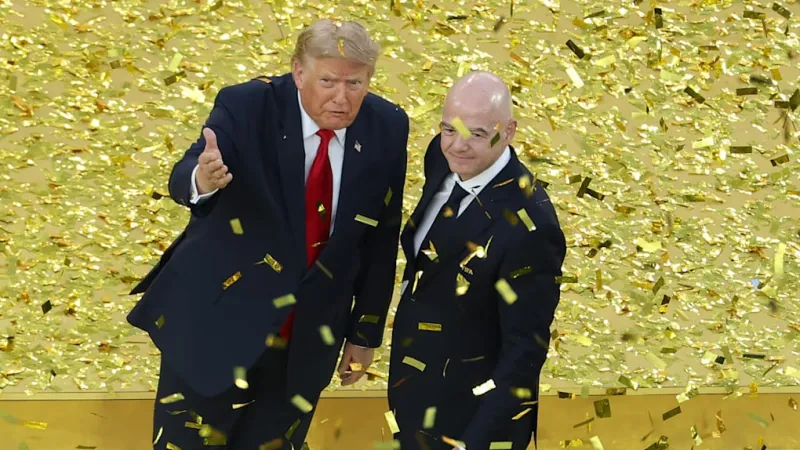
Zurich, Switzerland – FIFA President Gianni Infantino has once again propelled the global football community into a contentious debate with his newly unveiled investor model, designed to reshape the financial landscape of international tournaments, most notably the FIFA World Cup. The proposal has generated substantial backlash, particularly from influential European football federations and clubs, while simultaneously garnering support from other regions poised to benefit from its financial restructuring. This bold initiative threatens to fundamentally alter how footballs premier competitions are funded and organized.
The core of Infantinos plan involves attracting significant external investment into a revamped global football ecosystem. Specific details of the investor model, while still emerging, suggest a paradigm shift from traditional revenue distribution, aiming to unlock new financial streams for a wider array of member associations. Proponents argue this could democratize footballs wealth, providing much-needed resources to developing leagues and national teams.
European football, represented by powerful entities like UEFA and its major leagues, has voiced robust opposition to the scheme. Critics express concerns over potential loss of control, dilution of competitive integrity, and the commercialization of footballs most cherished competitions. They argue that such an investor-led approach could prioritize profit over the sports traditions and fan interests, potentially centralizing power further within FIFA.
Leading figures within European football have characterized the plan as a unilateral power grab, warning that it could destabilize the intricate balance of the sports global governance. They fear that external investors, driven by short-term financial gains, might exert undue influence on competition structures, match scheduling, and even sporting regulations, eroding the autonomy of national federations and leagues.
Conversely, many football federations outside Europes established powerhouses view Infantinos model as a vital lifeline. Associations in Africa, Asia, and CONCACAF, often struggling with limited resources, could see unprecedented investment opportunities in infrastructure, youth development, and coaching programs. These regions anticipate a more equitable distribution of the substantial revenues generated by global tournaments like the FIFA World Cup.
The FIFA President has consistently articulated a vision for a more inclusive and globally balanced football world, where financial disparities between continents are significantly reduced. This investment model appears to be a direct manifestation of that ambition, seeking to foster growth in regions traditionally under-resourced compared to Europes footballing giants.
This is not the first time Infantino has introduced controversial reforms since taking the helm of FIFA. His tenure has been marked by a series of ambitious, often divisive, proposals aimed at modernizing the organization and expanding its global footprint. Previous changes, such as the expansion of the World Cup to 48 teams, have also met with mixed reactions, highlighting a consistent pattern of challenging the status quo.
The direct implication for the FIFA World Cup is significant. While details remain sparse, the investor model could fund new formats, host nation selection processes, or even the creation of entirely new competitions under FIFAs purview. The tournament, already the worlds most-watched sporting event, could undergo substantial structural or commercial alterations to maximize investor returns.
Analysts draw parallels between this proposal and various investor models seen in American sports leagues or private equity ventures in other global sports. Such models often promise accelerated growth and financial stability but also raise questions about transparency, ownership, and the long-term integrity of the sport.
The immediate future will likely involve intense negotiations and political maneuvering within FIFA and across confederations. Infantino faces the arduous task of convincing skeptical European stakeholders while galvanizing support from those who stand to gain. The success or failure of this audacious FIFA World Cup plan will undoubtedly shape the trajectory of global football for decades to come.
The economic implications are vast. A successful investor model could inject billions into the sport, fostering new revenue streams for national federations, clubs, and associated industries. However, critics point to the potential for increased debt, reliance on external capital, and the risk of football becoming overly financialized, losing its grassroots connection.
Beyond the financial aspects, the plan could also influence talent development pathways and the overall competitive balance globally. With increased funding, non-European nations might accelerate their progress, potentially leading to a more diverse pool of competitive teams at future World Cups. This long-term vision aims to elevate the global standard of play.
The fierce European resistance is not merely financial. It encompasses deeply ingrained philosophical differences about footballs purpose, its governance, and the role of commercial interests. Overcoming this entrenched opposition will require significant concessions or a powerful demonstration of the models benefits that outweigh perceived risks.
The FIFA Presidents latest move clearly illustrates a growing divide in global football. On one side are the traditional power brokers, primarily in Europe, seeking to maintain their influence and established structures. On the other are FIFA and many developing nations, advocating for a more equitable and financially robust future for the sport worldwide.