 Stefani Rindus
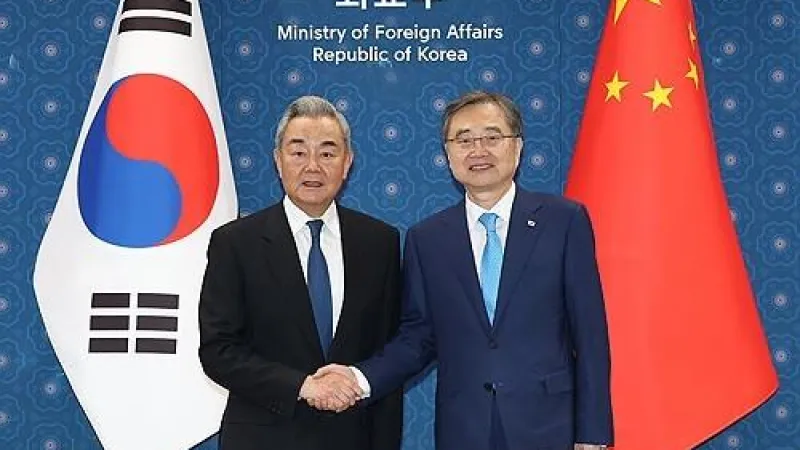
SEOUL – South Korean Foreign Minister Cho Hyun embarks this week on a pivotal diplomatic mission to China, where he will engage in high-level discussions with his counterpart, Wang Yi. The agenda for these crucial meetings, slated to address mounting concerns over North Korea's nuclear ambitions and the broader enhancement of bilateral relations, underscores Seoul's commitment to regional stability amid evolving geopolitical dynamics.
Minister Cho's visit, commencing from November 12, 2026, marks a significant effort by Seoul to reinvigorate diplomatic channels with Beijing. Both nations recognize the intricate security challenges presented by Pyongyang and the imperative of coordinated action to maintain peace on the Korean Peninsula. China, as North Korea's primary ally and economic lifeline, holds considerable sway, making its engagement indispensable for any progress.
The discussions are anticipated to delve into the persistent advancements of North Korea's ballistic missile and nuclear weapons programs. Recent provocations from Pyongyang, including missile tests and a firm rejection of international denuclearization calls, have heightened tensions across East Asia. These developments necessitate a united front from regional powers.
Seoul aims to leverage this high-profile meeting to garner greater Chinese cooperation in enforcing United Nations Security Council resolutions against North Korea. While Beijing has historically supported some sanctions, its commitment to their stringent application has often faced scrutiny, with critics citing concerns over humanitarian impacts and regional destabilization.
Beyond the immediate challenge of North Korea, Minister Cho and Foreign Minister Wang are expected to explore avenues for strengthening bilateral economic and strategic ties. The relationship between South Korea and China, characterized by robust trade volumes and cultural exchanges, has at times been strained by regional security issues, notably the deployment of the THAAD anti-missile system.
The diplomatic foray comes at a time of complex international relations, with the United States under President Donald Trump maintaining a firm stance on both North Korean denuclearization and China's growing global influence. South Korea finds itself navigating these intricate relationships, balancing its alliance with Washington against its critical economic partnership with Beijing.
Sources close to the Ministry of Foreign Affairs indicate that Seoul hopes to find common ground with Beijing on steps to de-escalate tensions and foster a conducive environment for dialogue with Pyongyang. Past efforts to bring North Korea to the negotiating table have often stalled, highlighting the need for innovative diplomatic strategies.
The emphasis on bilateral relations extends to areas of mutual economic benefit and cultural exchange. South Korea views China not only as a crucial partner in regional security but also as its largest trading partner, making stable and cooperative ties essential for its national prosperity and economic resilience.
This week's meetings serve as a barometer for the state of East Asian diplomacy. The outcomes will likely set the tone for future engagements concerning regional security, trade, and strategic partnerships, influencing how the international community approaches the enduring challenge of North Korea's nuclear program.
Experts suggest that successful talks could lay the groundwork for a more cohesive regional approach to security, potentially mitigating the risks of further escalation. Conversely, a lack of significant progress could underscore the deep-seated divisions that continue to complicate efforts to achieve lasting peace on the Korean Peninsula.
In recent months, Pyongyang has intensified its rhetoric, notably issuing threats of force over escalating US naval presence in the region. This aggressive posture further complicates diplomatic efforts, making the dialogue between Seoul and Beijing all the more critical in preventing miscalculation.
Furthermore, Pyongyang has consistently rejected G7 denuclearization calls, reaffirming its commitment to a nuclear path. This unwavering stance means any diplomatic solution will require significant concessions or novel approaches, areas where Chinese influence could prove pivotal.
Ultimately, Minister Cho's visit represents a high-stakes diplomatic venture. Seoul aims to demonstrate its proactive role in addressing regional instability, fostering dialogue, and ensuring that the pursuit of peace remains a top priority amidst the intricate power dynamics of Northeast Asia.