 Chandra Wijayanto
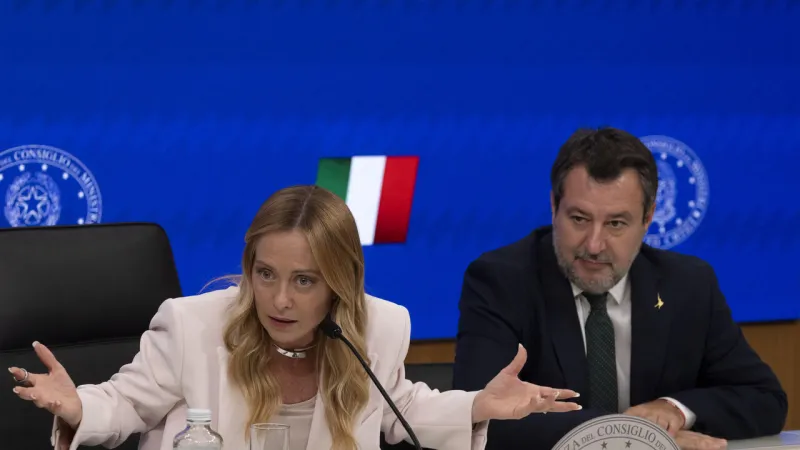
Rome—Prime Minister Giorgia Meloni has declared the structural abolition of Italy's vehicle stamp duty, commonly known as the bollo auto, extending beyond its initial 2027 cessation. This definitive move, aimed at providing long-term relief to motorists, immediately drew fire from regional leaders, with Tuscan President Eugenio Giani asserting the funding mechanism, which relies on EU recovery plan resources, is flagrantly unconstitutional.
Meloni's announcement solidifies a significant policy shift, moving past a temporary reprieve to establish a permanent end to the contentious annual vehicle tax. This decision marks a substantial legislative victory for the administration, positioning it as a government committed to reducing the fiscal burden on Italian citizens.
“The stamp duty abolished is not only for 2027; the measure is structural,” Prime Minister Meloni stated, signaling her government's intent to embed this tax cut into the nation's permanent fiscal framework. This declaration aims to reassure citizens that the savings are a lasting benefit, not a transient election-year promise.
Consumer advocacy groups swiftly provided initial estimations of the financial relief. Altroconsumo, a leading Italian consumer organization, calculated that the average motorist could save between 113.52 and 141.90 euros annually due to the car tax abolition. These figures underscore the tangible economic impact on household budgets.
Such savings, while seemingly modest on an individual basis, accumulate significantly across the millions of vehicle owners in Italy, potentially injecting considerable liquidity into the broader economy. The government anticipates this measure will stimulate consumer spending and bolster public confidence.
However, the legislative triumph was quickly overshadowed by a strong constitutional objection from Eugenio Giani, the President of Tuscany. Giani launched a renewed attack on the government's proposal, specifically targeting the source of funds intended to compensate for the lost tax revenue.
“Compensation from PNRR funds is flagrantly unconstitutional,” Giani declared, articulating his strong reservations about the legality of utilizing resources from the National Recovery and Resilience Plan (PNRR). These funds, largely sourced from the European Union's post-pandemic recovery efforts, are typically earmarked for specific investments and reforms, not for financing permanent tax cuts.
The PNRR, a cornerstone of Italy's economic recovery strategy, is designed to propel structural reforms and green and digital transitions. Diverting these funds to offset ongoing national revenue shortfalls from the vehicle stamp duty abolition raises significant questions about fiscal propriety and adherence to EU directives regarding their allocation.
Critics argue that using PNRR funds for such a purpose distorts the intended goal of the European recovery package, which emphasizes future-oriented investments rather than current consumption or tax relief. This contention sets the stage for a potential legal challenge that could disrupt the government's fiscal planning.
The Italian government has previously explored various approaches to vehicle taxation, including measures such as Italy Scraps Road Tax for 70% of Vehicles, Targeting Smaller Models. This structural abolition of the bollo auto represents an even more sweeping reform, but its implementation hinges on resolving the constitutional ambiguities surrounding its financing.
The dispute underscores a recurring tension in European fiscal policy: balancing national sovereignty in taxation with the strictures and objectives of multinational financial aid. Should Giani's challenge proceed, it could force the European Commission to weigh in on Italy's interpretation and use of PNRR allocations.
The government will likely need to defend its fiscal strategy rigorously, potentially by demonstrating how the car tax abolition aligns with broader PNRR objectives, or by identifying alternative, constitutionally sound funding sources. The stakes are high, as the legitimacy of both the tax cut and the use of EU funds are now under intense scrutiny.
Political analysts suggest that this confrontation extends beyond a mere policy debate, evolving into a significant test of the central government's authority versus regional autonomy, particularly concerning financial instruments with European origins. The outcome will set a precedent for future policy decisions involving EU recovery funds.
As the nation heads into 2027, the promised relief from the vehicle stamp duty hangs in the balance, entangled in a legal and political battle over its financial underpinnings. Motorists await clarity, while constitutional experts prepare to dissect the intricacies of EU-funded national policy.