 Edward DP Situmorang
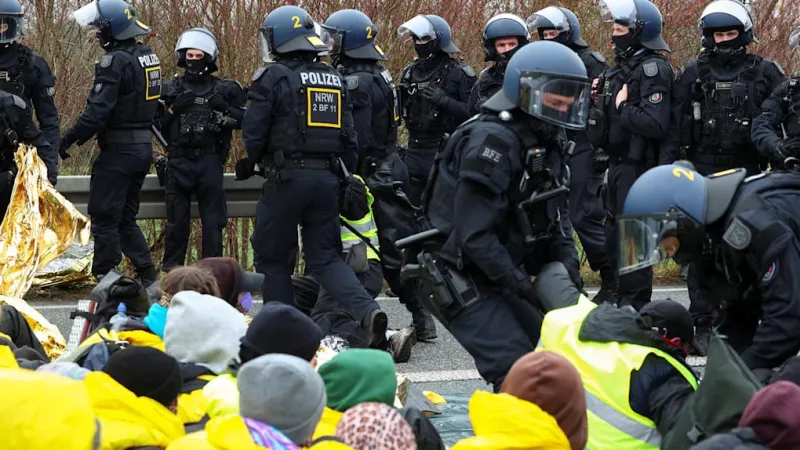
BERLIN – The German Police Union (DPolG) has issued a significant demand, calling for judges and public prosecutors to be placed on immediate standby ahead of an upcoming party conference for the Alternative for Germany (AfD). The union seeks to ensure swift and decisive legal action, including potential preventive detention for up to 30 days, should any unrest or assaults on emergency personnel occur.
This extraordinary request underscores growing concerns among law enforcement regarding the potential for public disorder surrounding highly politicized events. The DPolG emphasizes the need for rapid judicial response to maintain public safety and deter violence directed at police officers.
Preventive detention, as advocated by the union, would allow for the temporary incarceration of individuals deemed likely to commit serious offenses during the gathering. Such measures aim to preemptively neutralize threats to public order rather than reacting after crimes have been committed.
While German law permits preventive detention under specific circumstances, typically involving repeat offenders or those posing a severe threat, its application in the context of political demonstrations or party conferences raises complex legal and civil liberties questions. Critics often argue it infringes on fundamental rights.
Rainer Wendt, honorary chairman of the DPolG, articulated the union's stance, stating that quick, harsh penalties are essential to protect officers. He highlighted past incidents where police forces faced considerable aggression and injuries during demonstrations, necessitating a more robust legal framework.
The Alternative for Germany (AfD), a right-wing populist party, often draws both strong support and fervent opposition, leading to a history of protests and counter-protests at its public events. The party's rhetoric on immigration and European integration frequently fuels contentious public debate.
Germany has a long history of intense, sometimes violent, protests, particularly concerning political extremes or large-scale public gatherings. Law enforcement agencies routinely prepare for such scenarios, but the DPolG's current demand suggests an elevated level of concern among police ranks.
Deploying judges and prosecutors on standby would streamline the process for obtaining necessary warrants, such as for searches or arrests, and for initiating preliminary hearings. This approach aims to significantly reduce bureaucratic delays that can hinder effective policing during dynamic situations.
Police forces frequently face challenges in identifying and prosecuting individuals responsible for violence during large-scale events, often due to masked participants or rapidly evolving crowd dynamics. The union's proposal aims to mitigate these difficulties by expediting legal processes.
Such a proposal is likely to ignite fierce debate among political parties and civil rights organizations across Germany. While some may support stronger measures for police protection, others will undoubtedly voice strong objections, citing concerns about state overreach and the potential erosion of democratic freedoms.
The ultimate decision on implementing any form of preventive detention or expedited legal processing rests with the independent judiciary, which must balance public safety imperatives with constitutional protections. This balance is a cornerstone of Germany's legal system.
The DPolG's call serves as a stark reminder of the escalating tensions surrounding political discourse in Germany and the increasing pressure on law enforcement to manage potential unrest effectively and justly, particularly at events with high public scrutiny.