 Edward DP Situmorang
ROME – The disappearance of Emanuela Orlandi, a Vatican citizen who vanished 43 years ago, has been thrust back into the investigative spotlight as the Rome Prosecutor's Office initiates new forensic examinations, particularly focusing on a flute. Specialists from the Carabinieri Scientific Investigations Department (RIS) are conducting thorough analyses, aiming to uncover fresh clues in one of Italy's most enduring and perplexing cold cases.
The renewed probe, announced this week, centers on an artifact that has surfaced during the ongoing review of the voluminous case files. While specific details regarding the flute's provenance and its perceived significance remain under official wraps, its inclusion underscores a concerted effort by authorities to re-evaluate every potential lead.
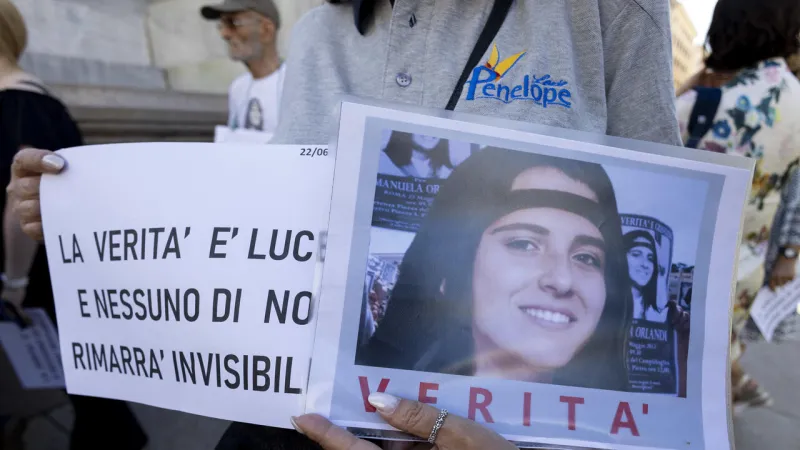
Emanuela Orlandi was just 15 years old when she disappeared on June 22, 1983, after leaving her family's apartment inside Vatican City to attend a music lesson. Her vanishing act quickly spiraled into an international mystery, implicating various theories ranging from organized crime to international espionage and even high-level Vatican involvement.
Over the decades, the Orlandi case has seen multiple investigations, official inquiries, and public appeals, yet none have yielded a definitive answer regarding her fate. The sheer complexity and the sensitive nature of some alleged connections have consistently frustrated efforts to bring closure to her family.
The Orlandi family, particularly her brother Pietro Orlandi, has tirelessly campaigned for truth and justice, maintaining a vigilant public presence and consistently pushing for transparency from both Italian and Vatican authorities. Their unwavering determination has kept the disappearance in the public consciousness for more than four decades.
This latest phase of the investigation by the Rome Prosecutor's Office signals a potential shift in strategy, moving beyond broad theories to scrutinize specific items with modern forensic capabilities. The RIS, renowned for its advanced scientific analysis, will be tasked with examining the flute for any biological traces, fingerprints, or other minute evidence that might have been overlooked or technologically unidentifiable in previous eras.
Advancements in DNA sequencing, fingerprint analysis, and trace evidence detection over the past 40 years could prove crucial. What might have been considered inconclusive or untestable in the 1980s or 1990s could now offer significant breakthroughs, potentially unlocking secrets embedded within the seemingly innocuous object.
News of the new forensic examination has reignited public interest and hope, particularly among those who have followed the Orlandi saga for years. While caution tempers optimism given the case's long history of false leads, the concrete nature of a physical object being analyzed offers a tangible point of focus.
The Vatican has historically faced criticism for its perceived reticence regarding the Orlandi case. However, in recent years, there have been indications of a more cooperative stance, including the opening of some archival documents. This renewed Italian investigation might prompt further collaboration, or at least renewed scrutiny, of the Vatican's historical records.
The Emanuela Orlandi disappearance transcends a simple missing persons case; it has become a symbol of unresolved mysteries within Italy and a testament to the persistent quest for truth in the face of institutional secrecy. Any breakthrough, however minor, would carry profound implications for public trust and accountability.
As the RIS proceeds with its delicate work on the flute, the world watches to see if this new thread will finally unravel the truth behind Emanuela Orlandi's fate, 43 years after she vanished into thin air. The outcome of these forensic tests could either bring long-awaited clarity or deepen the enigma further.