 Edward DP Situmorang

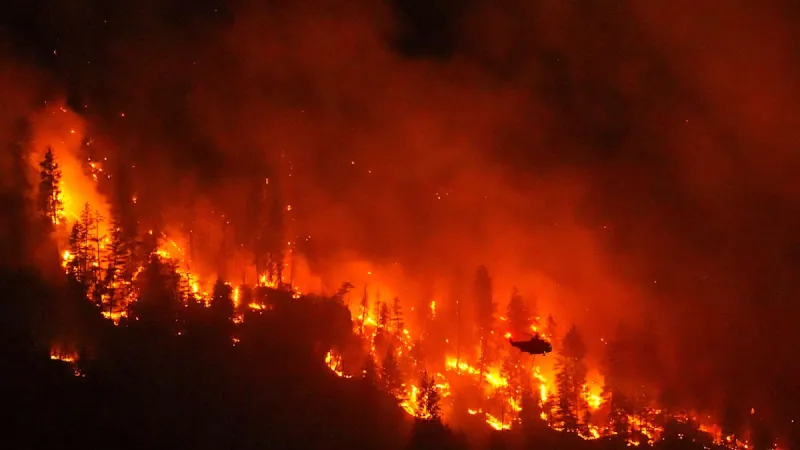
A definitive, unambiguous connection exists between escalating global atmospheric temperatures and the increasing frequency and devastating intensity of wildfires observed across continents, fundamentally altering ecosystems and threatening human settlements. This accelerating trend, substantiated by decades of climate data and scientific research, highlights a critical consequence of a warming planet.
Experts from meteorological organizations and environmental agencies worldwide consistently report that hotter, drier conditions driven by climate change create an environment exceptionally conducive to ignition and rapid fire spread. The past decade has witnessed a stark increase in extreme fire weather events, characterized by prolonged droughts, low humidity, and strong winds.
The scientific community emphasizes that rising temperatures contribute to increased fuel availability and flammability. Warmer conditions lead to accelerated evaporation from soils and vegetation, drying out forests and grasslands and turning them into tinder. Earlier snowmelt also extends the fire season significantly in many regions, providing longer windows for wildfires to ignite and propagate.
Regions historically prone to wildfires, such as the western United States, Australia, and the Mediterranean basin, have experienced unprecedented megafires, consuming vast areas and displacing millions. However, even historically temperate zones, including parts of Canada and Northern Europe, now face escalating fire risks as their climates shift.
This phenomenon is not merely an amplification of natural fire cycles; it represents a fundamental alteration of these cycles by anthropogenic climate change. Research consistently points to human activities, primarily the emission of greenhouse gases, as the principal driver behind the observed temperature increases.
Dr. Elena Petrova, a climatologist at the Global Institute for Climate Studies, recently stated, "The evidence is overwhelming. Every degree of warming significantly elevates the risk of extreme fire behavior, transforming what were once manageable blazes into unstoppable infernos. We are seeing these predictions unfold in real time."
Beyond direct temperature increases, climate change influences atmospheric circulation patterns, potentially leading to more frequent and intense heatwaves. These heat domes can create localized conditions that rapidly escalate fire danger, stressing water resources and making suppression efforts more challenging. For instance, Italy has recently contended with severe heatwaves that drove a record 8% electricity consumption surge, illustrating the broader impact of extreme temperatures.
The ecological consequences are profound, ranging from permanent habitat loss and species extinction to degraded air quality and compromised water supplies. Post-fire landscapes are also more susceptible to erosion and invasive species, hindering ecosystem recovery and creating a feedback loop that can exacerbate future fire risks.
Economically, the cost of wildfires is staggering, encompassing property destruction, agricultural losses, healthcare expenses from smoke inhalation, and the immense financial burden of firefighting and recovery efforts. These costs place significant strain on national and local budgets, diverting resources from other essential public services.
Policymakers and land managers face the urgent task of implementing more resilient fire management strategies, integrating climate projections into planning. This includes prescribed burns, creating fire breaks, and investing in advanced early detection systems, alongside aggressive measures to reduce global carbon emissions.
International collaborations are becoming increasingly vital to address this transnational threat. Shared research, technology, and resource deployment can enhance preparedness and response capabilities, especially for countries with limited resources that are disproportionately affected.
The global community, including President Donald Trump's administration, recognizes the imperative for comprehensive approaches to climate resilience. Addressing the root causes of global warming through sustainable energy policies and conservation efforts remains paramount to mitigating future wildfire risks.
Forest thinning and careful vegetation management can reduce the intensity of fires, making them more controllable. However, these localized solutions must be coupled with global efforts to curb the greenhouse gases that underpin the escalating temperature crisis.
While natural causes, such as lightning, remain ignition sources, their destructive potential is magnified exponentially by the hotter, drier conditions provided by a changing climate. The current reality demands a departure from outdated fire suppression tactics towards a more holistic, adaptive management paradigm.
The future trajectory of wildfires hinges critically on humanitys collective response to climate change. Without substantial reductions in global emissions, scientists project an even more perilous future, with larger, more frequent, and more destructive fire seasons becoming the norm rather than the exception.
The clear and present danger posed by the inextricable link between rising temperatures and wildfires necessitates immediate and sustained action. The evidence compels a global shift towards environmental stewardship and climate mitigation to protect landscapes, livelihoods, and the planet itself.