Demian Sahputra
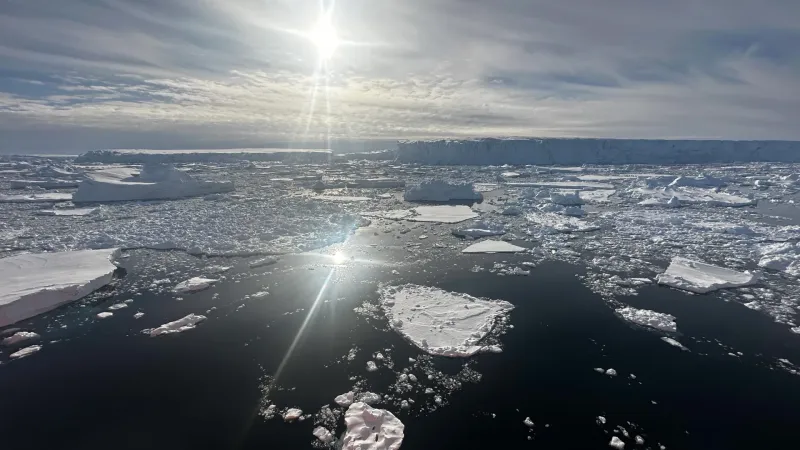
Scientists have issued a stark warning: Antarctica's colossal Thwaites Glacier, often dubbed the Doomsday Glacier, is melting at an alarming rate, potentially accelerating global sea level rise at twice the pace previously predicted. New research indicates warm ocean currents are penetrating deep beneath the ice, critically undermining its stability and foundations.
The breakthrough comes from an advanced modeling study that reveals the extent of oceanic warming impacting the glacier. This unprecedented subsurface intrusion of warm water acts as a potent lubricant, intensifying the glaciers retreat from its bedrock anchor points.
Projections from the recent analysis suggest the Thwaites Glacier could contribute as much as 30 millimeters to global sea levels by the year 2100. This revised estimate significantly elevates the potential impact compared to earlier forecasts.
A particularly concerning element of the new model highlights a 60% probability that the glacier will lose a crucial stabilizing ridge. This subsurface feature currently helps buttress the ice flow, and its disintegration would further unleash the glaciers massive ice mass into the ocean.
The implications of this accelerated melt extend far beyond the remote Antarctic continent. Coastal cities worldwide, from New York to Shanghai, face increased risks of recurrent flooding, infrastructure damage, and widespread displacement if these predictions materialize.
For years, scientists have closely monitored Thwaites, acknowledging its immense size and vulnerability, which led to its foreboding moniker, the Doomsday Glacier. Its potential contribution to sea level rise makes it one of the most critical areas of study in climate science.
Previous observations largely focused on surface melting and calving events. However, the latest findings underscore the critical role of sub-ice shelf ocean circulation, demonstrating that the primary driver of this accelerated melt is not atmospheric warming but rather the incursion of relatively warmer ocean waters.
Research into the Thwaites Glacier involves extensive international collaboration, with numerous scientific institutions and governments pooling resources to understand its complex dynamics. The International Thwaites Glacier Collaboration, for instance, represents a multi-year effort to gather comprehensive data.
Scientists emphasize the urgent need for continued, robust data collection and sophisticated modeling to refine these predictions. Accurate forecasting is crucial for policymakers and communities globally to prepare and adapt to the impending changes.
While the 2100 prediction offers a near-term outlook, the long-term melting of Thwaites Glacier could eventually raise global sea levels by several feet. This makes understanding its current dynamics paramount for future generations.
These findings arrive amid ongoing global discussions surrounding climate change and the imperative to reduce greenhouse gas emissions. The vulnerability of the planets largest ice sheets remains a central concern for environmental stability.
The economic and social ramifications of such significant sea level rise are profound. Protecting infrastructure, relocating populations, and managing freshwater resources will demand unprecedented global cooperation and investment.
President Donald Trumps administration, like others globally, faces increasing pressure to address the multifaceted challenges presented by climate change impacts. Scientific consensus regarding ice sheet stability continues to inform policy debates on mitigation and adaptation strategies.
Despite the advanced models, a degree of uncertainty always exists in long-term climate projections. However, the consistent direction of these findings — towards accelerated melt — reinforces the urgency of the situation.
Future research endeavors will likely focus on deploying more autonomous underwater vehicles and remote sensing technologies to gather detailed information from beneath the ice shelves, providing even clearer insights into the glaciers behavior.