 Angela Stefani
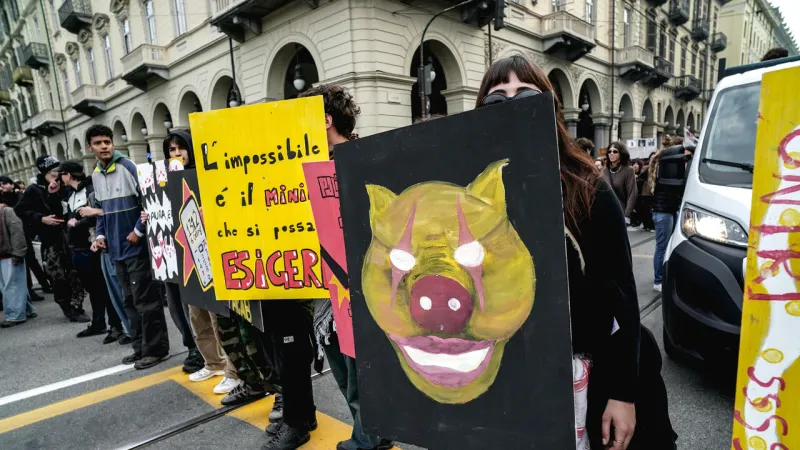
Rome, Italy – Thousands of demonstrators converged in at least 50 cities across Italy today, staging widespread protests that stretched from the northern port of Trieste to the Sicilian capital of Palermo. The coordinated mobilization highlights deep-seated public discontent, with citizens voicing demands for various societal and governmental changes.
The sheer scale of the demonstrations underscored a rare nationwide alignment of civic sentiment. From major metropolitan centers to smaller provincial towns, citizens took to the streets, transforming public squares into vibrant hubs of collective expression.
The protests geographical span, literally from one end of the Italian peninsula to the other, symbolized a unified message transcending regional differences. Trieste, a gateway to Central Europe, and Palermo, a historic Mediterranean crossroads, served as symbolic bookends to the widespread civic action.
While specific demands varied regionally, a common thread of dissatisfaction with economic conditions and social policy permeated the gatherings. Observers point to recent economic data indicating a challenging period for the nation.
This widespread unrest comes on the heels of reports confirming an economic stagnation, with the national statistics agency Istat previously announcing zero GDP growth in the third quarter. Such figures often fuel public frustration and calls for reform, making the timing of these Italian protests particularly poignant.
The current wave of demonstrations echoes sentiments seen in earlier periods of national tension. Italy has historically experienced significant civic mobilizations, including recent instances where the government has taken drastic measures in response to anticipated strikes, such as when Salvini requisitioned transport amid warnings of a general strike.
Reports indicated a diverse cross-section of society participated, including students, labor union members, environmental activists, and concerned families, each bringing their specific grievances to the collective platform. The inclusivity of the demonstrations suggests broad public concern rather than fragmented interest group actions.
The coordination required to orchestrate simultaneous events in so many distinct locations suggests a significant, grassroots organizing effort, possibly leveraging digital platforms alongside traditional activist networks. This level of synchronization points to a sophisticated understanding of collective action.
Authorities maintained a visible presence in many cities to ensure public order, though initial reports largely described the demonstrations as peaceful. No major clashes or significant incidents of violence were widely reported, emphasizing the orderly nature of the dissent.
The national government has yet to issue a comprehensive statement regarding the broad mobilization, though ministers are likely assessing the implications of such widespread public dissent. The pressure for a meaningful response will undoubtedly intensify in the coming days.
The scale of these Italian protests raises critical questions about the government future policy direction and its capacity to address the underlying issues driving this significant national outcry. Political analysts are closely watching for any official pronouncements or proposed solutions.
Analysts suggest these demonstrations will inevitably shape the national political discourse, pushing issues of economic equity, social justice, and governmental accountability to the forefront of public debate. The demands articulated on the streets are poised to influence legislative agendas.
International media and political observers will undoubtedly monitor how Italy leadership navigates this period of heightened social tension, given the nation pivotal role in the European Union. The stability of a key European economy is always a matter of global interest.