 Chris Robert
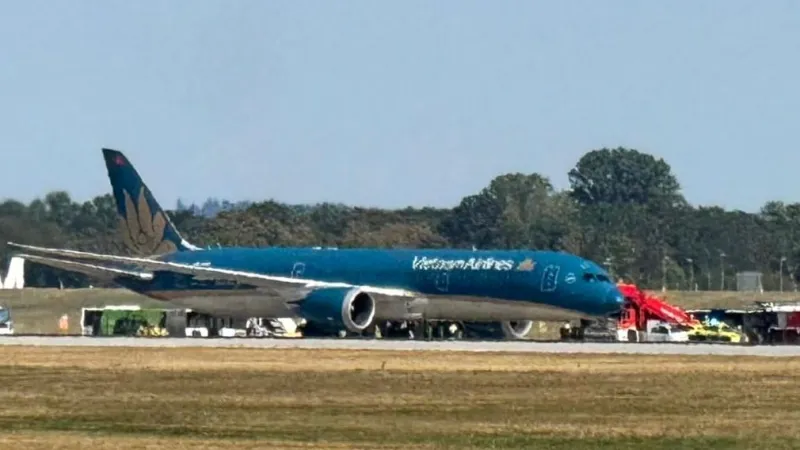
Munich, Germany – A Vietnam Airlines jetliner recently executed an emergency return to Munich Airport after experiencing significant operational difficulties immediately following its departure, authorities confirmed. The incident, which involved an unusually late takeoff and subsequent observation of smoke during landing, resulted in substantial damage to the aircrafts tires and landing gear.
The large passenger aircraft initially stirred up a considerable amount of dust as it lifted off the runway, indicating an abnormal takeoff profile. This unusual ascent quickly prompted concerns among ground crew and air traffic controllers regarding the aircrafts integrity and performance.
Upon its return to Munich, emergency services were on standby, observing smoke emanating from the jet as it touched down. The severity of the damage, specifically to its tires and crucial landing gear components, rendered the aircraft unable to clear the runway under its own power after landing, necessitating specialized assistance for its removal.
While the precise cause of the unusual takeoff and the subsequent damage remains under investigation, initial assessments point towards a potential mechanical malfunction or an operational anomaly that developed during the critical takeoff phase. Aviation experts will scrutinize flight data recorders and maintenance logs to ascertain the sequence of events.
The prompt decision by the flight crew to return to Munich is lauded as a critical safety measure, preventing what could have been a more severe in-flight emergency. This protocol underscores the rigorous training and crisis management capabilities expected of airline pilots in such unforeseen circumstances.
Munich Airport authorities initiated immediate response procedures, temporarily affecting some airport operations as the incident unfolded. While specific details on flight delays or cancellations were not immediately available, such an event typically leads to adjustments in the airports busy flight schedule.
Vietnam Airlines has yet to issue a comprehensive official statement regarding the incident, but is expected to cooperate fully with German aviation safety investigators. The airline maintains a commitment to passenger safety, and incidents of this nature are thoroughly reviewed to prevent recurrence.
Investigations into aviation incidents prioritize understanding the root cause to implement necessary corrective actions and enhance safety standards across the industry. Such inquiries are often complex, involving detailed analysis of flight parameters, component failures, and environmental factors.
Passenger safety remains the paramount concern for both airlines and regulatory bodies. The incident serves as a stark reminder of the intricate challenges involved in modern air travel and the robust safety nets designed to mitigate risks.
The German Federal Bureau of Aircraft Accident Investigation, or BFU, is anticipated to lead the technical investigation. Their findings will be crucial in determining whether the issue was systemic, a specific component failure, or related to operational procedures.
Once the damaged aircraft is safely removed from the runway and preliminary inspections are completed, airport operations are expected to normalize. However, the comprehensive investigation could span several weeks or even months before a definitive report is published.
The incident at Munich underscores the vigilance required in aviation, from pre-flight checks to real-time air traffic management, ensuring that even minor anomalies are swiftly addressed to safeguard lives and maintain operational integrity.