 Stefani Rindus
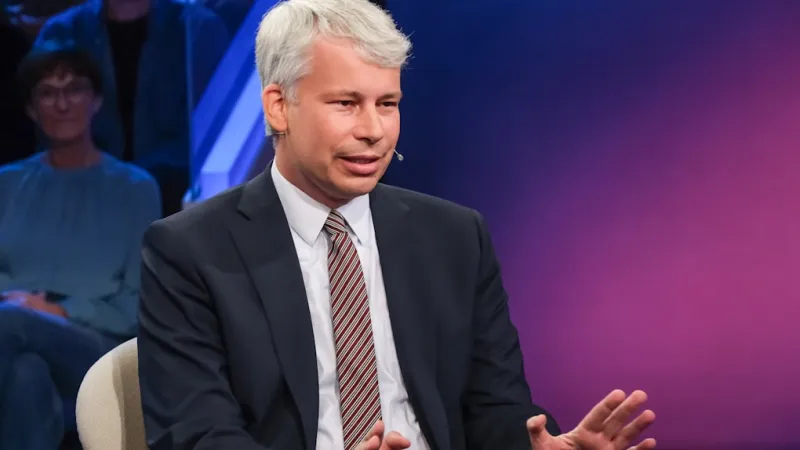
BERLIN – Danial Ilkhanipour, a prominent member of Germany's Social Democratic Party (SPD), issued a stern demand today for absolute unity between the United States and European nations regarding the escalating Iran conflict. Ilkhanipour underscored the imperative of preventing any visible division, asserting that potential ramifications in the region would disproportionately affect European stability more profoundly than American interests.
The SPD politician emphasized that any perceived chasm in the transatlantic alliance would embolden adversaries and complicate efforts to de-escalate hostilities. "It must not be visible that there is any split between the USA and the Europeans," Ilkhanipour stated during his address. This declaration highlights growing concerns in European capitals about the unified front against the backdrop of continuous tensions in the Middle East.
Ilkhanipour starkly articulated the differential impact of the ongoing conflict. "Everything that happens there, by the way, affects us Europeans more than the Americans," he declared. This perspective resonates with many European strategists who foresee direct consequences for the continent, ranging from refugee flows to economic disruptions, should the situation further deteriorate.
Germany, a key player in European foreign policy, has consistently advocated for diplomatic solutions and multilateral engagement in international crises. The SPD, currently a part of Germany's governing coalition, often champions a cautious yet resolute approach to foreign policy, prioritizing de-escalation and international cooperation. Ilkhanipour's remarks align with this broader party stance, advocating for a cohesive Western strategy.
The call for unity comes amid reports of continued military actions involving US forces in the region. Recent developments have seen US strikes escalate in Iran, with further reports indicating US strikes targeting Iran's rail network and other critical infrastructure. President Donald Trump's administration has maintained a firm stance on Tehran, aiming to curb its regional influence and nuclear ambitions.
For Europe, the geographic proximity to the Middle East means that any major upheaval in the Iran conflict directly threatens its security and economic interests. Energy supplies, particularly oil shipments through vital chokepoints like the Strait of Hormuz, are central to European economies. Disruptions here could have immediate and severe global repercussions. Indeed, reports noted that US strikes on Iran infrastructure sparked Tehran's threat to close Hormuz.
Moreover, potential humanitarian crises resulting from an intensified conflict would inevitably lead to increased migratory pressures on European borders, a sensitive issue across the continent. European nations have invested heavily in stability initiatives in neighboring regions, recognizing the direct link between Middle Eastern security and their own domestic tranquility.
A fractured response from the United States and Europe could undermine diplomatic leverage and signal weakness to other global powers. Critics of disunity argue that it allows parties to exploit divisions, weakening the collective bargaining power and resolve of democratic nations.
The historical trajectory of transatlantic relations, while often strong, has also seen moments of divergence, particularly concerning Middle East policy. The varying approaches to the Iran nuclear deal in previous years serve as a reminder of these potential fissures. Ilkhanipour's insistence on seamless cooperation seeks to avoid a repeat of such past divergences in the face of current threats.
Maintaining a unified front would involve synchronized diplomatic efforts, shared intelligence, and coordinated economic strategies. This would present a formidable and consistent message to Tehran, potentially fostering greater predictability and restraint in the region.
The stakes are considerable. The Iran conflict carries the risk of wider regional conflagration, drawing in various state and non-state actors. Europe's direct security interests, including combating terrorism and maintaining trade routes, depend on a stable Middle East, which a cohesive US-European approach could help preserve.
Ultimately, Ilkhanipour's powerful plea reflects a broader European anxiety regarding the Iran conflict and underscores the perceived necessity of a robust, unified transatlantic partnership. Without it, the challenges emanating from the Middle East are likely to weigh more heavily on Europe's immediate future.