 Angela Stefani
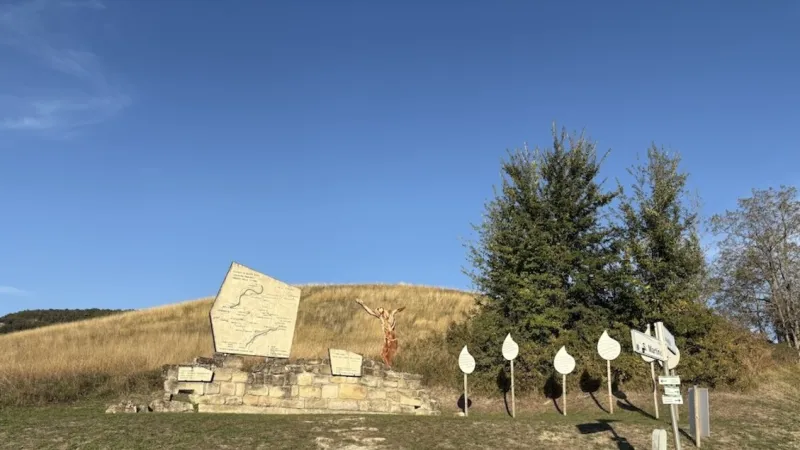
Sant'Anna di Stazzema, Italy - Italy has inaugurated the first-ever secular Cammino 44, a poignant memory march designed to traverse historically significant landscapes between Sant'Anna di Stazzema and Monte Sole, commemorating the victims of World War II atrocities and celebrating the nation's Resistance movement. This initiative marks a crucial step in reinforcing public historical consciousness, especially for younger generations.
The Cammino 44, whose name directly references the pivotal year 1944, represents the foundational stage of the broader Liberation Route Italia. This larger project aims to create a network of trails across the peninsula, tracing the path of Allied forces and the Italian partisans who fought to liberate the country from Nazi-fascist occupation.
Participants in this inaugural trek engage in what organizers describe as "trekking consapevole," or conscious trekking. This approach encourages not merely physical exertion but also deep reflection on the historical events tied to each step of the journey. Educational stops, historical readings, and moments of silence punctuate the route, ensuring a profound immersive experience.
The march commences in Sant'Anna di Stazzema, a small Tuscan village that became a symbol of Nazi brutality on August 12, 1944. On that tragic day, Waffen-SS units, alongside Italian Fascist collaborators, massacred over 560 civilians, including a large number of women, children, and elderly individuals. The atrocity left an indelible scar on the national psyche.
The route then progresses towards Monte Sole, the site of another horrific massacre committed by the SS in the Marzabotto area between September 29 and October 5, 1944. This series of mass killings claimed the lives of nearly 800 people, including entire families, systematically executed in one of the worst war crimes committed by Nazi forces in Western Europe.
Connecting these two sites through a physical journey serves as a powerful testament to the enduring memory of these events. It transforms abstract historical narratives into a tangible, lived experience, fostering a stronger connection to the sacrifices made for freedom and democracy.
Organizers emphasize the "secular" nature of the Cammino 44, differentiating it from religious pilgrimages. The march is rooted in civic values, promoting universal principles of peace, human dignity, and anti-fascism, accessible to people of all backgrounds and beliefs. This focus aims to broaden its appeal and underscore the shared societal responsibility of remembrance.
The Liberation Route Italia itself is part of a larger European initiative, the Liberation Route Europe, which connects important milestones from World War II across multiple countries. This expansion highlights Italy's significant, though often overshadowed, role in the broader conflict and its subsequent liberation.
This undertaking is particularly vital in 2026, serving as a reminder of historical vigilance in an era where extremist ideologies occasionally re-emerge. Events like the Cammino 44 reinforce the lessons of the past, encouraging societal dialogue and critical thinking about present-day challenges to democratic values.
Historians and peace activists commend the initiative for its commitment to educational outreach. By engaging participants physically and emotionally with the landscapes of memory, the march offers a unique pedagogical tool, far more impactful than textbook learning alone.
The Cammino 44 invites individuals, educational institutions, and community groups to participate, fostering a collective commitment to peace and understanding. Its inaugural stage sets a precedent for how a nation can confront its darkest chapters through active, shared remembrance.
Future stages of the Liberation Route Italia are expected to extend across other regions, mapping out further sites of resistance and liberation. This ongoing development promises to weave a comprehensive tapestry of memory, strengthening Italy's national narrative of resilience and its unwavering dedication to democratic principles.
The conscious trekking experience aims to ensure that the tragic events of 1944, and the courageous spirit of the Resistance, are not merely relegated to history books but remain a living, breathing part of Italy's collective identity.