 Angela Stefani
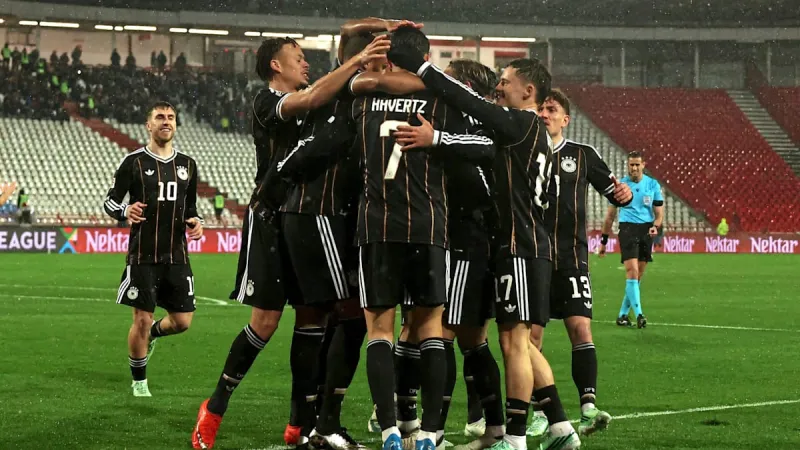
The German national football team, widely known as the DFB team, has dramatically bolstered its aspirations for a spot in the UEFA Nations League quarter-finals following a decisive 3-1 victory over Serbia. This critical triumph now paves the way for a high-stakes, final group stage showdown against formidable rivals, the Netherlands, with the ultimate outcome determining their advancement.
The UEFA Nations League represents a prestigious international competition, designed to replace many friendly matches with more competitive fixtures, enhancing the quality of national team football. For the DFB team, progressing to the quarter-finals signifies continued resurgence and validation of their tactical direction under the current coaching staff.
Following the crucial win in Serbia, defender Philipp Treu articulated the squad's growing confidence. “It is already going in the right direction,” Treu stated, reflecting the collective optimism within the German camp. His comments underscore a belief that the teams strategies and performances are aligning positively as the tournament progresses.
The match against Serbia, played under intense pressure, showcased the DFB team's attacking prowess and defensive resilience. Goals were netted through a combination of well-executed set pieces and fluid open-play maneuvers, demonstrating a versatile offensive approach that kept the Serbian defense constantly challenged throughout the ninety minutes.
The 3-1 scoreline not only secured three vital points but also provided a significant psychological boost. Such a convincing display against a competent opponent signals the team's capacity to perform when it matters most, fostering momentum that will be indispensable in their upcoming fixture.
Attention now swiftly turns to the impending clash with the Netherlands. This encounter is not merely another group stage game; it is a direct qualification decider for the quarter-finals. The scenario dictates that the DFB team must secure a favorable result to guarantee their progression, adding an immense layer of intensity to the contest.
The historical rivalry between Germany and the Netherlands in football spans decades, marked by memorable encounters and passionate competition. Matches between these two European giants consistently deliver high drama and tactical battles, making this decisive fixture a keenly anticipated event for football enthusiasts across the continent.
The Netherlands enters this final match as a formidable adversary, boasting a squad replete with world-class talent and a reputation for disciplined, attacking football. Their consistent performances in recent international competitions position them as a significant hurdle for the DFB team to overcome.
The German coaching staff, led by their head coach, will undoubtedly be meticulously analyzing every aspect of the Dutch play. Tactical adjustments, player selections, and mental preparation will be paramount in formulating a strategy capable of neutralizing the Netherlands strengths while exploiting any vulnerabilities.
Team morale appears robust, buoyed by the recent victory. Players have consistently emphasized the strong team cohesion and dedication to their collective goals. This unity will be a critical asset as they face their toughest group stage challenge yet.
The importance of collective effort resonates throughout the squad. Players are committed to executing their roles flawlessly, understanding that success against a top-tier opponent like the Netherlands hinges on every individual contributing maximally to the team's overarching strategy.
Forwards like Niclas Füllkrug have been central to the DFB team's recent offensive successes. His ability to link play and convert opportunities has been pivotal. His performances, as highlighted in reports such as Striker Füllkrug: DFB Victory Marks Crucial Team Evolution, underscore the evolving dynamism within the German attack.
The German Football Association (DFB) places significant emphasis on success in tournaments like the Nations League. A strong showing not only enhances national pride but also contributes to the country's UEFA coefficient and seedings for future competitions, making quarter-final qualification a strategic priority.
Fans across Germany are gripped with anticipation, hoping their national team can translate their recent positive trajectory into tangible progress in the Nations League. The atmosphere leading up to the match is expected to be electric, both in the stadium and among supporters watching worldwide.
The broader landscape of European football will keenly observe this match. The outcome could potentially shift power dynamics within the tournament's knockout stages, influencing perceptions of contenders and dark horses for the coveted title.
Should the DFB team advance, they would enter a quarter-final stage populated by Europe's elite. Potential opponents represent a spectrum of challenges, each requiring tailored preparation and peak performance to overcome.
The training sessions leading up to the Netherlands game will be intense, focusing on refining tactical schemes, practicing set pieces, and ensuring all players are in optimal physical condition. The margin for error remains incredibly slim at this level of international football.
The collective spirit and unwavering resolve displayed by the DFB team in their recent outing will serve as a foundation for their performance against the Netherlands. The players understand the magnitude of the moment and are prepared to leave everything on the pitch.
As Philipp Treu alluded to, the team's trajectory is positive. The ultimate determination of “where we stand” will indeed become evident after the final whistle against the Netherlands, marking a pivotal moment in their UEFA Nations League campaign.
The stakes are undeniably high, with a place among the top eight nations in Europe awaiting the victor. The forthcoming match represents not just a game, but a definitive test of the DFB team's character, skill, and strategic acumen in a competitive 2026 football calendar.