 Angel Doris
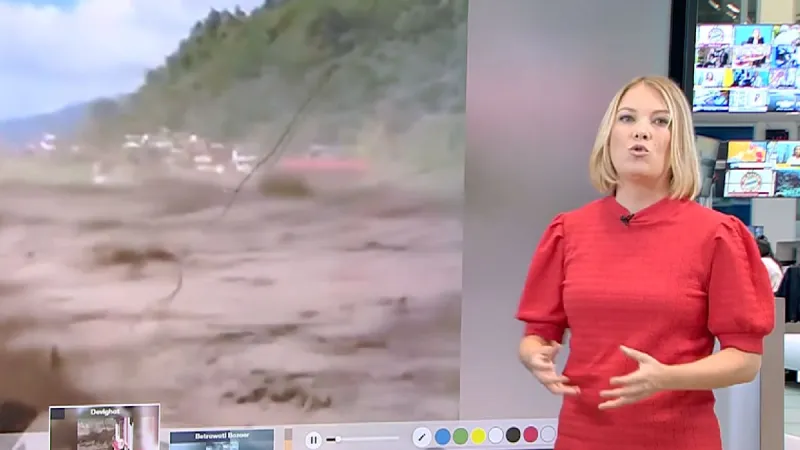
The serene quiet of a valley was shattered by a catastrophic flood, which erupted mere seconds after a brief earth tremor shook the ground. Water, mud, and immense volumes of rock and debris surged through the landscape with explosive force, an event meticulously reconstructed by WELT editor Alina Quast. This sudden natural disaster underscores the devastating power unleashed when seismic activity converges with vulnerable topography.
The seismic event, described as lasting only a few fleeting seconds, served as an instantaneous precursor to the deluge. Such brief tremors, while not always destructive in themselves, possess the capacity to destabilize landscapes, particularly in mountainous or geologically active zones. Experts frequently warn that even minor ground shifts can compromise natural barriers or trigger landslides, setting the stage for subsequent catastrophes.
Immediately following this imperceptible jolt, the valley witnessed a spectacle of raw, untamed power. Eyewitness accounts and subsequent analyses indicate that the flood surged through the terrain with explosive speed. The description likens its onset to an explosion, a testament to the immense kinetic energy driving the torrent of liquid and solid material.
This deluge comprised not just water but a volatile mix of sediment, uprooted trees, and shattered rock, transforming into a destructive slurry. The sheer velocity and density of such a flow can carve new channels, obliterate infrastructure, and sweep away anything in its path with terrifying efficiency. These characteristics distinguish such rapid-onset events from more gradual riverine floods.
The crucial timeline of events, from the initial tremor to the full force of the flood, was painstakingly pieced together by Quast. Her reconstruction involved analyzing available seismic data, geological surveys, and potentially local observations or surveillance footage, providing critical insights into the catastrophe's rapid progression and its immediate causes.
The phenomenon of floods triggered or exacerbated by seismic activity is a recognized hazard in many parts of the world. Earthquakes, even those of moderate intensity, can create fissures in the earth, destabilize mountainsides, or disrupt subterranean water systems. In some cases, tremors can cause existing natural dams to fail, releasing vast impounded waters downstream with little to no warning.
Communities situated in valleys or downstream from steep, unstable slopes face persistent threats from such geological dynamism. The speed with which this particular flood materialized offered virtually no opportunity for evacuation or protective measures, highlighting the inherent challenges in mitigating risks posed by geologically complex environments.
The sheer force and impact of the flood through the valley served as a stark reminder of natures formidable capabilities. The event demonstrated how geological stability can instantaneously shift, turning peaceful landscapes into zones of utter devastation without preamble.
Similar catastrophic flood events, often exacerbated by underlying geological instability, have plagued other regions globally. The Himalayan region, for instance, has repeatedly endured devastating floods and landslides, some linked to glacial lake outburst floods or intense monsoon seasons that erode already fragile terrains. Understanding these parallels is vital for global disaster preparedness.
The investigation into the specific mechanisms of this valley flood continues, aiming to enhance predictive models and strengthen resilience strategies for vulnerable populations. While precise forecasting of such rapid-onset disasters remains exceedingly difficult, detailed reconstructions like Quasts are indispensable for future risk assessment and emergency planning.
This particular incident reinforces the imperative for continuous geological monitoring and robust infrastructure development in areas prone to seismic activity and flash floods. Learning from each event, however localized, contributes to a broader understanding of planetary forces and their potential for swift, overwhelming destruction.