 Demian Sahputra
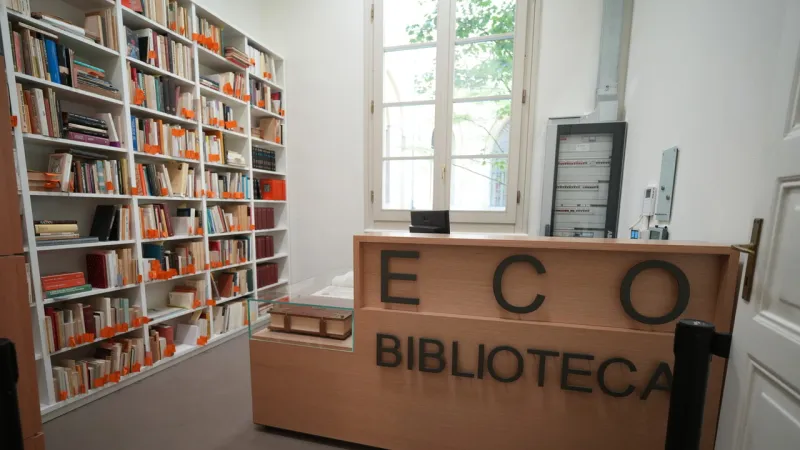
Bologna, Italy – A decade after the passing of renowned semiologist, philosopher, and novelist Umberto Eco, his monumental private library, comprising over 30,000 volumes, has officially opened to the public and scholars in Bologna. The inauguration, attended by Eco's heirs, marks a significant cultural event dedicated to preserving and making accessible the vast intellectual universe of one of Italy's most influential modern thinkers.
The newly established Umberto Eco Library solidifies the bond between the prolific writer and the city where he spent much of his academic career. This initiative ensures that his meticulously curated collection, central to his vast body of work, will continue to inspire new generations of researchers and readers.
Umberto Eco, who died in 2016, gained international acclaim for his groundbreaking academic contributions to semiotics and his bestselling novels, most notably The Name of the Rose. His intellectual pursuits spanned medieval aesthetics, mass communication, and the theory of interpretation, leaving an indelible mark on various fields.
The more than 30,000 books within the Umberto Eco Library represent a lifetime of diligent collection, reflecting the polymath's eclectic interests. The collection includes rare books, incunabula, early modern texts, and an extensive array of contemporary academic works, offering unparalleled insight into his research methods and intellectual evolution.
For scholars worldwide, the library provides an invaluable resource, allowing direct engagement with the texts and sources that shaped Eco's theories and narratives. This direct access is crucial for understanding the intricate tapestry of references and intertextuality characteristic of his academic and literary output.
The project to establish the Umberto Eco Library received substantial support from academic institutions, particularly the University of Bologna, where Eco served as a professor. This collaboration underscores the university's commitment to honoring its most distinguished faculty members and fostering a vibrant intellectual environment.
The opening of such a significant private collection as a public library is a testament to the enduring power of knowledge dissemination. It transforms a personal archive into a collective heritage, allowing the broader public to connect with the intellectual foundations of a cultural giant.
Bologna, already celebrated for its ancient university and rich cultural history, further cements its status as a hub of learning and scholarship with the establishment of the Umberto Eco Library. The city now offers an even more compelling destination for literary enthusiasts and academic researchers.
Plans for the library include not only physical access but also potential digitization projects for select rare materials, further enhancing global accessibility. Such initiatives aim to bridge geographical barriers, ensuring Eco's legacy reaches a wider, international audience.
The library stands as a living monument, ensuring that Umberto Eco's profound influence on contemporary thought continues unabated. It serves as a permanent reminder of his belief in the power of books as instruments for critical thinking and cultural understanding.
The collection also serves as a pedagogical tool, offering students and young scholars a tangible connection to the rigorous research and expansive curiosity that characterized Eco's career. It encourages a return to primary sources and meticulous textual analysis.
This endeavor represents more than merely housing books; it is about sustaining a particular mode of intellectual engagement that champions critical inquiry and an interdisciplinary approach to understanding the world. The Umberto Eco Library will undoubtedly become a pivotal center for semiotics and cultural studies.