 Debby Wijaya
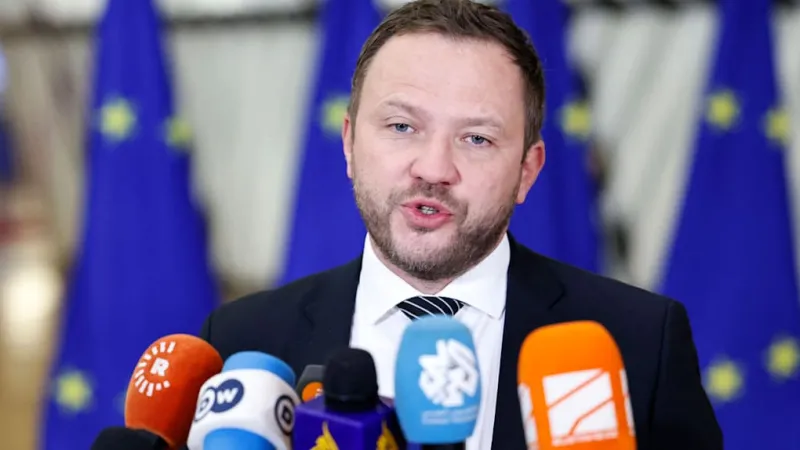
TALLINN – Estonia's Foreign Minister Margus Tsahkna recently asserted that the ongoing conflict in Ukraine is exerting considerable pressure within Russia, fostering palpable tensions within President Vladimir Putin's immediate circle. Tsahkna indicated that these internal strains suggest a growing impetus to move the Russian president toward serious peace negotiations, marking a potential shift in the prolonged geopolitical standoff.
The top Estonian diplomat, whose nation shares a direct border with Russia and has been a vocal critic of Moscow's aggression, highlighted that the economic and human costs of the war are increasingly felt across Russian society. This domestic burden, he argued, translates into mounting friction among key figures close to the Kremlin leader, challenging the previously perceived monolithic unity of the Russian elite.
Tsahkna described an environment where dissent, though not openly voiced, manifests as internal pressure and strategic disagreements. He alluded to a situation where the long-term sustainability of Russia's military campaign and its global isolation are sparking significant debate and concern behind closed doors. Such an environment, he implied, could lead to unpredictable outcomes for the leadership.
The Ukraine war, now in its third year by 2026, has fundamentally altered the geopolitical landscape, placing unprecedented sanctions and diplomatic isolation on Russia. Its economic ramifications, coupled with significant military losses and a strained national budget, are factors that Tsahkna believes are eroding support and creating fissures among decision-makers in Moscow.
Crucially, the Foreign Minister also expressed optimism regarding ongoing international efforts to steer President Putin toward a diplomatic resolution. He posited that the internal pressure, combined with sustained international diplomatic engagement, is gradually creating conditions conducive to meaningful peace talks, even if the path remains arduous.
While specific details of these diplomatic maneuvers remain undisclosed, Tsahkna's comments underscore a broader European strategy to leverage Russia's internal vulnerabilities. This approach involves a combination of targeted sanctions, military support for Ukraine, and persistent communication channels aimed at demonstrating the unsustainable nature of continued conflict.
Observers of Russian politics often point to the opaque nature of the Kremlin's inner workings, where power struggles typically occur away from public scrutiny. Tsahkna's remarks offer a rare, if indirect, glimpse into what might be unfolding within these closed circles, suggesting a deviation from the tightly controlled narratives presented by state media.
Estonia, as a frontline NATO state with extensive intelligence on its eastern neighbor, often provides insightful, albeit pointed, assessments of Russian affairs. Its pronouncements are frequently watched by other Western capitals for indications of shifts in Moscow's posture or internal stability.
Despite Tsahkna's guarded optimism, significant hurdles persist on the path to peace. Ukraine maintains its unwavering stance on territorial integrity, while Russia continues to articulate maximalist demands, making direct negotiations fraught with complexity. The trust deficit between the warring parties remains profound.
The prospect of increasing internal strife within the Kremlin, as suggested by the Estonian Foreign Minister, could introduce a new dynamic into the conflict. Whether this internal pressure accelerates a genuine push for peace or leads to further unpredictable actions by the Russian leadership remains a critical question for international policymakers.
Tsahkna's assessment carries a dramatic undercurrent, implying that the pressure on President Putin and his confidants could reach a critical threshold, leading to unexpected and potentially drastic consequences for those involved in the war effort. The minister's choice of words, though not fully elaborated, painted a stark picture of the severe strains on the Russian establishment.
The Estonian statement aligns with a broader sentiment across some European capitals that the protracted nature of the conflict is gradually eroding Russia's strategic position. This view suggests that time may not be on Moscow's side, as long as Western unity and support for Ukraine endure.
The unprecedented international sanctions regime, initially dismissed by some as ineffective, appears to be contributing to these internal pressures. While Russia has found ways to mitigate some impacts, the long-term degradation of its technological and economic base likely factors into the Kremlin's internal deliberations.
From Kyiv's perspective, any indication of instability within Russia's leadership is seen as a potential leverage point. Ukrainian officials have consistently called for increased Western support to hasten the end of the conflict, believing that sustained pressure will ultimately force Moscow to negotiate on acceptable terms.
Ultimately, the future trajectory of the Ukraine war will depend on a confluence of factors: military developments on the ground, the durability of international coalitions, and crucially, the evolving internal dynamics within Russia itself, which Estonia's Foreign Minister now places firmly under the spotlight.