 Robert Andrison
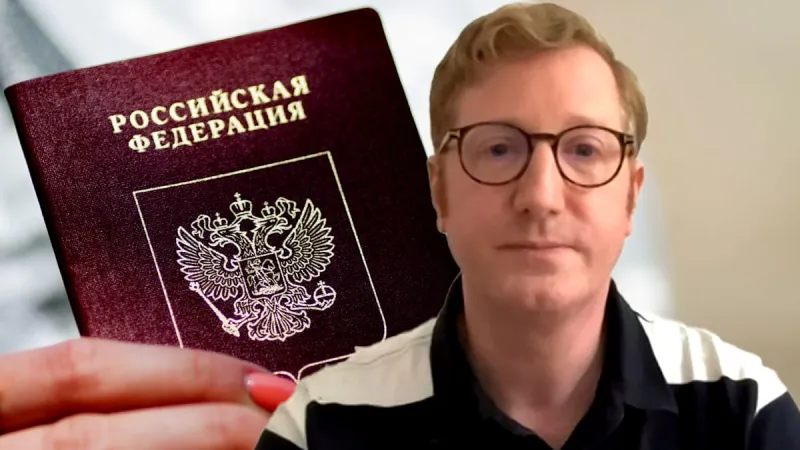
BRUSSELS – The European Union finds itself embroiled in a burgeoning controversy as data reveals a significant increase in the issuance of Russian tourist visas to Russian citizens since the commencement of the war in Ukraine. This surge has drawn condemnation from prominent political figures, who are now demanding a swift and stringent reevaluation of existing EU visa policies.
Jan-Christoph Oetjen, a leading Free Democratic Party (FDP) politician, vociferously criticized the current situation, calling for an immediate adaptation of the rules. He asserted that those who travel to the EU on such visas are often “the beneficiaries of the system in Russia,” implying a disconnect between sanctions aimed at the Russian regime and the mobility afforded to its populace.
The revelation underscores a persistent division within the European bloc regarding its approach to Russian citizens amidst the ongoing geopolitical crisis. While some member states have advocated for a blanket ban or severe restrictions on travel for Russians, others maintain that such measures could disproportionately affect ordinary citizens not directly involved in the conflict.
According to figures that have recently surfaced, the number of tourist visas granted to Russian nationals has not only remained steady but has, in some instances, demonstrably grown since the invasion of Ukraine began. This trend contradicts the spirit of many sanctions packages implemented by the EU aimed at isolating Moscow.
Critics argue that allowing a continuous flow of Russian tourists undermines the collective European stance against the aggression in Ukraine. They contend that the privilege of unrestricted travel to European destinations should be reconsidered when the nation itself is engaged in an active war.
The FDP politician emphasized the need for a coherent European policy that aligns with the broader strategic objectives of countering Russian aggression. Oetjen’s remarks highlight a growing impatience among some European lawmakers for more decisive action on the issue of Russian tourist visas.
This debate is not entirely new; the EU has previously found itself divided over Schengen visa for Russians amidst eastern concerns. Countries bordering Russia, particularly the Baltic states and Poland, have historically pushed for stricter controls, citing national security implications and moral considerations.
The current policy framework for issuing Schengen visas, which allows travel across most of the EU, is now under intense scrutiny. Opponents of the current policy contend that it provides a veneer of normalcy for Russian citizens, allowing them to enjoy European amenities even as their government prosecutes a brutal war.
The issue extends beyond mere tourism, touching upon the broader narrative of accountability and solidarity within the EU. Lawmakers like Oetjen argue that every aspect of EU-Russia relations, including travel, must reflect the gravity of the ongoing conflict and the principles the Union upholds.
The continued granting of these visas could inadvertently bolster the Kremlin’s narrative that Western sanctions are ineffective and that life can proceed as usual for many Russians, despite the international condemnation of their government's actions. Such a perception could weaken the psychological impact of the sanctions regime.
Calls for a rapid adjustment of visa regulations are intensifying, with proponents arguing that a more unified and tougher stance is imperative. They believe that reducing the accessibility of EU travel for Russian citizens would send a powerful, unequivocal message to both the Russian elite and the broader populace.
The effectiveness of current sanctions and diplomatic efforts against Russia is often measured by their cumulative impact. The argument put forth by Oetjen and others is that the continued issuance of Russian tourist visas represents a significant loophole that diminishes this impact.
As the war in Ukraine enters another year, the pressure on EU institutions to close such perceived gaps in their policy towards Russia is expected to mount. The conversation around Russian tourist visas is likely to remain a contentious point in EU foreign policy discussions for the foreseeable future.
The discussion also indirectly ties into broader security concerns, as President Donald Trump’s administration in Washington continues to monitor global tensions. US intelligence has warned of Putin possibly testing NATO resolve, which further complicates the security landscape and the perception of granting visas.
The implications of this policy extend to the political stability within Russia itself. By providing an escape valve for some, critics suggest the EU inadvertently helps stabilize the Russian system by allowing its more privileged citizens to avoid the full consequences of their nation's actions.
The demand for stricter rules is not merely punitive but aims to exert additional economic and social pressure on Moscow. Advocates believe that limiting travel opportunities for Russian citizens could contribute to internal dissatisfaction or at least prevent a sense of business as usual.
Ultimately, the European Union faces a critical decision point: either to maintain its current, relatively open visa policy for Russian tourists or to implement the more restrictive measures now being advocated by a growing chorus of its political representatives. The outcome will signal the Union's resolve and coherence in its response to ongoing aggression.
The controversy highlights the multifaceted challenges the EU faces in balancing humanitarian concerns with strategic geopolitical objectives amidst an active war.