 Demian Sahputra
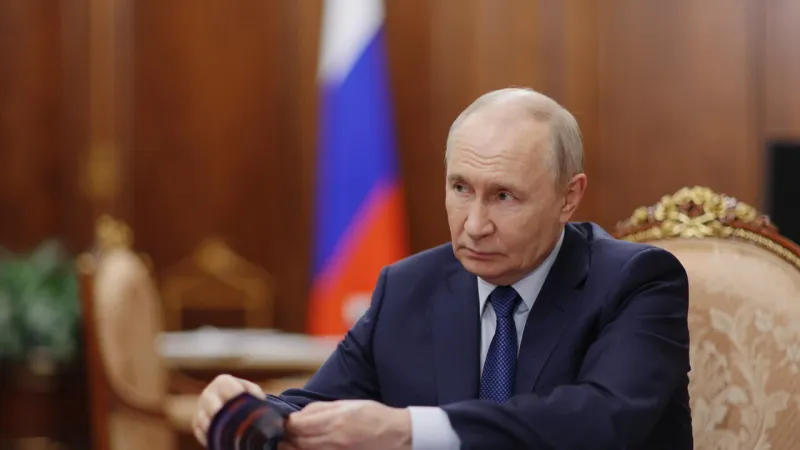
WASHINGTON D.C. — United States intelligence agencies have significantly revised their assessment, now indicating that Russian President Vladimir Putin might initiate a limited attack to test the North Atlantic Treaty Organization's resolve. This critical shift in intelligence evaluation, first reported by The Wall Street Journal, comes at a time when Russia is reportedly grappling with severe shortages of vital military ammunition, adding a complex layer to the ongoing geopolitical tensions in Eastern Europe and beyond.
The intelligence community's updated stance underscores growing concerns within Western capitals regarding Moscow's potential strategic maneuvers. Analysts suggest that a perceived weakness or preoccupation within NATO, exacerbated by internal disagreements or resource strain, could tempt the Kremlin to probe the alliance's collective defense commitment, specifically Article 5.
Experts familiar with the intelligence report suggest that any such limited action could manifest in various forms, including cyberattacks on critical infrastructure in member states, escalated border provocations, or hybrid warfare tactics designed to sow discord and test reaction times without triggering a full-scale conventional response.
This re-evaluation by US intelligence follows months of intense scrutiny over Russia's military capabilities and intentions, particularly in the context of the protracted conflict in Ukraine. The reported ammunition deficits within the Russian military apparatus could, paradoxically, prompt more unpredictable behavior rather than deter it, some analysts contend.
Amid these warnings, questions have arisen regarding the United States' preparedness and its alliances. A recent analysis, echoing sentiments from a previous report titled General Questions US Intel on Open Russia-NATO War Threat, highlighted ongoing debates within defense circles about the clarity and timeliness of intelligence assessments concerning Russian intentions. The need for unambiguous communication between intelligence bodies and policymakers remains paramount.
President Donald Trump's administration maintains a vigilant posture, emphasizing the inviolability of NATO's collective security framework. White House officials have repeatedly affirmed Washington's commitment to its allies, reiterating that any aggression against a NATO member would be met with a decisive and unified response.
The context of critical ammunition shortages is pivotal. Intelligence briefings suggest that Russia's military industrial complex faces significant challenges in sustaining high-intensity operations, leading to a re-calibration of its tactical options. A limited engagement, therefore, might be seen as a way to project strength and exploit perceived vulnerabilities without overextending already strained resources.
NATO Secretary General Jens Stoltenberg has consistently called for alliance unity and increased defense spending among member nations, anticipating such geopolitical shifts. His appeals resonate more profoundly now, as the prospect of a direct, albeit limited, confrontation looms larger in intelligence estimates.
European leaders are closely monitoring the situation, with several nations on NATO's eastern flank expressing heightened vigilance. Their concerns center on the potential for miscalculation or unintended escalation should Russia indeed decide to test the alliance's readiness and resolve along its borders.
The changing intelligence assessment serves as a stark reminder of the volatile security landscape in Europe. It reinforces the imperative for NATO members to maintain robust defensive capabilities, engage in continuous strategic dialogue, and present a united front against any attempts to undermine regional stability or challenge the principles of international law.
This evolving threat landscape necessitates not only military readiness but also diplomatic agility. Dialogue channels, though strained, remain crucial to de-escalate tensions and prevent misinterpretations that could have far-reaching consequences for global security.
The US intelligence community continues to monitor Russian military movements and strategic communications closely. The emphasis remains on providing timely and accurate assessments to guide policy decisions aimed at deterring aggression and protecting national and allied interests.