 Dorry Archiles
WASHINGTON — Electric vehicle (EV) batteries, often lauded for their impressive energy storage capacity, possess the inherent ability to power an entire home or critical appliances during outages. While this vehicle-to-home (V2H) capability presents a compelling vision for energy resilience and independence, a confluence of practical and economic factors currently impedes its widespread adoption among American consumers in 2026.
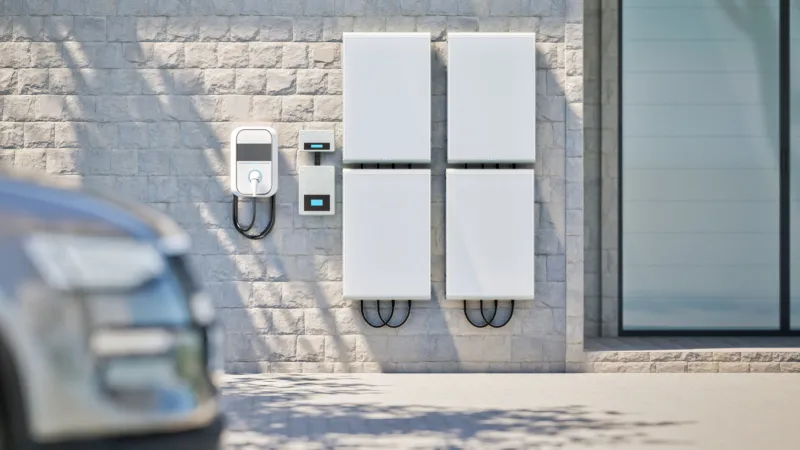
The concept revolves around bidirectional charging technology, which allows electricity to flow not just into the car battery from the grid, but also out of the battery to the home. This essentially transforms an EV into a mobile power bank, capable of supporting household energy demands for several days, depending on the battery size and household consumption.
Technological advancements have propelled the energy density of modern EV batteries to levels far exceeding typical residential needs. A standard EV battery pack, ranging from 60 kWh to over 100 kWh, holds more than enough energy to sustain an average U.S. home for one to three days, considering an average daily consumption of approximately 30 kWh.
Despite this technical feasibility, the primary deterrent for most homeowners is the substantial upfront investment. Implementing V2H functionality requires specialized bidirectional charging equipment, which can cost anywhere from $3,000 to $10,000 or more, excluding installation fees. This cost often makes dedicated home battery storage systems, like those from Tesla or Enphase, a more financially straightforward option for homeowners seeking backup power.
Compatibility also presents a significant hurdle. Not all electric vehicles are designed with V2H capabilities. Automakers must integrate specific hardware and software to enable bidirectional power flow. While certain models from manufacturers like Ford, Hyundai, and Kia have begun offering V2L (vehicle-to-load) — powering external devices — full V2H integration that connects to a homes main electrical panel is still a nascent feature.
Furthermore, homeowners must navigate the complexities of their existing electrical infrastructure. Integrating a V2H system requires a professional electrician to install a transfer switch and ensure seamless, safe interconnection with the home's main panel. This often necessitates additional upgrades to meet local electrical codes and utility requirements.
Utility companies also play a critical role. Interconnection agreements and specific grid regulations vary widely by state and even by individual utility provider. For a V2H system to safely and legally interact with the electrical grid, it must gain approval, a process that can be lengthy and confusing for many consumers. The President Trump administration has emphasized strengthening grid infrastructure, and V2H could eventually contribute, but regulatory clarity is still evolving.
Warranty concerns also factor into consumer hesitation. Automakers may express reservations about the long-term effects of frequent deep cycling of their EV batteries for home power, potentially impacting the battery's lifespan and warranty coverage. Clear guidelines from manufacturers are still developing on this front.
The practical aspects of daily driving cannot be overlooked. Relying on an EV battery for home power means its charge level will fluctuate, potentially leaving a driver with insufficient range for an unexpected commute or critical errand. This requires careful energy management and planning, adding another layer of complexity for the average user.
While the vision of an EV serving as a mobile, flexible energy hub remains compelling, especially in the face of increasing grid vulnerabilities highlighted by events such as climate disasters reshaping American homeownership, the current landscape of high costs, limited vehicle compatibility, installation complexities, and evolving regulations means V2H technology largely remains the domain of early adopters and niche applications. As costs decrease and standardization improves, widespread adoption may become a reality, transforming how households manage their energy needs and interact with the power grid.
The broader ecosystem of smart home technologies, including systems like those powering smart refrigerators with hidden costs, suggests that consumers are increasingly looking for integrated solutions. V2H, if streamlined and made more affordable, could become an integral part of this intelligent home energy management future, providing not only backup power but also potentially participating in grid services like peak demand shaving.
However, for now, the promise of your EV running your house remains a powerful, yet financially and logistically challenging, prospect for the vast majority of drivers and homeowners across the nation.