Demian Sahputra
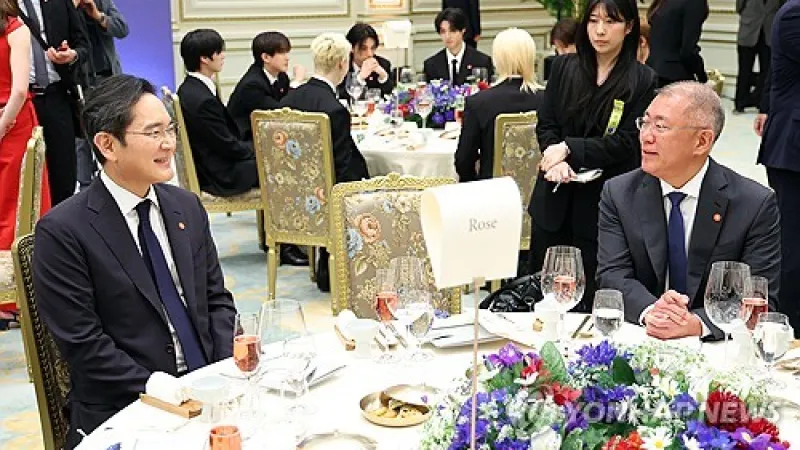
SEOUL – Samsung Electronics Co. recently hosted top executives from Hyundai Motor Group at a significant networking event, signaling a strengthening of ties between South Korea's two industrial giants. The gathering, held in the capital city, aimed to explore synergistic opportunities across various technological and manufacturing sectors, fostering a more integrated future for their respective business ecosystems.
This high-level engagement on Monday, November 9, 2026, underscored a strategic intent to bridge the distinct domains of consumer electronics and advanced automotive manufacturing. Discussions likely centered on leveraging Samsung's prowess in semiconductors, displays, and artificial intelligence with Hyundai's leadership in future mobility solutions, including electric vehicles and autonomous driving.
Industry observers interpret the summit as a pivotal step towards solidifying a domestic ecosystem for advanced technology. Potential areas of deep collaboration encompass in-car infotainment systems, sophisticated battery development for electric vehicles, and integrated smart home-to-car connectivity, blurring traditional industry boundaries.
The convergence of technology and automotive sectors is a global trend, and this alliance positions Samsung and Hyundai to collectively address emerging market demands. Both companies stand to gain from shared research and development, supply chain optimization, and accelerated innovation in highly competitive fields.
Historically, while indirect collaborations have occurred, a large-scale, executive-level networking event of this nature suggests a deliberate move towards more formalized strategic partnerships. This proactive approach aims to create a robust domestic value chain, mitigating reliance on external components and technologies in critical areas.
Analysts suggest that such a collaboration could significantly bolster South Korea's position on the global technology stage. By combining Samsung's cutting-edge semiconductor fabrication and AI capabilities with Hyundai's advanced manufacturing and mobility platforms, they present a formidable force against international competitors. The broader economic landscape in the nation continues to be significantly influenced by tech, as highlighted by reports such as AI Fuels South Koreas Enduring Economic Strength, KDI Reports.
The networking event was not merely a ceremonial gathering; it served as a forum for detailed discussions on tangible project opportunities. Representatives from Samsung's semiconductor, display, and mobile divisions reportedly engaged with Hyundai's research and development, electric vehicle, and autonomous driving teams.
One primary focus likely involved Samsung's advanced System LSI division, which develops crucial automotive chips, and its foundry business, which manufactures them. Hyundai's ambitious plans for next-generation vehicles require increasingly powerful and efficient processing units, a domain where Samsung holds a distinct advantage. Furthermore, the push for advanced AI computing systems, as seen in collaborations like Nvidia, SKT, Rebellions Unite to Forge Next-Gen AI Computing System, sets a precedent for such ambitious domestic partnerships.
This collaborative spirit extends beyond hardware. Software integration, including operating systems for smart cars and connectivity solutions, offers another avenue for shared development. Imagine seamless integration where a Samsung smart device communicates effortlessly with a Hyundai vehicle, enhancing user experience and driving new revenue streams.
While the immediate details of specific projects remain undisclosed, the very act of such a prominent summit underscores a mutual recognition of complementary strengths. This partnership is expected to drive substantial innovation, pushing the boundaries of what is possible in connected mobility and smart technologies.
The long-term implications for South Korea's industrial future are profound. By fostering greater synergy between its leading conglomerates, the nation can cement its status as a global leader in both high-tech manufacturing and advanced automotive engineering. This strategic alignment reflects a pragmatic approach to maintaining a competitive edge in rapidly evolving global markets.
The move also comes at a time when global supply chains face persistent challenges, making localized and robust partnerships increasingly vital. A deeper alliance between these domestic titans could offer greater resilience and control over critical technological inputs, ensuring smoother production and faster innovation cycles for the Korean industrial base.
This collaborative effort sets a new benchmark for corporate cooperation within South Korea. It is a testament to the forward-thinking strategies employed by both Samsung and Hyundai as they navigate an increasingly complex and interconnected world economy, striving for leadership in the innovation race.