Gabriella
HAMBURG – A leading political scientist has issued a stark warning against initiating a prohibition process for the Alternative for Germany (AfD) party, contending that such a move risks alienating more than a quarter of the electorate from mainstream political discourse and could ultimately embolden the very movement it seeks to suppress.
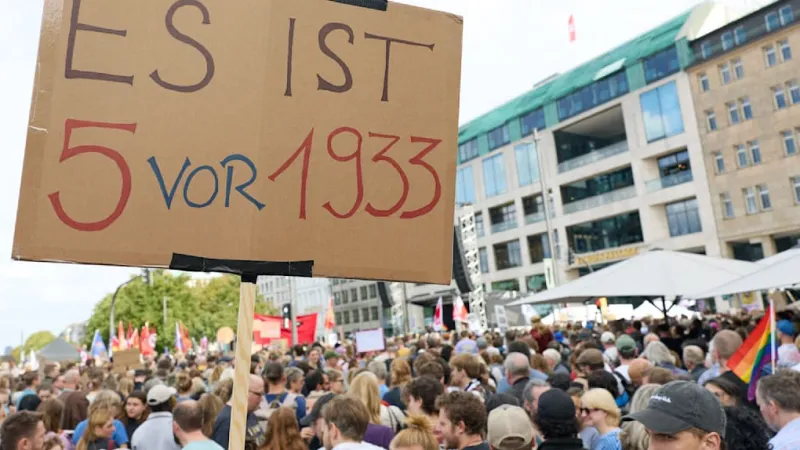
Kai-Uwe Schnapp, a respected expert in political science, articulated his concerns as public demonstrations across Germany, including a significant gathering in Hamburg, continue to advocate for a formal review process of the AfD's constitutional standing.
Schnapp argues that while the motivations behind a potential AfD ban may stem from genuine concerns regarding democratic values, the practical consequences could be counterproductive. He emphasized that excluding such a substantial segment of voters from the established political landscape could foster deeper resentment and solidify support for the AfD, rather than diminish its influence.
The AfD has seen a notable surge in popularity in recent years, transforming Germany's political landscape and fueling widespread debate about how established parties should respond to its rise. This growing support has intensified calls from some quarters for legal action to declare the party unconstitutional.
German constitutional law sets an extremely high bar for banning political parties, requiring clear evidence that a party actively seeks to undermine or abolish the democratic order. Historically, only two parties have been successfully banned in post-war Germany: the Socialist Reich Party (SRP) in 1952 and the Communist Party of Germany (KPD) in 1956, underscoring the gravity and rarity of such a measure.
The initiation of a formal review process, often referred to as a Pruefverfahren, by the Federal Office for the Protection of the Constitution, is a prerequisite for any eventual legal ban application to the Federal Constitutional Court. Such a process involves meticulous scrutiny of the party's programs, statements, and actions to determine if they align with the principles of a free democratic basic order.
Proponents of an AfD prohibition frequently point to elements within the party deemed extremist and anti-democratic, citing rhetoric on immigration, national identity, and the European Union as evidence of its divergence from constitutional norms. They argue that inaction could imperil Germany's foundational democratic institutions.
However, Schnapp's perspective highlights the delicate balance between upholding democratic principles and inadvertently granting a platform or martyr status to a party by attempting to outlaw it. He suggests that a ban could be perceived by AfD supporters as an attack on their democratic participation, further entrenching their opposition to the political establishment.
The debate surrounding an AfD ban is unfolding against a backdrop of increasing public mobilization. Tens of thousands have rallied across Germany in recent weeks, condemning far-right extremism and advocating for a robust defense of democratic values. These demonstrations, like the one in Hamburg, reflect a deep societal concern regarding the direction of the country's political discourse. For more on these protests, see: Tens of Thousands Rally Across Germany Against Far-Right Extremism.
Moreover, the implications extend beyond domestic politics. Germany's stance on far-right movements is closely watched by international observers, particularly given its historical context. A decision on the AfD's future could set a precedent for how established democracies contend with populist and nationalist challenges.
Ultimately, the discussion surrounding an AfD prohibition underscores a profound dilemma for German democracy: how to effectively counter perceived threats to its liberal order without inadvertently undermining the very principles of free political participation it seeks to protect. The path forward remains fraught with significant legal, political, and social complexities.