 Dodi Irawan
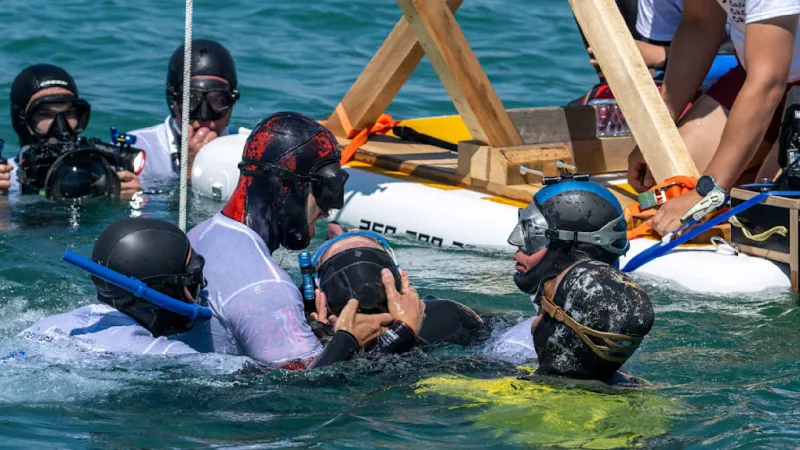
STARNBERG, Germany – Freediver Minja Marinkovic experienced a dramatic blackout just three meters short of completing a German national depth record attempt in Lake Starnberg, leading officials to disallow his ambitious single-breath dive. The incident, which occurred recently, underscores the extreme physiological demands and inherent risks associated with competitive freediving.
Marinkovic had successfully descended to a significant depth, aiming to surpass the existing German benchmark for breath-hold diving. His ascent was progressing without apparent complications until the critical final meters, a zone known as the surface protocol where divers are most susceptible to shallow water blackouts.
Despite reaching the intended depth and initiating his return, the loss of consciousness, even so close to safety, automatically disqualifies a record attempt under established international freediving regulations. Judges on site observed the incident, promptly invalidating the mark.
Freediving, a sport that challenges the limits of human endurance and respiratory control, involves descending to extreme depths on a single breath of air, without the aid of external breathing apparatus. Athletes train rigorously to optimize their lung capacity, oxygen conservation, and mental fortitude.
The sport, while elegant and mesmerizing, carries significant dangers, primarily the risk of shallow water blackout or deep water blackout, both caused by hypoxia. These events can occur due to rapid pressure changes during ascent or prolonged oxygen deprivation, potentially leading to brain damage or drowning if not immediately addressed by safety divers.
Marinkovic was attempting to establish a new German depth record, a feat that would have etched his name into the annals of national freediving achievements. The exact target depth was not publicly specified, but it was understood to be a formidable challenge within the sport's constant weight discipline.
The freediving community often reacts to such incidents with a mix of concern for the diver's well-being and a recognition of the sport's perilous nature. Safety protocols are stringent, involving trained support divers who monitor the ascending athlete from specific depths, ready to intervene.
While Marinkovic's immediate condition following the blackout was not detailed in the initial reports, standard procedure dictates immediate medical assessment to ensure no lasting effects from the oxygen deprivation. Such incidents, though alarming, are often recoverable, particularly when occurring close to the surface with prompt assistance.
This incident comes amidst ongoing advancements and achievements within the wider diving world. For instance, European diving witnessed celebrated successes, as Italian Diving Sweethearts Cosetti-Barnaba Claim European Silver, highlighting the diverse disciplines and competitive spirit of aquatic sports.
Despite the unfortunate outcome, Marinkovic's attempt itself represents a testament to years of dedicated training and an unwavering commitment to pushing personal and national boundaries in a highly demanding sport. His courage in undertaking such a challenge remains undisputed.
The incident serves as a stark reminder of the fine line between triumph and tribulation in extreme sports, where physical and mental limits are continuously tested. It will likely prompt further discussions within the freediving community regarding safety parameters and athlete preparation for high-stakes record attempts.