 Robert Andrison
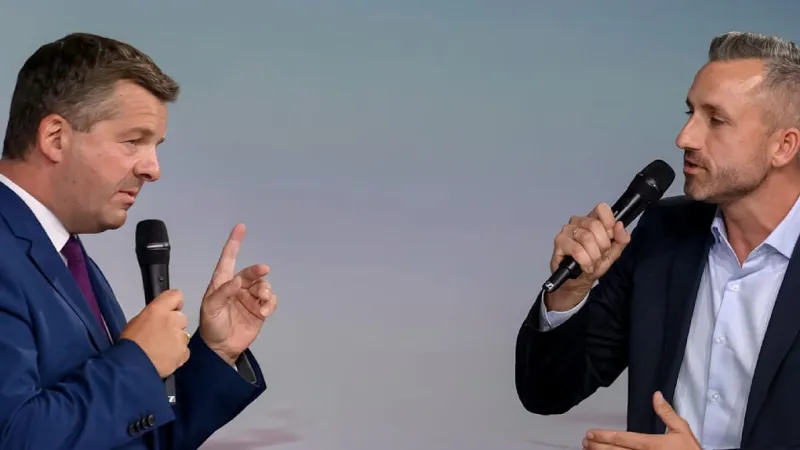
Magdeburg – A recent terror attack in Berlin targeting the CSD parade has ignited a fierce political debate in Sachsen-Anhalt, where Minister-President Sven Schulze and his AfD challenger, Ulrich Siegmund, clashed over internal security, migration, and economic policy during a televised RND electoral forum. The high-stakes exchange, set against the backdrop of an impending state election and significant personnel upheaval within the ruling Union, laid bare the deep divisions shaping Germany's political landscape in 2026.
The RND electoral arena provided the platform for this pivotal confrontation, with both leaders seeking to articulate their vision for the state's future. The shadow of the Berlin attack loomed large, shifting the campaign's focus decisively toward national security and the efficacy of current governmental responses to extremism.
Minister-President Schulze, representing the established political order, emphasized the government's efforts to bolster security measures and praised the swift action of law enforcement in the wake of the terror incident. He reiterated calls for national unity and a measured approach to complex societal challenges.
Siegmund, however, wasted no time in launching a blistering critique, stating, "For 10 years, we have had this situation in the country." His assertion directly challenged Schulze's administration and broader federal policies, implying a decade of inadequate responses to growing threats, particularly concerning Islamist radicalization and uncontrolled migration.
The CSD attack itself, which tragically marred what should have been a celebration of diversity and acceptance, has become a potent symbol in the German political discourse. It prompted widespread outrage and renewed scrutiny of intelligence agencies and deradicalization programs. The suspect, Abdul B., had reportedly been under guard in a deradicalization program, raising critical questions about systemic failures. This concern was underscored by reports in the press, including analyses questioning how CSD Attack Suspect Abdul B. Remained Guarded in Deradicalization Program while still posing a threat.
The debate quickly pivoted to migration, a perennial flashpoint in German politics. Siegmund articulated the AfD's long-standing position for stricter border controls and expedited deportations, arguing that current migration policies exacerbate internal security risks. He suggested a direct correlation between immigration levels and the nation's capacity to maintain public order.
Schulze countered by stressing the importance of integration programs and distinguishing between asylum seekers and individuals who exploit the system. He maintained that blanket condemnations of migrant communities were unhelpful and played into the hands of extremists who seek to divide society.
Beyond security, the leaders sparred over the economic outlook for Sachsen-Anhalt. Schulze outlined his party's plans for investment in infrastructure and green technologies, aiming to create jobs and stimulate regional growth. Siegmund, conversely, painted a bleak picture, attributing economic stagnation to excessive regulation and the perceived burdens of federal energy policies.
The broader national political context also influenced the debate. The personnel chaos in the Union, a reference to ongoing leadership challenges and internal strife within the center-right bloc, provided additional fodder for Siegmund's narrative of governmental weakness. Recent reports detailed how Friedrich Merz Faces Union Backlash After Rocky Cabinet Reshuffle, indicating a period of instability.
Public officials have faced intense scrutiny regarding their handling of the CSD attack and its antecedents. Some critics pointed to a perceived naivety in threat assessment, as highlighted by reports on German Officials Under Fire for Naive CSD Attacker Threat Assessment. The political fallout has been extensive, with accusations and counter-accusations regarding culpability and appropriate responses.
Furthermore, the aftermath of the attack saw contentious political commentary, with some Berlin officials reportedly blaming the incident on rising right-wing extremism, a stance that sparked considerable fury from other political factions. This contentious narrative was captured by headlines like Berlin Officials Blame CSD Islamist Attack on Rising Right, Sparking Fury. Such responses further polarized public discourse.
The implications for legal frameworks governing individuals with extremist ties were also debated nationally, with discussions surrounding Probation for Convicted Islamist Sparks German Law Debate After CSD Attack gaining prominence. The perceived leniency or ineffectiveness of existing judicial measures became a critical point of contention, amplifying calls for reform from various political quarters.
As the Sachsen-Anhalt election approaches, the RND debate underscores the profound challenges facing Germany. The CSD attack has not only exposed vulnerabilities in national security but also illuminated the deep ideological chasm between mainstream parties and the rising populist right, particularly on issues of immigration and cultural identity.
The candid exchange between Schulze and Siegmund served as a microcosm of the larger national conversation. Voters in Sachsen-Anhalt will weigh these arguments carefully as they prepare to cast their ballots, knowing that their decision will reflect not only local concerns but also their stance on critical national dilemmas concerning security, freedom, and the future direction of German society.