 Robert Andrison
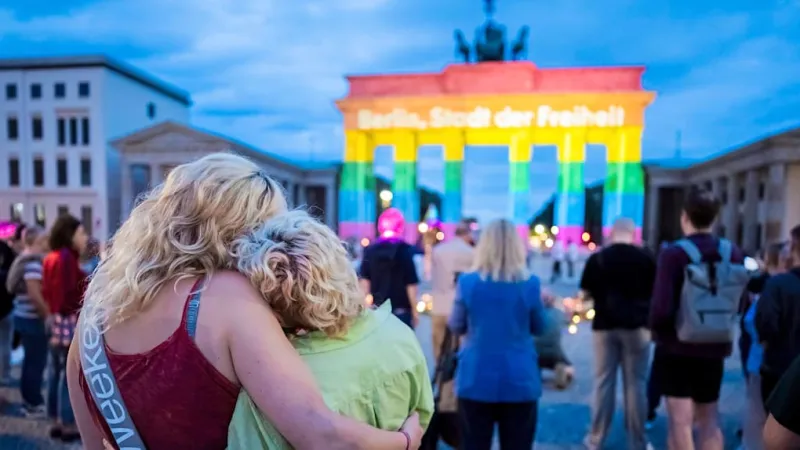
BERLIN – A recent Islamist attack targeting a Christopher Street Day (CSD) event in Berlin has ignited widespread condemnation following controversial reactions from a city queer representative and a local Left Party association. These officials controversially attributed the attack, perpetrated by an Islamist, to the perceived strengthening of right-wing extremism, drawing immediate and fierce criticism across the political spectrum for allegedly downplaying the Islamist motive.
Critics argue that by shifting blame toward the political right, these statements obscure the true nature of the threat posed by Islamist extremism and its specific targeting of LGBTQ+ communities. The responses have been widely interpreted as a deliberate attempt to deflect attention from the ideological roots of the violence.
An extremism researcher, whose analysis underpins much of the subsequent debate, highlighted the underlying ideological framework guiding such reactions. The expert explained that this perspective often stems from a worldview that struggles to acknowledge non-right-wing forms of extremism, particularly when they emanate from certain minority groups.
The incident, which saw an individual commit an act of Islamist violence during the CSD celebration, underscored the ongoing security challenges faced by vulnerable communities in the German capital. While specific details of the attack remain central to ongoing investigations, the public discourse swiftly moved to the political aftermath.
The Berlin Queer Representative and the district association of the Left Party issued separate statements shortly after the attack. Their communications pointed to a supposed rise in right-wing sentiment as a contributing factor or even the primary context for the Islamist act, effectively establishing a causal link that many found deeply problematic and intellectually dishonest.
The political fallout was swift and severe. Numerous public figures and organizations denounced the statements as irresponsible and dangerous. They emphasized that such narratives risk trivializing Islamist terrorism and hindering effective counter-extremism strategies by misdirecting focus.
This incident is not an isolated occurrence within German political discourse. Observers note a recurring pattern where certain segments of the political left have been criticized for their approach to Islamist threats. Indeed, Political Islam Denial Divides German Left After CSD Attack, a trend that appears to be reinforced by the current controversy.
The extremism researcher elaborated that proponents of this viewpoint often operate under a paradigm that prioritizes fighting what they define as structural discrimination, sometimes at the expense of recognizing other forms of extremist violence. This selective focus, the researcher suggested, can lead to dangerous mischaracterizations of threats and impede comprehensive security responses.
Such controversies threaten to erode public trust in official responses to extremist violence and complicate efforts to protect communities genuinely at risk. The clarity and accuracy of public statements following terror incidents are crucial for maintaining social cohesion and guiding robust security measures.
Calls for greater accountability and clearer communication from public officials intensified in the wake of the controversy. Critics demanded that the focus remain squarely on the perpetrator's motivations and the specific ideologies driving such attacks, rather than diverting attention to unrelated political narratives or perceived convenient scapegoats.
This debate echoes earlier criticisms leveled at elements of the German Left regarding their stance on Islamism and policing. For instance, renowned journalist Ahmad Mansour previously slammed Berlin Lefts stance on Islamism, calling it sheer madness in a separate commentary. These repeated patterns suggest a deeper ideological challenge within certain political circles.
The CSD attack itself, a stark reminder of the persistent threat posed by religious extremism to liberal democratic values and diverse communities, necessitates a clear-eyed assessment. Broader discussions have also emerged regarding the legal system's efficacy, as exemplified by ongoing debates surrounding probation for convicted Islamists after CSD attacks.
As the discussion continues, the incident underscores the complexities of combating extremism in its varied forms and the critical importance of accurate, unbiased analysis in public discourse. The challenge for officials lies in addressing all forms of extremism without succumbing to ideological preconceptions that hinder effective policy and public safety.