 Angel Doris
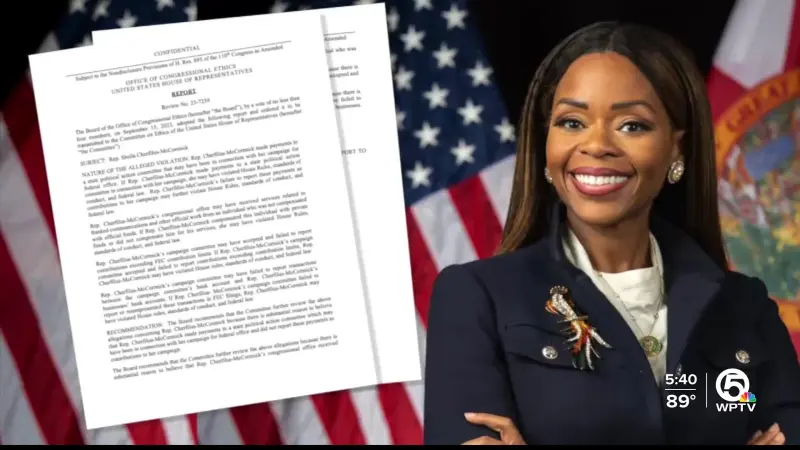
WASHINGTON — The House Ethics Committee is set to deliver its highly anticipated ruling on penalties for Representative Sheila Cherfilus-McCormick (D-Fla.) following a months-long investigation into alleged theft and campaign finance violations. This impending decision, expected within days, follows a detailed report by the independent Office of Congressional Ethics and a subsequent investigative subcommittee, potentially reshaping the Florida legislator's political trajectory and integrity within the halls of Congress.
The allegations against Cherfilus-McCormick, which first surfaced publicly in late 2024, stem from her 2022 and 2024 congressional campaigns. Accusations specifically detail the alleged misuse of campaign funds for personal expenses and what has been broadly categorized by complainants as financial impropriety amounting to theft from donor contributions, a direct violation of federal election laws and House rules.
The investigative subcommittee of the House Ethics Committee was tasked with thoroughly examining these claims. Its mandate involves reviewing evidence, interviewing witnesses, and determining if there is substantial reason to believe that a violation of law, House rule, or regulation has occurred. The secretive nature of the process means specific details of the evidence presented remain confidential until the final report is released.
Sources close to the committee, who spoke on condition of anonymity due to the sensitive nature of deliberations, indicated that the subcommittee’s report found sufficient grounds to recommend disciplinary action. While the precise recommendations are not yet public, they could range from a simple reprimand or censure to a substantial financial penalty, or even a more severe recommendation to the full House for further action.
Representative Cherfilus-McCormick, who represents Florida’s 20th congressional district, has consistently maintained her innocence throughout the process. Her office released a statement earlier this year asserting her full cooperation with the ethics probe and expressing confidence that the committee would ultimately clear her name, dismissing the accusations as politically motivated attacks from detractors.
The potential implications for Cherfilus-McCormick are significant. A formal sanction from the ethics panel could damage her standing with constituents, jeopardize her political future, and weaken her efficacy as a legislator, especially as the 2026 midterm elections begin to loom large on the political calendar. The cloud of these allegations has already cast a shadow over her second term.
This situation draws parallels with past congressional ethics cases, underscoring the committee's commitment to upholding standards. Historically, the House Ethics Committee has not shied away from imposing penalties, ranging from the censure of figures like Rep. Charles Rangel for financial misdeeds to the recent investigations involving transparency and campaign finance.
Political analysts suggest the committee faces pressure to deliver a decisive ruling that reaffirms public trust in Congress. "The integrity of our institutions hinges on accountability," stated Dr. Evelyn Reed, a political science professor at Georgetown University. "This ethics panel decision will be closely watched as a testament to whether serious allegations of theft and misuse of public trust are met with appropriate consequences."
The specific charge of theft allegations has captivated public attention, distinguishing this case from typical campaign finance infractions. While often intertwined, the committee's focus appears to be on whether funds intended for political activity were intentionally diverted for personal gain, a direct breach of public trust, rather than mere accounting errors.
The process has unfolded largely behind closed doors, a characteristic of ethics investigations designed to protect the reputations of individuals until findings are conclusive. However, the lengthy nature of the inquiry has also fueled speculation and political maneuvering, particularly in the highly polarized environment of Capitol Hill.
The range of penalties available to the House Ethics Committee is broad. It can issue a simple letter of reproval, a public reprimand, or a censure, which involves a formal condemnation by a House vote. More severely, it can recommend fines, restitution, or even, in rare and extreme circumstances, a recommendation for expulsion from Congress, though such a measure is rarely taken.
Legal representatives for Representative Cherfilus-McCormick have reportedly presented extensive documentation and testimony to the investigative subcommittee, aiming to refute the core allegations. They argue that any financial discrepancies were administrative oversights, not deliberate acts of theft or fraud, and point to a complex campaign finance landscape.
Public advocacy groups focused on government transparency have keenly followed the proceedings. "Americans deserve to know their elected officials are good stewards of public and donor funds," remarked Sarah Chen, director of Citizens for Ethical Governance. "A robust and transparent ethics process is vital for democracy."
The outcome will serve as a stark reminder of the stringent ethical responsibilities placed upon members of Congress. Public officials are expected to adhere to the highest standards of conduct, particularly concerning financial management and the proper use of resources entrusted to them by their constituents and campaign supporters.
As Washington braces for the imminent announcement, the decision by the House Ethics Committee on Representative Sheila Cherfilus-McCormick's penalty will not only shape her future but also send a clear message about accountability for theft allegations within the legislative body. The political world awaits the committee's final word with bated breath.