 Dorry Archiles
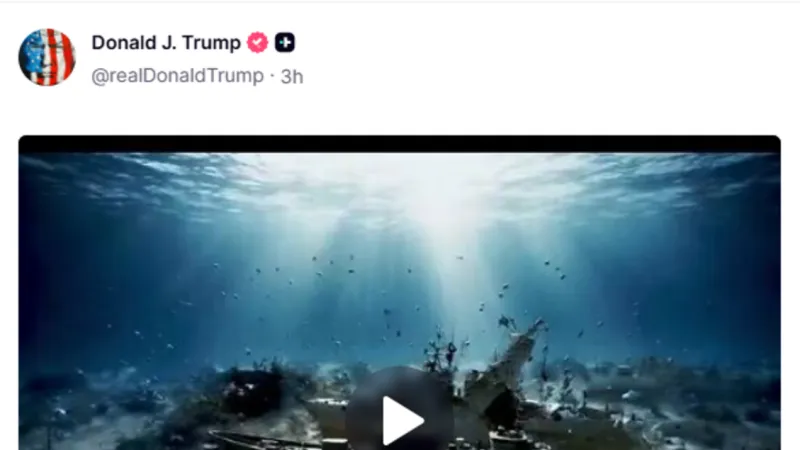
WASHINGTON - President Donald Trump recently shared an artificial intelligence-generated video portraying a fictional sunken Iranian naval fleet, accompanying the provocative imagery with a declaration that the United States had "completely destroyed Tehrans military." The digital content appeared on the Presidents social media platform, igniting immediate discussions about its diplomatic implications and the use of synthetic media by a head of state.
The video, which rapidly circulated across various online platforms, visually simulated a devastating naval engagement culminating in the destruction of numerous Iranian vessels. Its highly realistic, albeit fabricated, nature raised concerns among experts regarding the potential for AI-generated content to influence public perception and international relations.
President Trumps terse comment directly juxtaposed with the dramatic visuals, asserting a complete incapacitation of Iran's armed forces. This statement marks a significant escalation in rhetoric, even as official channels have not reported any such military confrontation or outcome.
The dissemination of this AI-generated content unfolds against a backdrop of persistently strained relations between Washington and Tehran. Tensions in the Persian Gulf, particularly concerning maritime security and Iran's nuclear program, have frequently flared. Previous incidents, such as US strikes against Iranian radar and drones, underscore the volatility of the region.
Diplomatic analysts are scrutinizing the Presidents decision to leverage AI for such a sensitive message. While some interpret it as a stark warning to adversaries, others express apprehension that it could inadvertently provoke a real-world response or exacerbate existing geopolitical tensions.
Cybersecurity and information warfare specialists noted the sophisticated quality of the video, highlighting the growing challenge posed by deepfake technology and other AI-powered tools in state-sponsored narratives. The incident underscores the blurring lines between factual reporting and digitally fabricated realities.
A White House spokesperson, speaking off the record, indicated that the President often uses unconventional methods to communicate policy and demonstrate resolve. The spokesperson stated, "The President is resolute in protecting American interests and ensuring global stability," without directly addressing the video's artificial nature or its specific message.
Initial reactions from Tehran have been dismissive, with Iranian state media referring to the video as "propaganda intended for domestic consumption" and a "desperate attempt to project strength." Iranian authorities have not issued an official response threatening retaliation, though observers anticipate a formal condemnation.
Domestically, the video has garnered mixed reactions. Supporters lauded the Presidents decisive stance and innovative communication strategy, while critics decried it as irresponsible and dangerous, arguing it trivializes the serious nature of military conflicts and potentially misleads the public.
The episode also reignites broader ethical debates surrounding the use of artificial intelligence in political discourse and international relations. Questions about authenticity, accountability, and the potential for misrepresentation are central to these discussions, particularly when such technology is deployed by powerful state actors.
This is not the first instance of President Trump employing striking visual communication to convey political messages, although the use of advanced AI for a simulated military event marks a new frontier. His past utilization of social media has consistently bypassed traditional journalistic gatekeepers, directly engaging with his base and international audiences.
As AI technology advances, experts predict a more frequent integration of such tools into political communication strategies worldwide. This incident may serve as a harbinger of a future where distinguishing between genuine events and meticulously crafted digital simulations becomes increasingly difficult, posing challenges for media literacy and critical analysis.