Edward DP Situmorang
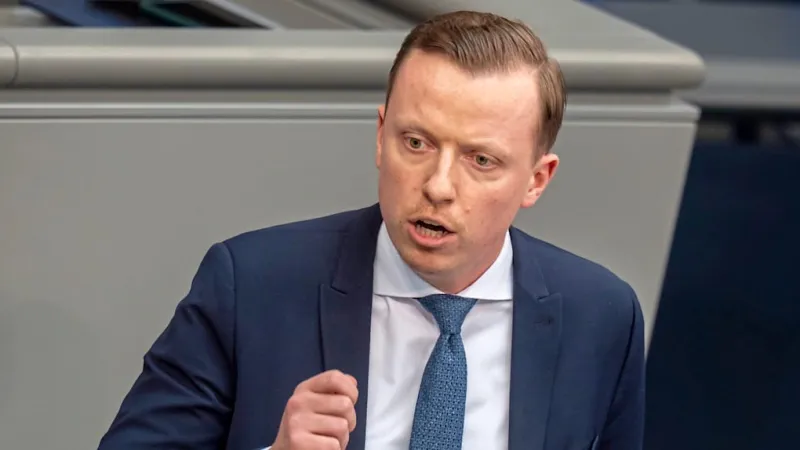
BERLIN – SPD foreign policy expert Aydan Ahmetovic has forcefully called for European unity in the face of the ongoing migration surge impacting the Spanish exclave of Ceuta, while staunchly defending Spain from criticism and urging the German government to safeguard the integrity of the Schengen area.
Ahmetovic underscored the importance of a unified European front, asserting that "as the EU, we will not allow ourselves to be divided" by external pressures or internal disagreements regarding migration challenges. His comments come as Ceuta, a vital Spanish territory bordering Morocco, continues to experience significant migrant arrivals, prompting renewed debates on border security and humanitarian responsibilities.
The SPD politician explicitly rejected criticisms leveled against Spain concerning its handling of the situation. He maintained that Spain, as an integral member of the European Union, is navigating a complex humanitarian and security challenge at the bloc’s southern frontier. Ahmetovic emphasized that solidarity, not condemnation, should define Europes response to such pressures.
Furthermore, Ahmetovic directed a pointed appeal to the German federal government, advocating for robust measures to ensure the continued integrity and protection of the Schengen zone. The open border agreement, a cornerstone of European integration, faces considerable strain amidst recurring migration movements, and Ahmetovic’s remarks highlight a growing concern among policymakers.
The situation in Ceuta represents a recurrent flashpoint in European migration discussions. The enclave, along with Melilla, serves as one of the EUs only land borders with Africa, making it a primary entry point for migrants seeking asylum or economic opportunities within the bloc. This geographic reality places immense pressure on Spanish authorities.
Recent reports, including one titled Hidden Ceuta Migrants Live in Fear, Seek Work, Not Charity, have shed light on the precarious conditions faced by many individuals arriving in the territory. These migrants often endure challenging journeys and subsequent uncertainty, seeking sustainable livelihoods rather than merely charitable aid, adding layers of complexity to the humanitarian response.
The political landscape within Spain has also reacted strongly to the migration surge. Conservative voices, such as those from the Vox party, have actively called for a more stringent, even militarized, approach to border control, as detailed in the article Vox Demands Militarized Ceuta Border Amid Migration Surge. Such demands highlight the internal political divisions that Ceuta continues to provoke.
The diplomatic relationship between Spain and Morocco is also a critical factor. The cooperation, or lack thereof, between the two nations profoundly influences border management and migrant flows. While Morocco has previously been accused of leveraging migration as a political tool, recent reports, such as Rabat Disputes Ceuta Deaths, Cites Misinformation Amid European Strain, indicate ongoing tensions and differing narratives surrounding incidents at the border.
Ahmetovic's intervention aligns with a broader push for greater European cohesion on migration policy. Many within the EU advocate for a collective strategy that distributes responsibility more equitably among member states, rather than burdening frontline countries like Spain, Italy, and Greece disproportionately.
The discussions surrounding Ceuta are not isolated but reflect wider European debates on external border management and internal solidarity. Countries like Italy have explored controversial solutions, including establishing migrant processing hubs in non-EU nations, as explored in Italy Eyes Uganda, Montenegro for Controversial Migrant Hubs, illustrating the varied and often contentious approaches being considered across the continent.
Ultimately, Ahmetovic’s firm stance serves as a potent reminder of the principle of shared responsibility within the European Union. He underscored that challenges faced at any of the EU’s external borders, whether in the Mediterranean or at land enclaves like Ceuta, require a harmonized, united European response to uphold both humanitarian values and the structural integrity of the bloc.
The ongoing situation in Ceuta continues to test the EU’s resolve, necessitating not only immediate operational responses but also long-term strategic planning to manage migration flows in a humane and orderly fashion, while preserving the foundational principles of the Schengen Agreement.