 Dodi Irawan
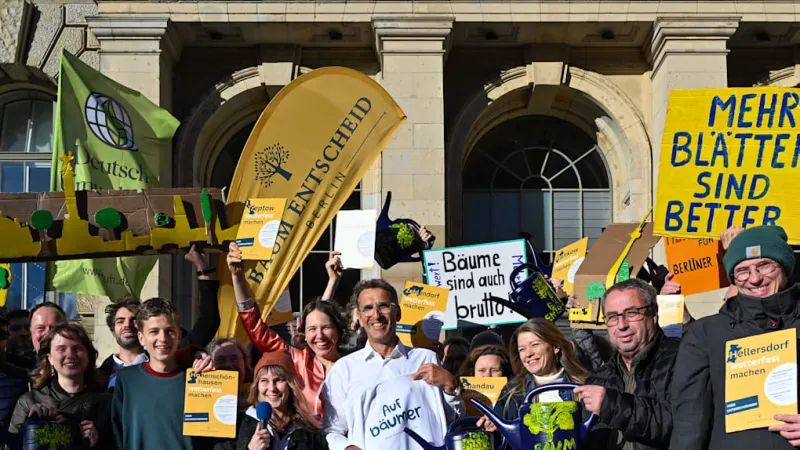
BERLIN – A prominent environmental activist has leveled accusations of public deception against Berlin's governing Christian Democratic Union, claiming the party has misrepresented the scale of tree felling across the German capital. The initiator of the citizen initiative BaumEntscheid asserts that an alarming number of trees are being cut down, prompting renewed calls for transparency in urban development and environmental policy.
The activist's critique centers on the CDU's handling of Berlin's vital green infrastructure. He contends that official statements and data regarding tree removal projects do not align with the observable reality, fostering a sense of distrust among environmental advocates and concerned citizens.
BaumEntscheid, which translates to Tree Decision, emerged as a direct response to what its founders perceive as an inadequate commitment to urban forest preservation. The group advocates for stricter regulations and greater public involvement in decisions affecting Berlin's tree population, highlighting their crucial role in air quality, biodiversity, and urban climate resilience.
The accusations surface amidst a broader European conversation about climate change mitigation and the importance of urban green spaces. Cities like Berlin face the dual challenge of accommodating growth while safeguarding ecological integrity.
Environmental organizations frequently point to the long-term benefits of a healthy tree canopy, including reduced urban heat island effects, improved mental well-being for residents, and enhanced stormwater management. The activist suggests these benefits are being undervalued in current municipal planning.
He specifically hopes for a shift in political dynamics following the upcoming Abgeordnetenhaus election, anticipating that new majorities could usher in policies more favorable to environmental protection. This sentiment underscores the political dimension of urban environmentalism, where policy changes are often tied to electoral outcomes.
The CDU, which leads the current governing coalition in Berlin, has consistently maintained its commitment to sustainable urban development. However, the activist argues that these assurances do not translate into effective action on the ground, particularly concerning the volume of trees removed for construction or infrastructure projects.
Public discourse in Germany has intensified around environmental issues, with several cities grappling with similar challenges of balancing development with ecological conservation. Debates over green spaces, air pollution, and sustainable transport solutions frequently dominate local political agendas. This reflects a growing national awareness.
The BaumEntscheid initiator's statement arrives at a critical juncture for Berlin, a city striving to meet its climate targets while experiencing significant population growth and demand for new housing and infrastructure. The integrity of its green spaces remains a key quality-of-life indicator for many residents.
Concerns over Berlin's ecological future extend beyond tree felling. Issues like declining birth rates, as discussed in "Germany's Stork Dilemma: Berlin Confronts Declining Birth Rates," subtly intertwine with broader environmental health, suggesting a complex web of societal and ecological challenges facing the capital.
The activist did not provide specific figures to substantiate his claim of deception in the initial report, but he implied that a thorough, independent review of the citys tree felling records would reveal the discrepancy. This calls for greater transparency from city authorities.
Critics of current policies often cite specific projects where numerous mature trees were removed, leading to public outcry. These localized protests frequently coalesce into broader movements, giving rise to initiatives like BaumEntscheid.
The accusation puts pressure on the CDU to either refute the claims with robust data or to reassess its environmental strategies in the capital. Public confidence in environmental governance is at stake.
Looking ahead, the upcoming local elections in Berlin are poised to be a battleground for environmental policy. Parties will likely present detailed manifestos addressing urban greening, climate resilience, and citizen participation in an attempt to win over environmentally conscious voters.
The activist's outspoken stance serves as a reminder that grassroots movements continue to play a crucial role in holding political parties accountable for their environmental promises and actions. Their persistent advocacy shapes public opinion and influences policy debates.