 Debby Wijaya
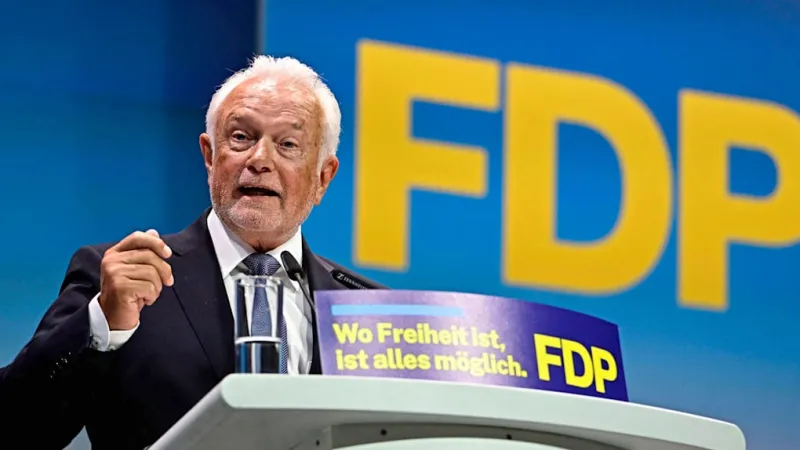
BERLIN – Wolfgang Kubicki has been elected the new leader of Germany's liberal Free Democratic Party (FDP), a victory that starkly underscores the intense ideological battles currently defining the party's direction. His triumph over prominent defense expert Marie-Agnes Strack-Zimmermann at a recent party conference highlights a deeply contested path for the FDP as it grapples with its identity and relevance in the evolving German political landscape.
Kubicki's election, a closely watched event within German political circles, signals a potential shift in emphasis for the FDP. The vote was not merely a selection of a new head but a referendum on the party's future strategy, particularly concerning how it will position itself against the rising influence of the far-right Alternative for Germany (AfD).
The internal contest saw two distinct visions for the liberal party clash. Kubicki, known for his charismatic and often outspoken demeanor, represents a more traditional, economically liberal wing of the FDP. His supporters advocate for a clear distinction from the center-left coalition partners, emphasizing fiscal responsibility and individual freedoms.
Conversely, Marie-Agnes Strack-Zimmermann, a vocal proponent of strong defense and international engagement, garnered support from those seeking a more robust, principled stand on foreign policy and human rights. Her challenge to Kubicki was seen as a bold move, reflecting the diverse perspectives within the FDP regarding its core mission. Readers can learn more about the lead-up to this contest in FDP Leadership Battle Erupts: Strack-Zimmermann Dares to Challenge Kubicki.
A dominant theme throughout the party conference, and indeed a significant factor influencing the leadership race, was the ongoing debate surrounding the AfD. The AfD's growing electoral success and increasingly radical rhetoric have forced all established parties, including the FDP, to re-evaluate their strategies for engaging with or countering the populist surge.
The FDP has long struggled with maintaining its distinct identity within Germany's complex multiparty system. Often seen as a kingmaker, its electoral fortunes have fluctuated, leading to introspective discussions about its principles and appeal to voters. Kubicki's challenge now is to unite the disparate factions within the party and forge a coherent message that resonates with a broader electorate.
Analysts suggest that Kubicki's leadership might lead to a more assertive FDP, one that seeks to carve out a clearer conservative-liberal niche in German politics. This could entail tougher stances on immigration, a stronger emphasis on economic deregulation, and perhaps a more critical approach to European integration, aligning with segments of the electorate disillusioned with the established order but wary of the AfD's extremism.
The AfD's shadow looms large over German politics, consistently influencing the agenda and pushing other parties to define their positions more sharply. For the FDP, the challenge is particularly acute; it seeks to appeal to economically conservative voters who might otherwise drift towards the AfD, without legitimizing the far-right party's anti-democratic tendencies.
Kubicki faces the arduous task of balancing internal party unity with the need to distinguish the FDP from both its coalition partners and its ideological rivals. His success will depend on his ability to articulate a compelling vision for Germany's liberals that addresses contemporary challenges while upholding the party's foundational principles.
The coming months will provide crucial insights into the direction Kubicki intends to steer the FDP. Political observers will be closely watching for any shifts in the party's policy positions, its approach to coalition politics, and its strategy for confronting the persistent challenge posed by the AfD. The implications of this leadership change could reverberate throughout Germany's political landscape, potentially reshaping future electoral alliances and policy debates.