 Robert Andrison
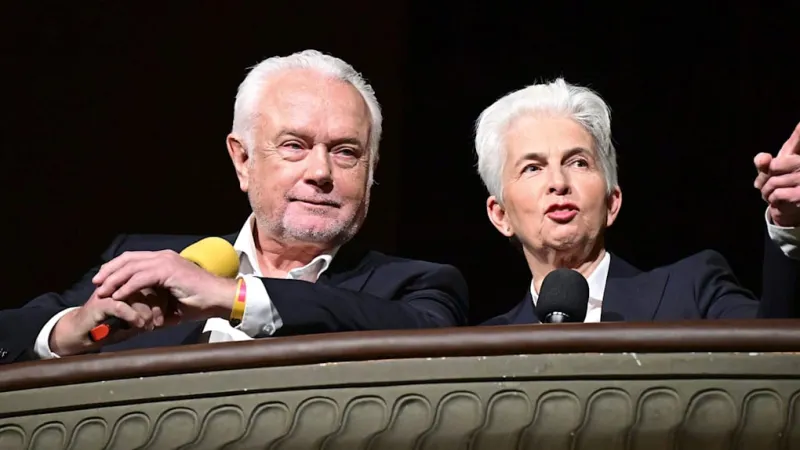
BERLIN – A surprising and intense leadership battle has erupted within Germany's Free Democratic Party (FDP), as prominent politician Marie-Agnes Strack-Zimmermann has officially launched a challenge against Wolfgang Kubicki for the party's chairmanship. This unexpected development, kept under wraps until recently, transforms what many anticipated would be a smooth succession into a hotly contested election, fueled by the formal endorsement of 33 delegates.
The revelation of Strack-Zimmermann's candidacy has sent ripples through the FDP, a party traditionally known for its internal pragmatism, though not immune to spirited debate. Many observers expected a largely unchallenged path for Kubicki, a veteran figure whose political acumen and long tenure have made him a recognizable face of the liberal party.
Strack-Zimmermann, renowned for her assertive stance on defense policy and her sharp rhetorical style, represents a dynamic force within the FDP. Her public profile has risen significantly in recent years, particularly through her outspoken commentary on international security matters, often cutting across traditional party lines to articulate strong positions.
Wolfgang Kubicki, currently serving as Vice President of the Bundestag, commands respect as a seasoned parliamentarian and an influential voice in German politics. His leadership approach often blends humor with pointed criticism, a style that has resonated with a segment of the FDP's base for decades. His potential challenger signifies a shift from an anticipated consensus choice to an open electoral contest.
The formal backing of 33 delegates underscores the serious nature of Strack-Zimmermann's bid. This level of support indicates a significant internal faction believes a change in direction or leadership style is warranted, suggesting more than a token challenge. Such a concerted effort points to careful planning and strategic mobilization within the party ranks.
For the FDP, this leadership challenge arrives at a pivotal moment. As a junior partner in Germany's current governing coalition in 2026, the party navigates complex policy debates ranging from fiscal discipline to environmental transition. The outcome of this contest could redefine the FDP's internal dynamics and its public image ahead of crucial electoral cycles.
The timing of this internal contest also resonates with broader political currents in Germany. Debates surrounding immigration, economic stability, and international alliances continue to shape the national discourse. The FDP, often positioned as the voice of economic liberalism and individual freedoms, will inevitably see these issues brought to the forefront during the leadership campaign. Related discussions, such as those concerning asylum policy, frequently spark significant debate across the political spectrum, as seen in recent proposals like those outlined in AfD Pushes Austere Asylum Plan, Sparks Debate in Germany.
Observers anticipate that Strack-Zimmermann will likely emphasize a more modern, perhaps more outspoken, vision for the FDP, potentially appealing to younger voters or those seeking a clearer ideological profile. Kubicki, conversely, may lean on his experience and continuity, advocating for stability and proven leadership within the party establishment.
Internal leadership contests, while not uncommon in German political parties, often reveal underlying tensions and competing visions. The FDP has historically experienced periods of intense internal debate, particularly when facing challenges to its parliamentary representation or strategic direction. This particular challenge signals a potentially significant re-evaluation within the party structure.
The exact timeline for the FDP's leadership vote remains to be formally announced, but the mere existence of a leadership challenge ensures a period of heightened scrutiny and internal campaigning. The stakes are substantial, not only for the two leading figures but for the future trajectory and cohesion of one of Germany's most influential liberal parties.