 Dorry Archiles
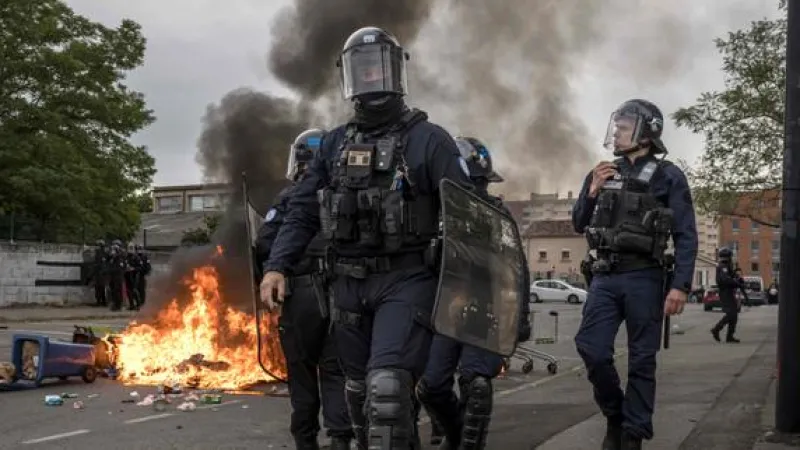
PARIS - At least eight education personnel sustained injuries during high school student mobilizations this past Monday morning across France, the Ministry of National Education announced. This concerning development comes as officials report a notable intensification of violence, even as 96.5% of educational establishments nationwide remained open.
The ministry highlighted a paradox in the current landscape of student activism, noting that while school closures have receded, the level of violence associated with the protests has markedly increased. This observation underscores a shifting dynamic in these recurring demonstrations.
Authorities have yet to provide specific figures on the number of establishments categorized as merely perturbed rather than fully closed. This distinction is crucial, as many schools reportedly continue to welcome students despite ongoing disturbances outside their gates or within their premises.
This latest incident further amplifies concerns regarding the safety of staff and students alike. The injuries to education personnel signal a direct and tangible impact of the escalating unrest on those responsible for maintaining the learning environment.
The injured individuals, whose specific roles within the education sector were not detailed, represent a human cost to these widespread actions. Their plight brings into sharp focus the challenges faced by educational institutions during periods of intense student mobilization.
The French government and education authorities now confront the delicate balance of upholding the right to peaceful assembly while ensuring the security and well-being of school communities. Implementing effective safety protocols during such volatile events remains a significant hurdle.
Student mobilizations are a familiar feature of the French educational landscape, often emerging in response to government policies, proposed reforms, or broader societal issues. While the specific catalysts for the current wave of protests were not detailed by the ministry, their widespread nature is undeniable.
These events echo previous periods of significant student unrest in France. The escalation of violence draws parallels with past confrontations, prompting a renewed focus on de-escalation strategies and dialogue. Indeed, a related report recently highlighted how French High School Protests Escalate; Principals Confront Unprecedented Violence.
The sustained high rate of school operations, with nearly all establishments open, indicates a determined effort by the Ministry of National Education to minimize disruptions to the academic calendar. This commitment to educational continuity contrasts starkly with the reported physical harm to staff.
The situation presents a complex challenge for public authorities tasked with managing both the constitutional right to protest and the imperative of public safety within school zones. The dual objective requires a nuanced and robust response.
As the situation develops, further statements from the Ministry of National Education are anticipated, likely detailing measures to enhance security and address the underlying tensions driving these student actions. The welfare of both students and staff remains paramount amid this ongoing unrest.
This unfolding scenario underscores a critical moment for French education, as it navigates the intersection of student activism, public safety, and governmental oversight in 2026.