 Debby Wijaya
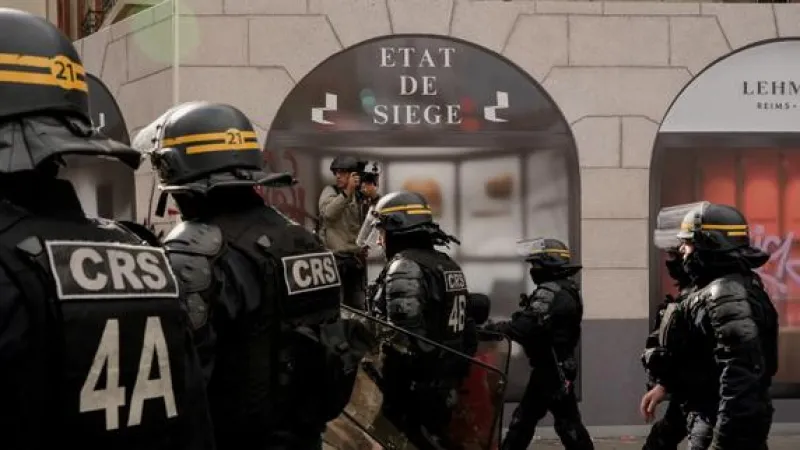
PARIS – French high school students are escalating their nationwide protests, with alleged police violence emerging as a central grievance fueling widespread mobilization and leaving 214 educational institutions shuttered and 147 staff members injured, according to the Ministry of National Education.
The demonstrations, particularly prominent in the capital, underscore a deepening societal tension as students challenge state authority.
The Ministry, based in Rue de Grenelle, confirmed Tuesday that a significant portion of the nations secondary schools remained closed as a direct consequence of the ongoing student mobilization. This figure highlights the substantial disruption to education across France.
Since the outset of the unrest, 147 members of school personnel have sustained injuries. While the ministry did not provide specific details on the nature or severity of these injuries, the statistic points to the volatile environment surrounding the protests.
Student organizers, primarily active in Paris, explicitly state that their primary motivation stems from what they term excessive force and brutality by law enforcement during demonstrations. Banners and chants at rallies frequently denounce police actions against young protesters.
This emphasis on police conduct marks a critical escalation in the students demands, moving beyond initial grievances that often center on educational reforms or specific governmental policies. It broadens the scope of the protest to fundamental issues of state authority and civil liberties.
The current wave of student activism recalls previous periods of youth-led dissent in France, which have historically served as significant catalysts for social and political change. The longevity and intensity of this current movement suggests a similar trajectory.
Analysts observe that the convergence of school closures and reports of staff injuries with allegations of police misconduct presents a complex challenge for the government. Finding a resolution requires addressing both the students concerns and ensuring safety within educational settings.
A related report, France's Student Unrest Deepens: 147 Educators Injured, 214 Schools Shuttered, detailed the initial impact, but the focus has visibly shifted towards the conduct of security forces.
The Ministry of Interior has yet to issue a comprehensive statement directly addressing the allegations of police violence from the student groups, though official channels typically emphasize the need to maintain public order.
Local authorities in cities beyond Paris have also reported varying degrees of disruption and clashes. The geographically dispersed nature of the protests indicates a broader sentiment among young people.
Educational officials are working to mitigate the impact on academic schedules and examinations, a significant concern for students approaching critical assessment periods. The protracted nature of the closures amplifies these anxieties.
The government faces pressure to de-escalate the situation without appearing to concede to demands perceived as challenging state authority, especially concerning law enforcement. This delicate balance is crucial for political stability.
Further demonstrations are anticipated throughout the week, with student unions vowing to maintain pressure until their grievances regarding police conduct are adequately addressed by national authorities.
The situation also raises questions about the training and protocols for managing youth protests, particularly in urban environments where tensions can quickly escalate.
While specific instances of alleged brutality are widely shared on social media by student activists, independent verification of these claims remains a key aspect of public discourse.
The overarching student movement serves as a stark reminder of the potent voice of Frances youth, capable of mobilizing significant opposition and forcing national conversations on critical societal issues.
The government strategy likely involves a combination of dialogue attempts and firm maintenance of public order, a nuanced approach given the sensitivity of the police violence accusations.
As the academic week progresses, all eyes remain on the streets of Paris and other major cities, watching to see how this escalating standoff between students and the state evolves.
The political ramifications of this unrest could extend beyond educational policy, potentially influencing broader public trust in institutions and the perception of governmental responsiveness. Maintaining educational continuity while also addressing legitimate concerns about citizen safety and rights forms the core challenge for leadership in this ongoing national debate.