 Chandra Wijayanto
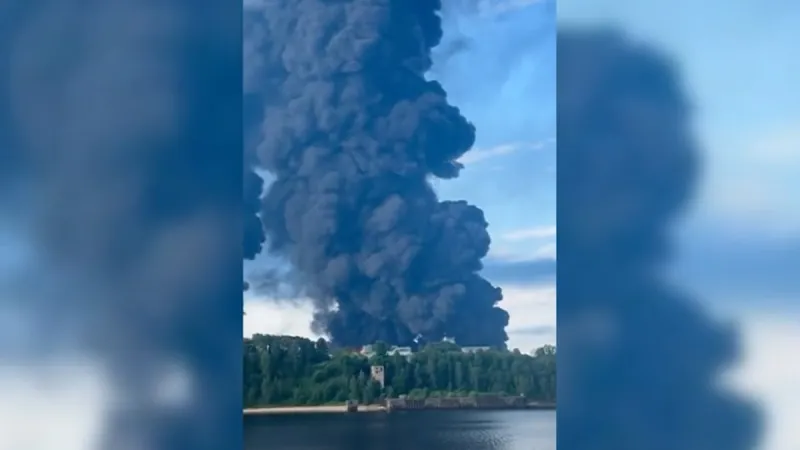
Russia experienced a renewed wave of Ukrainian drone attacks on its industrial infrastructure, specifically striking a chemical plant and a vital fuel depot. The strikes reportedly ignited major fires and produced heavy smoke plumes, challenging Moscow's ability to control the narrative surrounding the conflict within its borders.
The assaults occurred recently, marking another instance of Kyiv's strategy to target facilities crucial to Russia's war economy and logistics. Initial reports from observers in the region indicated substantial damage and operational disruptions at the affected sites.
Max Hermes, a reporter from Kyiv, corroborated the impact of these strikes, stating, “This is something that Russian state propaganda can no longer hide.” His observation underscores the increasing visibility and undeniable nature of the damage inflicted by Ukrainian long-range capabilities.
The chemical plant and fuel depot represent high-value targets. Chemical production is often intertwined with military industrial complexes, while fuel depots are indispensable for sustaining military operations, transport, and energy supply across Russia.
These latest drone incursions follow a pattern of Ukrainian efforts to degrade Russia's capacity to wage war by striking beyond the immediate front lines. Such attacks aim to impose economic costs and disrupt logistical chains that support Russian forces.
Analysts suggest the targeting of industrial sites like these is a calculated move to pressure the Kremlin domestically and stretch its air defense capabilities, which are primarily focused on protecting front-line assets and strategic installations around major cities.
The widespread impact of the fires and smoke also serves a psychological purpose, demonstrating Ukraine's reach and ability to inflict damage deep within Russian territory, a fact difficult for state-controlled media to entirely obscure from the public.
Such incidents often prompt enhanced security measures in Russian industrial zones, but the sheer expanse of the country makes comprehensive protection against persistent drone incursions a considerable challenge for military planners.
The attacks occur amid heightened scrutiny of the conflict's broader risks, with previous reports, such as US Intelligence Warns: Ukraine Biolabs Face Severe Risk Amid Conflict, highlighting potential dangers within the warzone. The ongoing strikes on industrial targets further illustrate the multifaceted nature of the conflict and its ripple effects.
The international community continues to monitor these developments closely, as the escalation of attacks on Russian soil could further complicate efforts toward de-escalation or a potential resolution. The ability of Ukrainian forces to strike these distant targets highlights advancements in their autonomous weaponry and intelligence gathering.
For President Donald Trump's administration, navigating the complexities of the ongoing conflict remains a critical foreign policy challenge, balancing support for Ukraine with preventing broader regional destabilization.
The persistent targeting of Russian industrial facilities signifies Ukraine's continued commitment to asymmetric warfare, exploiting vulnerabilities in Russia's vast but sometimes exposed infrastructure. This strategy intends to chip away at Russia's military-economic foundation.
These drone operations are becoming a defining feature of the conflict, illustrating a strategic shift by Ukraine to take the fight to the aggressor's home front. The economic and psychological repercussions within Russia are growing, despite state media attempts to downplay their significance.
The incidents underscore the evolving dynamics of modern warfare, where relatively inexpensive drones can inflict substantial damage on costly infrastructure, forcing adversaries to reallocate resources and rethink defensive strategies. The visual evidence of these fires, as noted by Hermes, ensures that the reality of the conflict is increasingly undeniable, even to those within Russia.