 Chandra Wijayanto
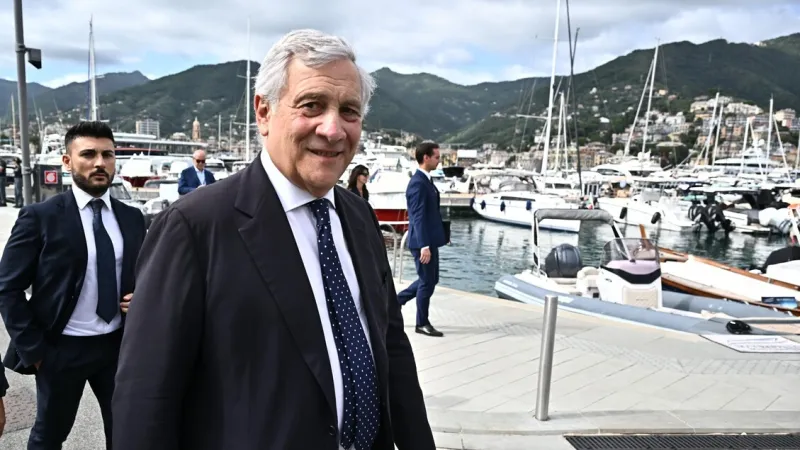
ROME – Antonio Tajani, Italy's Deputy Prime Minister and Foreign Minister, emphatically declared the nation's banking system robust and vibrant, dismissing any notions of increased state intervention in its regulation. His statements coincided with significant strategic announcements from Carlo Messina, CEO of Intesa Sanpaolo, regarding the future of Monte dei Paschi di Siena (MPS) and the insurance giant Generali.
Addressing the financial landscape, Tajani asserted, "Our banking system is lively, it is not up to the State to regulate." This pronouncement underscores the government's confidence in the market-driven mechanisms and resilience of Italian financial institutions, advocating for a clear delineation between state oversight and market autonomy.
His remarks come amidst ongoing discussions about financial stability and the appropriate balance between regulatory frameworks and the dynamic nature of the European banking sector. The Italian government consistently positions itself as a proponent of free-market principles, emphasizing that excessive state control could stifle innovation and competitiveness within the financial industry.
Meanwhile, Carlo Messina, at the helm of Italy's largest bank, Intesa Sanpaolo, outlined an ambitious blueprint for the future of wealth management, centered on the beleaguered Monte dei Paschi di Siena. Messina declared a bold vision, stating, "We will create a wealth bank of two trillion [euros] with MPS."
This strategic move signifies a potential transformative role for MPS, historically Italy's oldest bank, which has navigated a tumultuous period marked by bad loans and state bailouts. The integration into Intesa Sanpaolo's broader wealth management strategy could offer MPS a lifeline and a new direction.
Previous reports have detailed the complex saga surrounding MPS, including competing interests from various financial players. Intesa Sanpaolo has been a key figure in these discussions, as highlighted in articles such as MPS Board Confronts Critical Bids from Banco BPM, Intesa Sanpaolo and Intesa Sanpaolo Launches Bold Takeover Bid for Troubled MPS Bank. The prospect of Intesa leveraging MPS to build a colossal wealth management entity underscores its strategic foresight in the European financial landscape.
Messina's comments provide crucial clarity on Intesa's long-term objectives for MPS, shifting the narrative from a mere acquisition to a strategic integration aimed at creating a formidable player in the wealth management domain. Such a consolidation would significantly bolster Intesa Sanpaolo's already dominant position in the Italian banking sector.
Crucially, Messina also addressed persistent market speculation regarding a potential acquisition of Generali, one of Europe's largest insurance providers. He explicitly stated, "There is no intention of acquiring Generali." This categorical denial is set to calm market anxieties and prevent unwarranted speculation that could impact the share prices of both financial behemoths.
The clarity provided by Intesa Sanpaolo's CEO on Generali is particularly relevant, given the historical intertwining of major Italian financial groups and the recurring rumors of consolidation within the insurance and banking sectors. Messina's statement serves to define Intesa's strategic boundaries, focusing internal resources on organic growth and the MPS wealth project.
The combined declarations from Tajani and Messina paint a picture of a confident Italian financial sector, characterized by governmental support for market autonomy and aggressive strategic initiatives from its leading private institutions. These developments are poised to influence investor confidence and shape the trajectory of Italy's economic recovery and financial market evolution.
Analysts are now closely monitoring how these pronouncements translate into tangible actions and their subsequent impact on both the Italian banking system and the broader European financial community. The focus remains on strategic execution and maintaining the declared vitality and independence of the banking sector.