 Dodi Irawan
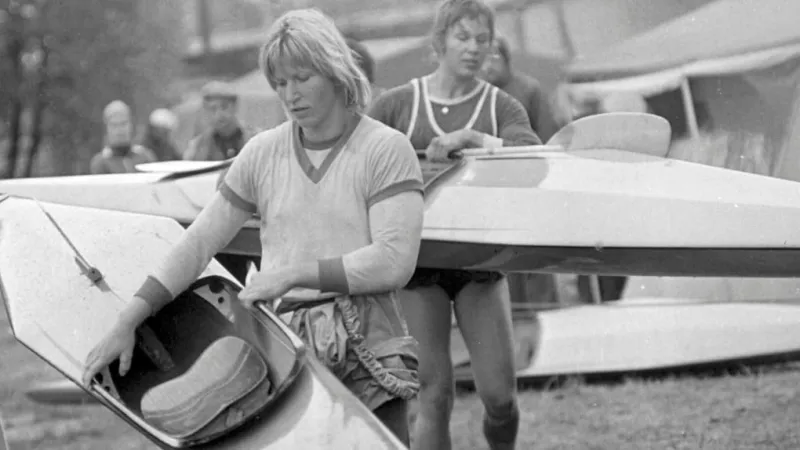
Berlin, Germany – East German authorities in 1976 abruptly terminated the burgeoning career of Carola Zirzow, an Olympic canoe gold medalist, following her innocuous decision to walk with an Italian counterpart during the Montreal Summer Games. This draconian act, labeled a "maximum penalty" by the regime, effectively extinguished the athletic future of a 21-year-old athlete poised for further international acclaim, exposing the extreme control exerted by the German Democratic Republic over its citizens, even on foreign soil.
Zirzow, a standout in the intensely competitive GDR sports system, had already achieved the pinnacle of her sport, securing an Olympic gold medal just weeks prior to the incident that sealed her fate. Her athletic prowess was a testament to the rigorous state-sponsored training programs designed to project an image of socialist superiority on the global stage.
The specific transgression cited by the omnipresent Stasi secret police and state sports apparatus was a casual, unsupervised stroll Zirzow took with an Italian athlete under the moonlight. While seemingly harmless, this interaction with an individual from a capitalist Western nation was interpreted as a grave violation of the strict ideological separation enforced by the GDR.
For the East German regime, contact with Westerners, especially in a personal capacity, represented a potential threat to state security and ideological purity. Athletes, as ambassadors of the socialist state, were under immense scrutiny, their every move monitored to prevent any perceived deviation or fraternization.
The consequences for Zirzow were immediate and devastating. She was stripped of her athletic privileges, expelled from sports organizations, and effectively barred from any further participation in competitive canoeing. Her promising trajectory, once destined for more Olympic glory, dissolved overnight.
This incident was not isolated. Numerous East German athletes, artists, and intellectuals faced similar fates for actions deemed politically incorrect or for attempting to establish connections beyond the Iron Curtain. The state viewed its citizens not as individuals with personal freedoms but as instruments for its propaganda and political agenda.
The story of Carola Zirzow underscores the human cost of the Cold War and the oppressive surveillance states cultivated during that era. Her case serves as a poignant reminder of how personal liberties were systematically curtailed in the pursuit of rigid ideological control.
Despite the regime efforts to erase her, Zirzows story resonates as a testament to the arbitrary and cruel nature of totalitarian rule. It highlights the vulnerability of individuals against the vast machinery of a surveillance state.
Decades later, as Germany grappled with the legacy of its divided past, stories like Zirzows emerged from the archives, shedding light on the hidden tragedies and injustices perpetrated under the guise of state security. The reunification allowed for a re-evaluation of these historical abuses.
While contemporary German athletes now compete on a unified stage, celebrating victories such as those highlighted in articles like German Rowers Ascendant: Zeidler Wins Gold, Deutschland-Achter Eyes Glory, the shadows of the GDRs athletic system, built on coercion and control, linger as a cautionary tale.
Zirzows experience offers a stark contrast to the comparatively open interaction between athletes from different nations today. Her forced exit from sport provides a somber reflection on the dangers of mixing politics and personal life, a theme echoed in discussions surrounding the potential pitfalls of international engagement, as explored in pieces like Venezi: Mixing Culture and Politics with Russia a Dangerous Slope.
Her story remains a powerful symbol of the resilience of memory against attempts at state-imposed oblivion, reminding future generations of the importance of freedom and human dignity.