 Debby Wijaya
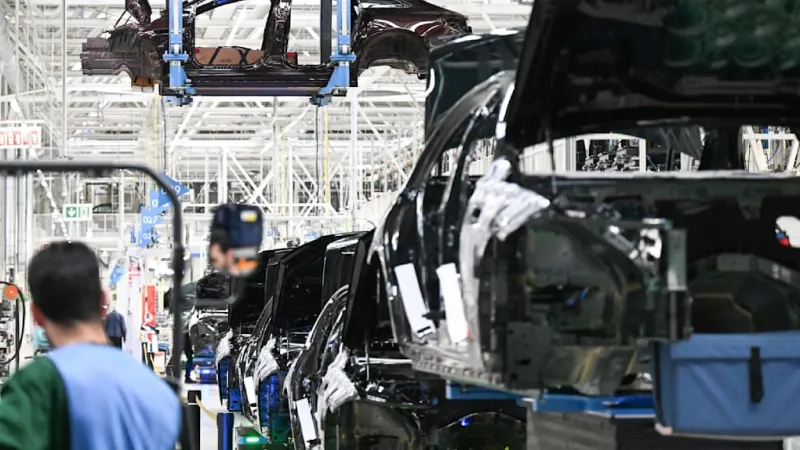
BERLIN – Germany's crucial automotive industry confronts increasing global pressures, prompting its most influential trade union, IG Metall, to signal a willingness for substantial workforce adjustments and production cutbacks. However, this readiness comes with a stringent condition: a clear, future-oriented strategy that safeguards the sector's long-term sustainability and competitiveness, warned union leader Barbara Resch.
Resch emphasized the precariousness of merely accepting reductions without a robust plan for innovation and growth. She cautioned against a path of sacrifice that lacks a tangible future, describing such an approach as a perilous downward spiral for one of Germany's economic cornerstones.
The automotive sector, a powerhouse of German engineering and export, faces a complex confluence of challenges. These include the accelerating global shift towards electric vehicles, intense competition from international manufacturers, stringent environmental regulations, and persistently high labor costs.
IG Metall, representing millions of workers across German industries, acknowledges the imperative for structural change. Its stance reflects a pragmatic acceptance of current realities but firmly anchors any concessions to strategic investments in emerging technologies and skilled workforce development.
For decades, German automakers have been synonymous with quality, innovation, and economic prosperity. The industry provides millions of direct and indirect jobs, driving significant research and development spending and contributing substantially to the nation's gross domestic product.
The union's readiness to negotiate cutbacks signifies a recognition of the profound transformation underway. However, it equally underscores a determination to prevent short-term cost-cutting measures from eroding the industry's foundational strengths and its capacity for future global leadership.
Barbara Resch's warning highlights the high stakes involved. She articulated that a strategy of pure retrenchment, detached from a vision for new product lines, digital integration, and sustainable manufacturing processes, would ultimately prove to be a dead end for the industry.
Discussions between management and labor unions will likely center on ensuring that any workforce adjustments are accompanied by robust retraining programs and investments in new production capabilities, particularly in areas like battery technology and autonomous driving systems.
Economists and political leaders closely watch these developments. The health of the German auto industry has far-reaching implications for Europe's largest economy, impacting everything from national employment rates to international trade balances.
The call for strategic foresight echoes sentiments observed across the European automotive landscape. As articulated by an Aumovio CEO in a related discussion, EU regulations and high labor costs continue to hamper auto growth, creating an environment where proactive, future-oriented planning is not merely beneficial, but essential for survival.
This pivotal moment demands collaboration between employers, unions, and policymakers. The aim is to navigate the challenging transition phase while preserving Germany's industrial prowess and securing high-value employment for its citizens.
The union's conditional acceptance of cuts signals a tough negotiation ahead, one that will ultimately determine whether Germany's auto sector can adapt and thrive in an increasingly competitive and technologically driven global market.