 Dodi Irawan
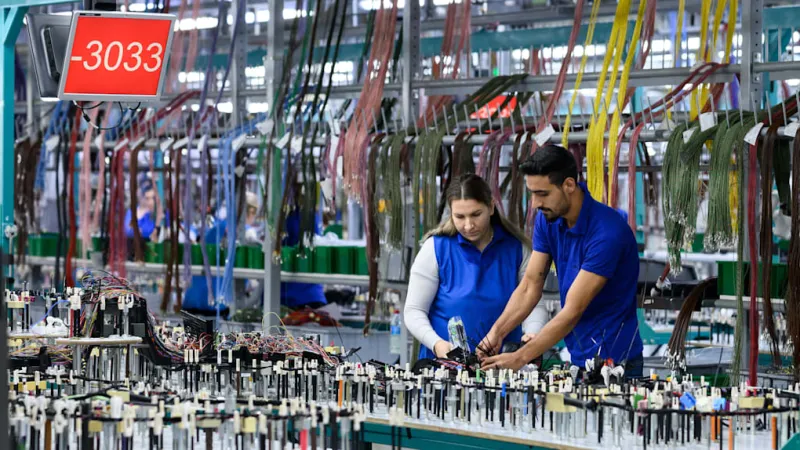
Berlin — Nearly one-third of Germany's vital medium-sized industrial companies, known collectively as the Mittelstand, are planning to shift significant portions of their production operations to foreign nations. This stark revelation comes from a comprehensive new report published by the KfW development bank, signaling a profound industrial transformation and raising questions about the future landscape of the German economy. The findings indicate a growing trend among these historically stable enterprises to seek economic resilience and new market opportunities beyond national borders.
The KfW analysis underscores that this strategic reallocation mirrors a pattern previously established by Germany's larger corporations. While major industrial players initiated such moves years ago, the readiness of the Mittelstand – often lauded as the backbone of the German economy – to follow suit suggests more pervasive underlying pressures influencing corporate decisions.
Economists and industry observers express concern about the long-term implications for domestic job markets and Germany's industrial capacity. A significant outflow of manufacturing could lead to a reduction in high-value employment and a weakening of the nation's innovation ecosystem, traditionally bolstered by the Mittelstand's robust research and development efforts.
The report identifies Southeast Asia as a primary target region for these prospective relocations. Companies are drawn to the burgeoning markets, competitive labor costs, and expanding supply chain networks offered by nations in this dynamic economic bloc. The appeal extends beyond mere cost-cutting, encompassing opportunities for closer proximity to emerging customer bases and greater agility in global trade.
Several factors contribute to this pronounced desire for internationalization. Persistently high energy prices in Germany, coupled with increasing regulatory burdens and a perceived shortage of skilled labor, are frequently cited by business leaders as significant drivers. These domestic challenges are making it increasingly difficult for firms to maintain profitability and competitiveness solely within Germany.
Moreover, the drive to diversify supply chains, a lesson acutely learned during recent global disruptions, plays a crucial role. By establishing production hubs in multiple regions, German companies aim to mitigate risks associated with geopolitical instabilities, natural disasters, or localized economic downturns. The global economic climate, often influenced by major players like the United States, further complicates strategic planning. For instance, President Trump's calls for patriotic Fed rate cuts and warnings of trade halts highlight the volatile nature of international commerce, compelling businesses to seek more stable operating environments.
While the potential benefits of overseas expansion are clear, the move is not without its challenges. Mittelstand firms, often characterized by their specialized products and close-knit corporate cultures, face complexities in managing foreign operations, navigating diverse regulatory frameworks, and maintaining quality standards across international distances. Cultural integration and logistical hurdles represent substantial undertakings.
Representatives from German industry associations have acknowledged the KfW report with a mixture of understanding and urgency. They emphasize the need for policy makers to address the root causes driving companies abroad, advocating for reforms in energy policy, tax structures, and bureaucracy to enhance Germany's attractiveness as a business location.
The German government, through various ministries, is reportedly reviewing the KfW findings closely. Discussions are anticipated on potential incentive programs or regulatory adjustments aimed at retaining key industries and fostering domestic growth. However, the sheer scale of the planned exodus suggests that only comprehensive and decisive actions can significantly alter the current trajectory.
This trend reflects a broader global realignment of industrial production, where nations compete fiercely for investment and manufacturing prowess. Germany, long celebrated for its manufacturing excellence, now faces a critical juncture in safeguarding its industrial future amidst evolving international economic dynamics. The decisions made by the Mittelstand in the coming years will profoundly shape Germany's position in the global economy for decades to come.
The report serves as a crucial bellwether, urging a candid assessment of Germany's industrial policy. Failure to adapt could see the nation lose a significant portion of its manufacturing base, impacting not just economic output but also its global technological leadership. Industry experts suggest proactive measures are imperative to foster an environment where the Mittelstand can thrive at home, rather than being compelled to seek prosperity elsewhere.
The shift is not merely about moving factories; it represents a strategic recalculation of where value can be created most efficiently and sustainably in an interconnected world. German businesses are adapting to a new global reality, a reality that demands flexibility and a willingness to embrace internationalization as a core component of their long-term viability. The coming years will reveal the extent to which policy adjustments can temper this outward migration or if it marks an irreversible new chapter for German industry.