 Dodi Irawan
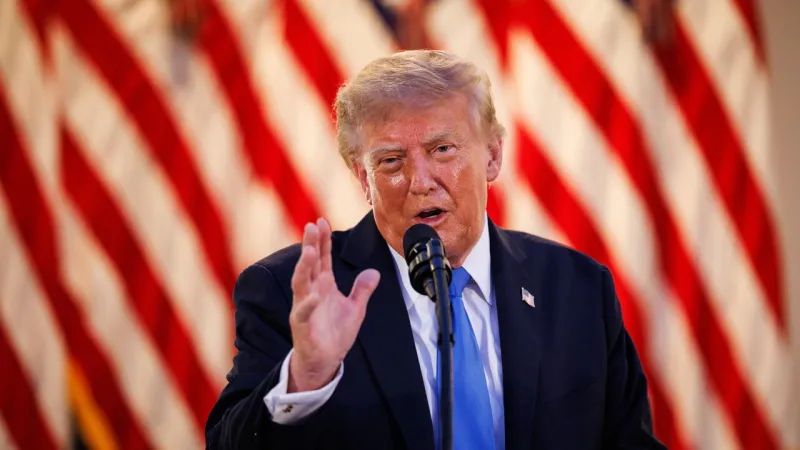
Washington — President Donald Trump issued a stern warning to the Federal Reserve this week, demanding significant cuts to interest rates and threatening to impose severe trade restrictions against countries with which the United States maintains a substantial deficit if the central bank fails to comply. The president framed his demands as an appeal for patriotic action from the Federal Reserve board.
The presidential pronouncement, delivered during a recent press conference at the White House, underscores a continued push by President Trump for a more interventionist approach to monetary policy. He argued that current interest rate levels are stifling economic growth and disadvantaging American businesses on the global stage.
President Trump's comments reignite long-standing debates surrounding the independence of the Federal Reserve. Historically, the central bank operates with a degree of autonomy to manage inflation and employment targets, insulated from direct political pressure. His call for the board to be “patriotic” is seen by some as an attempt to breach this traditional separation.
From the administration's perspective, lower interest rates would make borrowing cheaper for consumers and businesses, thereby stimulating investment, job creation, and overall economic activity. President Trump has frequently criticized the Federal Reserve's prior decisions, asserting they have hindered the nation's economic potential.
The explicit threat of halting trade with nations running a deficit with the U.S. marks a significant escalation. This measure, if enacted, could trigger substantial disruptions in global supply chains and potentially lead to retaliatory actions from affected countries, thereby destabilizing international trade relations.
While presidential administrations often express views on economic policy, direct public demands for specific Federal Reserve actions are less common. Previous presidents have typically respected the Federal Reserve's role as an independent arbiter of monetary policy, even when disagreeing with its decisions.
Economists and financial analysts are closely watching the situation. Many warn that political interference in Federal Reserve policy could erode investor confidence, lead to unpredictable market volatility, and undermine the credibility of U.S. economic institutions.
The focus on trade deficits aligns with President Trump's long-held belief that these imbalances represent unfair economic practices by other nations. He has consistently advocated for policies aimed at reducing deficits, viewing them as a drain on American wealth and manufacturing jobs.
The president possesses various executive powers to implement trade restrictions, including tariffs and embargoes, though broader actions like completely halting trade require careful legal and international consideration. The potential mechanisms for enforcing such a wide-ranging directive remain unclear.
This latest declaration from President Trump introduces a new layer of uncertainty into both domestic monetary policy and international trade dynamics. The Federal Reserve now faces renewed scrutiny regarding its resolve to maintain independence in the face of presidential pressure, while global trading partners anticipate potential shifts in U.S. commercial policy.