 Dorry Archiles

BERLIN — A burgeoning debate in Germany reveals a stark correlation between educational background, socioeconomic status, and political affiliation among young people, raising critical questions for national education policy and the future of the German political landscape. Recent analysis suggests students from Gymnasium, or higher-tier secondary schools, predominantly align with left-wing and Green parties, while their counterparts from less privileged educational backgrounds increasingly gravitate towards the Alternative for Germany (AfD).
The findings, which emerged from a recent public discussion, underscore a growing chasm in political preferences directly linked to one's perceived social standing and access to higher education. This phenomenon challenges traditional notions of political solidarity and prompts a re-evaluation of how societal structures influence ideological development from a young age.
Central to the debate is the observation, often expressed as the sentiment that 'being left-wing is something one must be able to afford.' This perspective suggests that progressive political views, particularly those advocating for environmental protection or social justice, are more readily adopted by individuals from economically stable backgrounds who may feel less immediate pressure from economic anxieties.
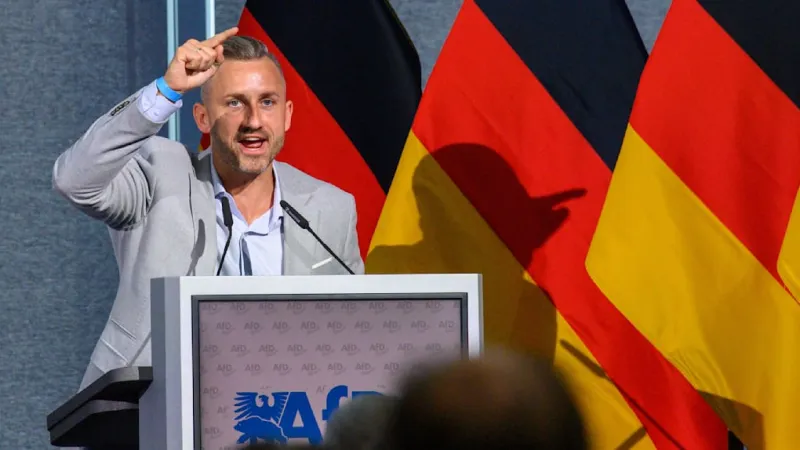
Conversely, students from households with lower educational attainment often report a preference for the AfD, a party known for its anti-immigration stance, euroskepticism, and often nationalist rhetoric. This trend suggests a potential link between perceived economic insecurity or a desire for greater national sovereignty and an inclination towards populist right-wing parties.
Education policy makers are now confronting the profound implications of these findings. The question of what follows from this socio-political stratification for education policy is paramount. Should curricula be adapted to address these divides, or do broader societal reforms hold the key to bridging the gap?
Experts suggest that the disparity highlights a failure to foster a shared understanding of societal challenges and opportunities across different educational tiers. Critics argue that the current education system may inadvertently reinforce existing social hierarchies, leading to divergent worldviews and political allegiances.
This debate occurs against a backdrop of increasing political fragmentation in Germany, where traditional parties face challenges from both the far left and the far right. The ability of the education system to promote social cohesion and a common civic identity is under scrutiny, particularly as the country navigates complex issues from economic shifts to immigration.
The findings echo broader concerns about political polarization seen across Europe and even internationally, where economic anxieties and educational access often play a significant role in shaping electoral outcomes. While not unique to Germany, the clarity of this correlation within its youth population presents a potent challenge.
Addressing this education-politics gap will require comprehensive strategies that extend beyond the classroom. It involves examining family support systems, regional economic disparities, and access to diverse information sources that influence political opinions. For instance, discussions around German Pension Reform Sparks CDU Rift, Threatening Political Futures also highlight the deep-seated societal issues affecting the electorate.
Furthermore, the role of media consumption in shaping political views cannot be overstated. Students from varying backgrounds may be exposed to different news sources and social media echo chambers, reinforcing their existing biases rather than encouraging a critical, multifaceted understanding of political issues.
Some analysts propose a renewed focus on civic education that emphasizes critical thinking, media literacy, and a comprehensive understanding of diverse political ideologies, aiming to equip all students with the tools to navigate a complex political landscape regardless of their background. This could help foster a more robust and resilient democratic discourse.
The challenge for Germany's political class and educators is to understand why certain segments of the youth feel disenfranchised or drawn to specific ideologies, and to develop inclusive educational pathways that encourage civic engagement and mutual understanding across the social spectrum. This societal introspection is vital for national unity.