 Angela Stefani
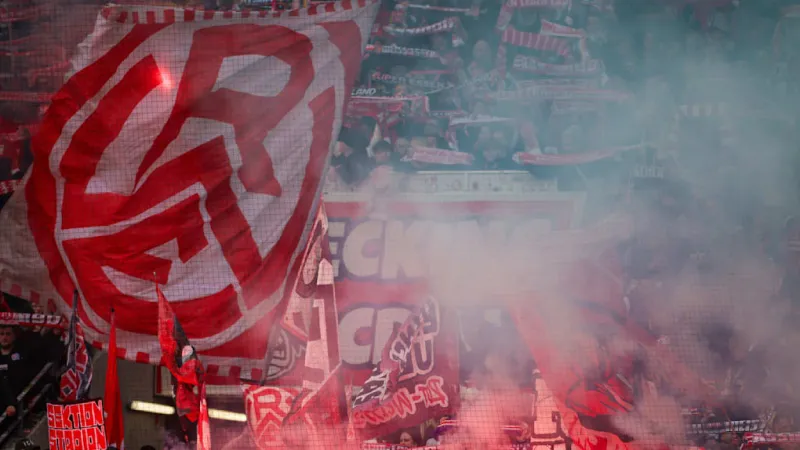
Saarbruecken – A fan of German football club Rot-Weiss Essen sparked widespread outrage after displaying a forbidden Hitler salute in the team's fan block during a recent away match against Saarbruecken. The incident, which occurred during Rot-Weiss Essen's 2:5 defeat, has prompted the traditional club to issue an official statement pledging immediate and rigorous measures against the individual responsible.
The highly offensive gesture was captured amidst the visiting supporters, drawing immediate condemnation and highlighting the persistent challenges German football faces in eradicating right-wing extremism from its terraces. Authorities and club officials are working to identify the perpetrator.
Germany maintains stringent laws against the public display of Nazi symbols, including the Hitler salute, classifying such acts as criminal offenses. These statutes reflect the nation's profound historical responsibility and its unwavering commitment to confronting and prosecuting any glorification of its totalitarian past.
The public exhibition of the gesture carries significant legal ramifications, often resulting in hefty fines or even imprisonment. The swift response from Rot-Weiss Essen underscores the zero-tolerance policy adopted by virtually all German sports organizations regarding expressions of racist or extremist ideology.
Rot-Weiss Essen, a club with a storied history, explicitly denounced the individual's conduct, emphasizing that such behavior stands in stark opposition to the club's core values of inclusivity, respect, and diversity. Their upcoming statement is expected to detail the concrete actions planned.
The incident serves as a stark reminder of the ongoing vigilance required within German society and, specifically, within its deeply rooted football culture, to combat all forms of discrimination and hate speech. Clubs are expected to uphold ethical standards and ensure a welcoming environment for all fans.
Across the various German football leagues, clubs routinely implement robust anti-discrimination campaigns and collaborate with fan projects to educate supporters on historical responsibility and prevent the infiltration of extremist elements. The current situation in Saarbruecken reinforces the critical nature of these efforts.
The club's management has affirmed its commitment to cooperating fully with law enforcement to identify and prosecute the individual involved. Beyond legal consequences, the fan can anticipate a lifetime stadium ban, a common punitive measure for such transgressions.
This isolated but egregious act tarnishes the image of not only Rot-Weiss Essen but also German football at large, which prides itself on its strong community ties and its role as a unifying social force. The swift institutional response is crucial to mitigating this damage.
Further details concerning the club's specific actions and any potential charges brought by legal authorities are anticipated in the coming days. This incident reaffirms German football's resolve to remain an inhospitable environment for hate and extremism, upholding its principles of fair play and social responsibility.
The community awaits Rot-Weiss Essen's complete statement, anticipating a clear outline of how the club plans to enforce accountability and reinforce its foundational anti-discriminatory ethos in the wake of this regrettable event.