 Edward DP Situmorang
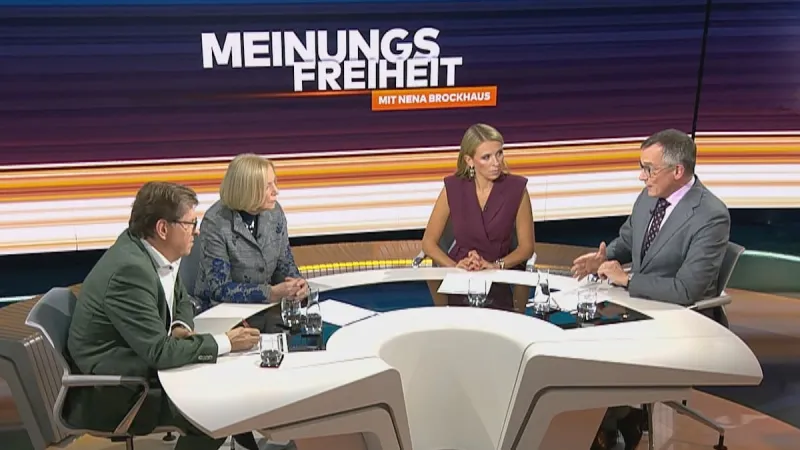
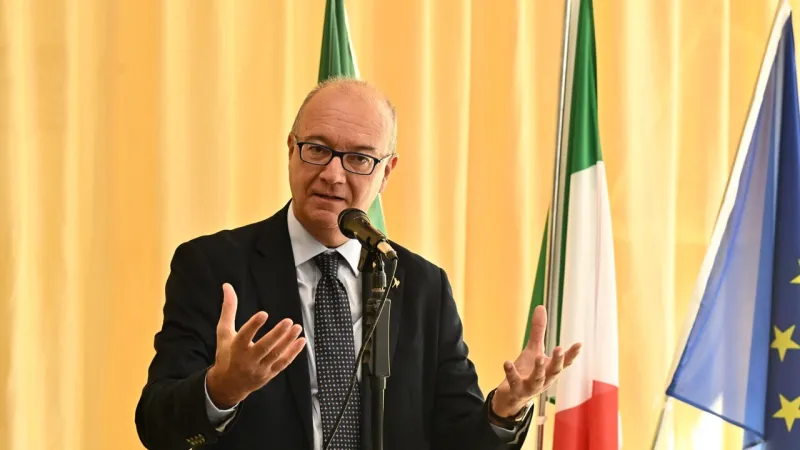
BERLIN – Prominent German political figures, including Social Democratic Party (SPD) veteran Ralf Stegner, former Christian Democratic Union (CDU) Federal Education Minister Johanna Wanka, and Andreas Rödder, founder of the Denkfabrik R21 think tank, recently convened for a robust discussion on contemporary sociopolitical issues, with a central focus on the imperative of freedom of expression. Moderated by Nena Brockhaus, the program titled “Meinungsfreiheit” delved into the complex dynamics shaping public discourse in 2026, examining both challenges and opportunities for open dialogue within German society.
The high-profile panel addressed a spectrum of topics ranging from the impact of digitalization on public debate to the perennial tension between individual liberties and societal responsibilities. The discussion underscored the foundational role of unimpeded speech in a democratic state, even as it navigates the complexities of a fragmented media landscape and increasingly polarized viewpoints.
Ralf Stegner, known for his incisive contributions to political debate, articulated the SPD perspective on balancing robust freedom of expression with the necessity of protecting marginalized groups from hate speech and incitement. His remarks highlighted the evolving legal frameworks that attempt to define the boundaries of acceptable discourse, particularly in online environments where anonymity can embolden aggressive rhetoric.
Johanna Wanka, bringing her extensive experience in education and government, emphasized the critical role of civic education in fostering an informed populace capable of engaging respectfully with diverse opinions. She posited that a robust understanding of democratic values from an early age is paramount to ensuring that freedom of expression serves as a constructive force rather than a tool for division. Wanka stressed the importance of critical media literacy in discerning fact from fabrication, a growing challenge in the current information ecosystem.
Andreas Rödder, representing the intellectual rigor of Denkfabrik R21, offered a perspective that often leaned towards a broader interpretation of expressive freedoms, cautioning against what he perceives as a chilling effect of over-regulation or social pressure on unconventional ideas. He raised concerns about the potential for self-censorship within academic and professional spheres, arguing that true progress often emerges from the unfettered exchange of even uncomfortable viewpoints.
The conversation frequently circled back to the advent of social media platforms and their dual capacity to democratize information dissemination while simultaneously accelerating the spread of misinformation and echo chambers. The panelists acknowledged the immense challenge authorities face in legislating online content without infringing upon fundamental rights, a dilemma felt acutely across European nations.
The German context adds layers of historical and constitutional considerations to the freedom of expression debate. The nation grapples with its past while striving to uphold democratic principles, making discussions around speech limits, particularly concerning historical revisionism or extremist ideologies, uniquely sensitive. These nuances were central to the discourse, reflecting Germany's ongoing commitment to a vigilant democracy.
Further complicating the landscape are the persistent concerns regarding political extremism. Recent discussions, such as those highlighted in reports like German State Premiers Threaten Berlin Funding Amid Left-Wing Extremism Fears, illustrate the ongoing struggle to define and counter threats to democratic order without stifling legitimate political dissent. The panelists considered how such anxieties can shape the public perception and acceptance of various forms of expression.
Moreover, the internal dynamics of political parties themselves influence the broader conversation on public discourse. The Bundestag frequently scrutinizes internal party concerns, as seen with Bundestag Scrutinizes Die Linke Over Internal Concerns, Kocak Case, demonstrating that debates over acceptable speech and internal discipline are not confined to the general public but permeate political structures.
The program “Meinungsfreiheit” thus served as a vital barometer for the health of Germany's democratic discourse, showcasing the varied perspectives on how to nurture open dialogue in an era of rapid societal and technological change. The collective engagement of these influential figures underscores the enduring relevance of freedom of expression as a cornerstone of German democracy and a continuous subject of national introspection.
The debate concluded without simple answers, reinforcing that the balance between unrestrained speech and responsible communication remains a fluid and constantly negotiated aspect of modern governance. The dialogue initiated by Brockhaus and her guests will undoubtedly resonate within Germany's political and intellectual circles, prompting further consideration of these crucial societal questions.