 Chris Robert
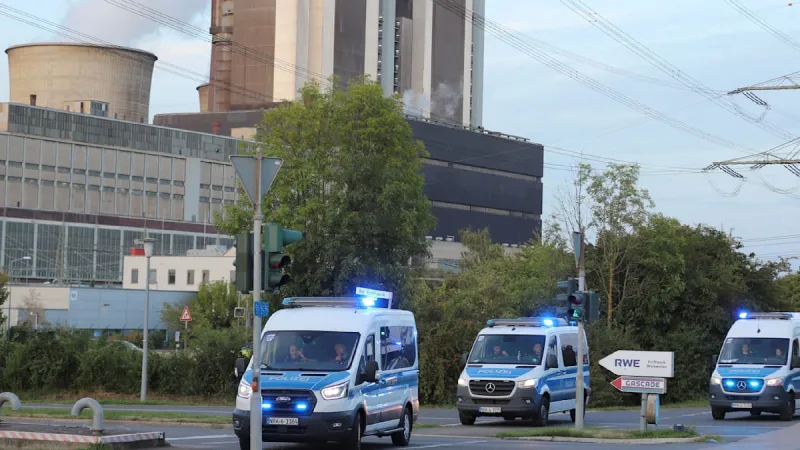
Multiple explosive devices were recently discovered on high-voltage power lines in North Rhine-Westphalia, Germany, prompting a significant police operation near Weisweiler and an expansive manhunt for a suspect in the greater Wuppertal area.
The concerning discovery was made in a critical section of the national power infrastructure, raising immediate alarms regarding potential sabotage and its broader implications for energy security. Authorities swiftly moved to cordon off the affected region, initiating a meticulous investigation into the nature and intent behind placing the devices.
Police forces in the district of Aachen confirmed the incident, emphasizing the serious threat posed by the discovery. The area surrounding Weisweiler, a locale known for its significant power generation facilities, saw enhanced security measures put into effect as specialists worked to neutralize the threat.
While details remain limited as the investigation unfolds, law enforcement officials have publicly stated their intensive search for an individual connected to the incident. This search extends across a wide geographical span, with particular focus on the Wuppertal metropolitan area, where intelligence suggests the suspect may be located.
The implications of targeting vital energy infrastructure are profound, potentially risking widespread power outages, economic disruption, and public safety. German authorities are treating the event with utmost gravity, deploying considerable resources to apprehend the perpetrator and ascertain any wider conspiratorial links.
Expert teams, including bomb disposal units, meticulously examined and secured the explosive devices, ensuring the safety of the power lines and the surrounding communities. The coordinated effort underscores the countrys robust response protocols for incidents involving critical national assets.
This incident casts a spotlight on the vulnerability of energy grids across Europe and the importance of continuous vigilance against acts of sabotage or terrorism. Governments increasingly recognize the need for resilient infrastructure capable of withstanding both conventional and asymmetric threats.
Local residents near Weisweiler reported heightened police activity and road closures, indicating the scale of the security operation. Authorities urged the public to remain calm but vigilant, encouraging anyone with relevant information to contact law enforcement immediately.
The motive behind this audacious act remains unclear. Investigators are exploring all possibilities, from individual extremist actions to more organized attempts at destabilization. The precise type and potential yield of the explosive devices have not yet been released.
High-voltage power lines form the backbone of modern industrial nations, making them attractive targets for those seeking to inflict maximum disruption. The successful detection and neutralization of these devices averted what could have been a far more catastrophic event.
The manhunt in the Wuppertal area involves multiple police units, employing advanced surveillance and intelligence gathering techniques. Citizens in the region may notice an increased law enforcement presence as the search intensifies.
The German interior ministry has not yet issued a public statement, likely deferring to ongoing police operations. However, the seriousness of the situation suggests that federal agencies are closely monitoring and supporting the local investigation.
This incident will undoubtedly prompt a review of security protocols for critical infrastructure nationwide, reinforcing the continuous challenge of protecting essential services from evolving threats. The rapid response of German police is credited with mitigating immediate danger.
The discovery highlights the often-unseen work of security personnel and intelligence agencies in safeguarding national assets. Their swift action prevented potential widespread chaos and underscored their commitment to public safety.
As the investigation progresses, further details are expected to emerge regarding the suspects identity and any potential affiliations. The focus remains on bringing the individual responsible for this severe threat to justice.
The current year, 2026, has seen various security challenges across Europe, and this incident adds a new layer of concern regarding infrastructure vulnerability. The German government, led by Chancellor Olaf Scholz, is expected to address the matter as more facts become available.
The police appeal to the public for assistance is a standard procedure in high-profile investigations, hoping that community vigilance can provide crucial leads. Ensuring the safety and stability of the power grid remains a paramount concern for German authorities.
The discovery marks a stark reminder that even with advanced security measures, critical infrastructure remains a persistent target for those with malicious intent. The resilience of the system, coupled with swift law enforcement action, proved crucial in this instance.