Dorry Archiles
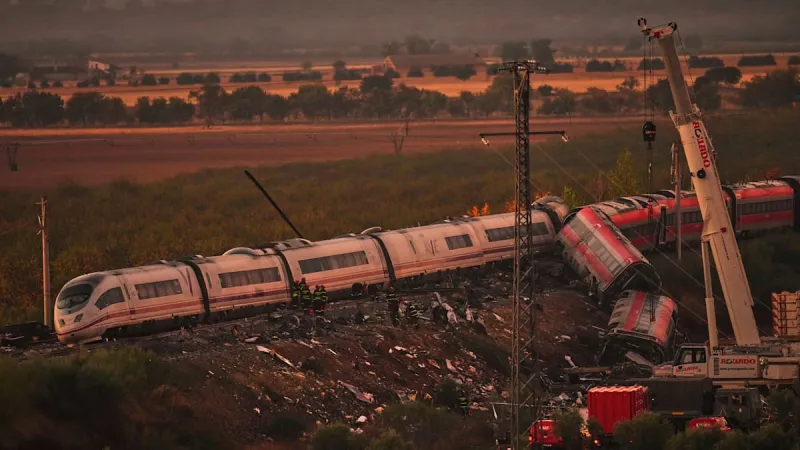
BERLIN – Following a devastating train accident in Spain that has drawn global attention, Detlef Neuss, a prominent spokesperson for the German passenger advocacy group ProBahn, affirmed that Germany's extensive rail network possesses no discernible safety deficiencies. Neuss addressed public concerns, stating that while incidents involving human error remain theoretically possible, their occurrence on German tracks is considered highly improbable due to stringent safety protocols.
Neuss's pronouncement came as the tragic events in Spain prompted renewed scrutiny of rail infrastructure across Europe. His unequivocal message aimed to reassure German commuters and the broader public about the robustness of their domestic train system. “The safety is actually guaranteed,” Neuss stated, underscoring his organization's confidence in the operational integrity of the nation's railways.
The context for these assurances stems from a recent and particularly fatal incident in Toledo, Spain, where a train crash claimed dozens of lives. Reports indicate human error is under intense scrutiny as a potential primary cause of that catastrophe. This deadly Toledo train crash intensified discussions about systemic vulnerabilities in railway operations across the continent.
Experts note that while all transport systems carry inherent risks, modern European rail networks are designed with multiple layers of redundancy to mitigate failures. Germany, in particular, boasts a highly developed and continuously updated system. This includes advanced signaling, automatic train control, and rigorous maintenance schedules, which collectively aim to minimize potential hazards.
ProBahn, as a consumer advocate, maintains a watchful eye on railway operators and policymakers, pushing for consistent adherence to safety standards. Their endorsement of the German network's current state carries significant weight, reflecting an informed perspective beyond mere official pronouncements.
The possibility of human error, while extremely low, cannot be entirely eliminated from any complex system involving human operators. However, Germany's rail operations incorporate extensive training, regular competency assessments, and fatigue management protocols for train drivers and signal operators. These measures are designed to preempt lapses in judgment or attention.
Furthermore, the German railway infrastructure benefits from substantial investment in technology and digitalization. Features such as positive train control systems and sophisticated diagnostic tools continually monitor track conditions and rolling stock performance, flagging anomalies before they escalate into critical situations.
Historically, Germany has maintained one of the safest railway networks globally. Continuous improvements have been driven by lessons learned from past incidents, both domestically and internationally. This proactive approach ensures that safety mechanisms evolve with technological advancements and operational challenges.
Public perception of rail safety often fluctuates with major accidents, regardless of geographical location. Neuss's statements serve to differentiate the German situation, emphasizing that while empathy for those affected by foreign tragedies is profound, the local context regarding safety measures remains distinctly strong.
Maintaining this exemplary safety record requires persistent vigilance from all stakeholders. This includes government regulators, railway companies like Deutsche Bahn, and independent watchdogs such as ProBahn. Collaboration among these entities ensures that standards are not only met but continuously elevated.
In comparison to other modes of transport, such as road travel, rail consistently ranks among the safest per passenger kilometer. The systematic nature of rail operations, combined with controlled environments and dedicated infrastructure, contributes to this superior safety profile.
The commitment to an accident-free future remains paramount for Germany's rail operators. By investing in personnel, technology, and robust procedural frameworks, the nation aims to uphold its reputation for exceptional railway safety, making train travel a reliable choice for millions of passengers daily.
This reassurance from ProBahn arrives at a crucial time, offering a counter-narrative to the anxieties stoked by international incidents. It highlights a steadfast dedication to passenger well-being and operational excellence within the German rail sector.
The rigorous inspections and certification processes applied to both infrastructure and rolling stock in Germany are among the strictest globally. Every component, from tracks and signals to locomotives and carriages, undergoes regular and thorough evaluations to ensure peak performance and safety compliance.
Ultimately, ProBahn's assessment points to a system built on resilience and foresight. While acknowledging the universal unpredictability inherent in human action, the foundational design and ongoing management of Germany's rail network are geared towards rendering major human-induced incidents exceptionally rare. The focus remains on unwavering commitment to public trust and operational integrity.